

The Saturday it finally clicked, I was in the hallway gripping a vacuum cleaner like a sword with no instructions. My flat was not a complete disaster; it was simply… always a little untidy. Shoes lay half-removed, a faint grey coating of dust covered the TV unit, and the washing-up appeared to reproduce overnight. I cleaned weekly, and sometimes more often, yet I still felt as though I was fighting a losing battle.
I was not lazy, and I was not dirty. I was simply fed up with my spare time disappearing beneath countless tiny jobs.
Then, one day, mostly out of irritation, I quit trying to clean “better” and began approaching cleaning differently.
That small change altered everything.
Why cleaning felt difficult even when I was doing it “right”
Few things are more frustrating than spending your one free evening wiping worktops, only to wake up to crumbs again. My routine never varied. I would choose a day, turn up some loud music, pull every product out from under the sink and tackle the flat room by room. After two hours, my back ached, the place reeked of lemon-scented chemicals, and I would promise myself, once again, that I would stay on top of it the following week.
By Thursday, clothes would be draped over the chair again, miscellaneous piles of paper would have returned, and the bathroom mirror would be marked with splashes. The effort never appeared to last.
One Sunday, I timed the whole thing. I wanted to know how much time this never-ending cycle of tidying and scrubbing was taking. It was ninety-two minutes from start to finish. That did not include the weekday “mini cleans” either: hurriedly washing dishes before bed, angrily wiping the bathroom sink before visitors arrived, or the five-minute panic tidy when the delivery driver rang the buzzer.
I realised I was not cleaning once a week at all. I was cleaning constantly, but in a disorganised, reactive fashion. Rather than managing a home, I was dealing with a series of small fires.
Once I considered it properly, I saw that frequency was not the issue. I actually cleaned fairly often. Strategy was the problem. I treated every bit of mess as urgent, which left my mind permanently on high alert. Cleaning involved one exhausting decision after another: where to begin, what to tackle first, which product to use and whether to complete it now or later.
Decision fatigue is real. By the final room, I was bad-tempered and careless. It wasn’t that I needed more time - I needed fewer choices.
The small shifts that made cleaning feel lighter, not bigger
My first adjustment was almost embarrassingly obvious: I stopped cleaning “rooms” and began cleaning “moments”. Rather than waiting for an empty afternoon to wage war on the flat, I linked small cleaning actions to things I already did. While the coffee machine burbled, I wiped down the kitchen surfaces. Once I had brushed my teeth at night, I spent 30 seconds wiping the sink and tap.
The jobs and their frequency stayed the same, but they slipped into my day like background music. There was no major build-up and no drama; just small actions that required neither a particular mood nor a playlist.
A friend with two children told me she used a similar approach to laundry. “I stopped doing ‘laundry day,’” she said, putting a small load into the machine as we spoke. “I wash whatever fits every other day while I’m cooking dinner. It never piles up enough to scare me anymore.”
Her approach was not glamorous. There were no huge stacks of folded clothes or Instagram-worthy “Sunday reset” stories. Still, her home felt more peaceful and lighter. The amount of work was unchanged, but it had been divided into thin, nearly invisible layers.
That chat quietly changed something in my thinking. Perhaps the answer was not to clean more effectively, but to make cleaning so small that it scarcely felt like a task.
It made sense logically. When something seems enormous, we postpone it until we cannot avoid it any longer. We then throw ourselves into it in one overwhelming burst, become exhausted and repeat the pattern. Splitting cleaning into micro-rituals removed the dread. My brain no longer categorised it as “a thing” that required preparation.
The emotional change was the unexpected part. The home stopped swinging between “disaster” and “perfect”, then back again. Instead, it sat in the middle at “pretty okay”. That was enough to prevent the spiral of shame. Let’s be honest: nobody really does this every single day.
Simple cleaning methods that quietly change everything
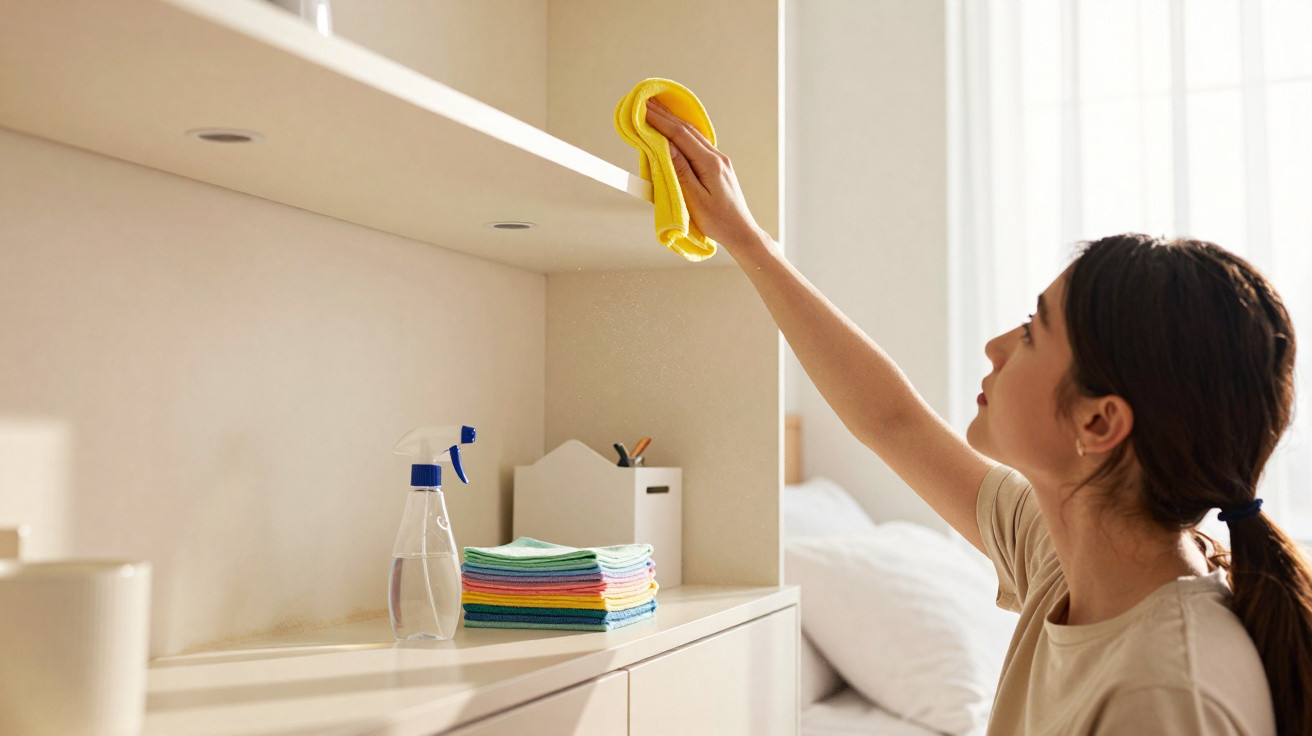
One useful change was to create “cleaning zones” rather than set aside cleaning sessions. I gave each area one quick, precise action instead of an unclear objective. Kitchen: wipe the worktops and hob once daily. Bathroom: quickly wipe the sink and mirror at night. Living room: tidy visible surfaces every other day. Bedroom: make the bed and pick clothes up from the floor in the morning.
Every action took less than three minutes. They were gestures rather than projects. If I skipped one, I had not “failed”; I simply dealt with it in the next round.
Previously, the biggest trap for me was all-or-nothing thinking. If I could not deep-clean the entire bathroom, I would avoid even hanging the towel up properly. If there was not enough time to vacuum the whole flat, I would not bother with the hallway. You may recognise that feeling: if it cannot be perfect, why do any of it?
That way of thinking is harsh on a home that is actually lived in. Life rarely offers a spare three-hour block alongside the right mood. As a result, the house never quite reaches that point, and you spend your time quietly irritated with yourself. I had to recognise that “better” was already a success, even if “perfect” never arrived.
At one stage, I wrote one sentence on a sticky note and put it on the fridge. It read:
“Do the smallest thing that makes this look a little better, then stop.”
I began using that rule everywhere. Faced with one obvious pile, I would sort only the top layer. With one untidy drawer, I would organise just the front half. What interested me was how these small successes accumulated. I started genuinely trusting myself to keep the space under control.
I also kept a short boxed list on my phone of tiny resets that made the greatest visual difference:
- Clear and wipe the dining table
- Empty the kitchen sink completely once a day
- Fold or remove anything on the sofa
- Make the bed and clear bedside tables
- Put shoes in one contained spot by the door
Whenever the flat felt “off”, I simply chose one of them. Within two minutes, the whole place felt more welcoming.
When the goal shifts from “clean house” to “lighter life”
What surprised me most was how much my relationship with cleaning changed once it stopped being a performance. I no longer did it for an imaginary guest in my mind; I did it for tomorrow’s version of myself. That person does not mind whether the skirting boards are spotless. They care that the sink is empty and that they can locate clean socks.
The workload did not become smaller; its meaning did. Instead of being a moral test I continually failed, cleaning became a minor routine, like charging my phone.
There is also a quiet dignity in allowing your routines to reflect your real life. On some evenings, the dishes remain until morning. In some weeks, the bathroom receives more of a “functional wipe” than a spa treatment. That is fine. A home is not a showroom; it holds the life you truly live.
What changed was not how frequently I clean, but how I fit cleaning into what is already there: coffee, showers, bedtimes, leaving and coming home. The house looks much the same as it did during my old marathon cleaning days. I feel and look less exhausted.
You may not need a new product, a new mop or a rigid timetable. Perhaps you simply need to renegotiate the arrangement you have made with your home.
| Key point | Detail | Value for the reader |
|---|---|---|
| Move from “sessions” to “moments” | Link quick cleaning actions to existing habits, such as making coffee, brushing teeth or cooking | Reduces mental effort and makes cleaning feel almost automatic |
| Prioritise tiny visible resets | Focus on small jobs that alter how a room looks at first glance | Creates an immediate sense of control with very little effort |
| Let go of perfection and aim for “better” | Accept that partial progress and “pretty okay” are sustainable goals | Reduces guilt and helps keep the home consistently liveable |
FAQ:
- How do I start if my place is already a mess? Choose one surface - a table, worktop or sofa - clear and clean only that, then stop. Tomorrow, repeat the process with another surface.
- What if I’m really busy during the week? Connect 1–2 micro-tasks to things you never miss, such as making coffee or showering. Make sure each takes under two minutes.
- Do I need a strict cleaning schedule? No. A flexible rotation of “zones” and several daily resets is often easier to maintain than a rigid weekly plan.
- How can I stay motivated? Judge success by how quickly your home feels “reset”, rather than by the amount you cleaned. Pay attention to how your mood changes when small areas are under control.
- What if I live with messy people? Choose a handful of shared non-negotiables, such as an empty sink and shoes in one place, then keep your own areas simple and quick to reset. Set an example rather than giving lectures.


Comments
No comments yet. Be the first to comment!
Leave a Comment