
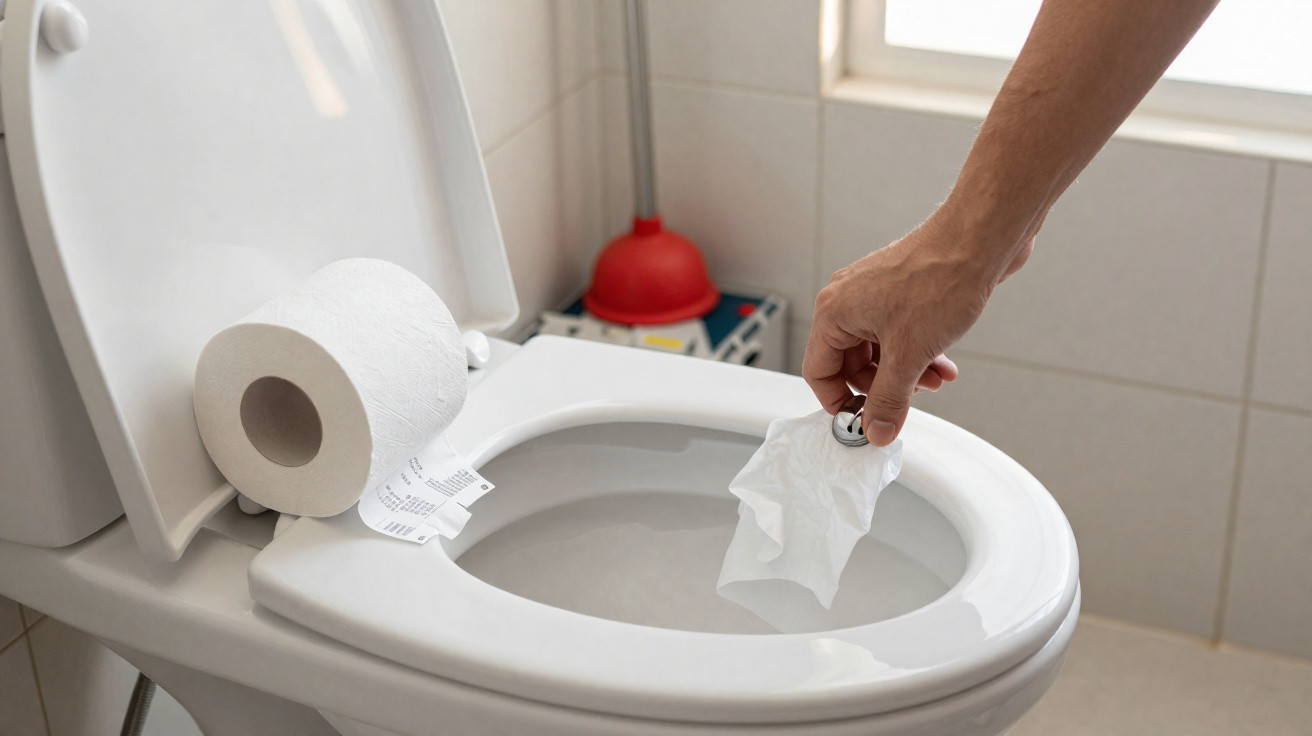
You have probably flushed toilet paper down the toilet without giving it a second thought. It is an automatic action, repeated several times a day. Yet behind this simple habit lies an entire plumbing and sanitation system, and knowing how it works can prevent a major headache at home.
The difference nobody told you about Brazilian toilet paper
In many countries, including the United States, toilet paper is made to break down quickly as soon as it comes into contact with water. In Brazil, much of the paper sold in shops is tougher, designed to last and avoid tearing during use rather than to dissolve easily in the pipes.
Combine this with the fact that many older homes and blocks of flats have plumbing with narrower pipes, designed to cope with only a small volume of solid waste, and you have the ideal conditions for material to build up inside the pipework.
- Narrower plumbing: many older properties have pipework intended for a low volume of solid waste.
- Stronger paper: toilet paper sold in Brazil does not always break down as quickly as products in other countries.
- Sensitive septic tanks: in properties with a septic tank, too much paper overloads the system faster than people might expect.
- Silent blockages: build-up can take months to become noticeable, and by the time it does, it may already be a serious issue.
When a habit becomes a household headache
This is not about poor hygiene; it is about adapting. Many people grew up with a bin beside the toilet precisely because of the realities of Brazil's plumbing, a custom that still puzzles those who have never considered the reason for it.
In blocks of flats where several homes share soil stacks, one blockage can affect more than one property at once. That can lead to expensive plumber call-outs and disruption for neighbours who did not even know what caused the problem.
The route toilet paper takes after flushing
Once it has gone down the pipe, the material travels through an underground network before reaching the municipal sewer system or a septic tank, depending on the type of property. Along this route, anything that does not break down properly becomes a potential risk.
Inside the pipes
The journey toilet paper takes to the sewer network
When the paper breaks down effectively, it passes smoothly through the system, mixing with the water without creating resistance. That is how the plumbing was designed to operate.
When it does not dissolve, however, it forms small clumps that stick to the inside walls of the pipes. These gradually grow until they restrict the flow of water.
If this build-up occurs further away from the home, the issue can even reach treatment plants, requiring extra maintenance and greater energy use to keep the sanitation system operating normally.
What this changes for your budget and daily routine
Using the bin rather than flushing in properties with older plumbing may seem like a minor change, but it can prevent emergency drain-unblocking call-outs, which usually cost far more than an extra pack of bin bags.
It is also worth watching how your home behaves. If water takes longer to drain or you hear unusual noises coming from a drain, these details may already indicate that something is starting to form inside the pipe.
Signs that appear before the problem becomes serious
Water that rises slowly, odours coming from the drain, and a toilet that seems to “choke” when flushed will often appear well before a complete blockage. Paying attention to them is the simplest way to act in time.
Ultimately, understanding how toilet paper interacts with the toilet and the rest of the drainage system is not unnecessary fussiness. It is a practical precaution that protects both your finances and your home's structure.
If this explanation has made you see an everyday habit differently, share it with someone who would also like to understand the reason for that little bathroom bin.

Comments
No comments yet. Be the first to comment!
Leave a Comment