
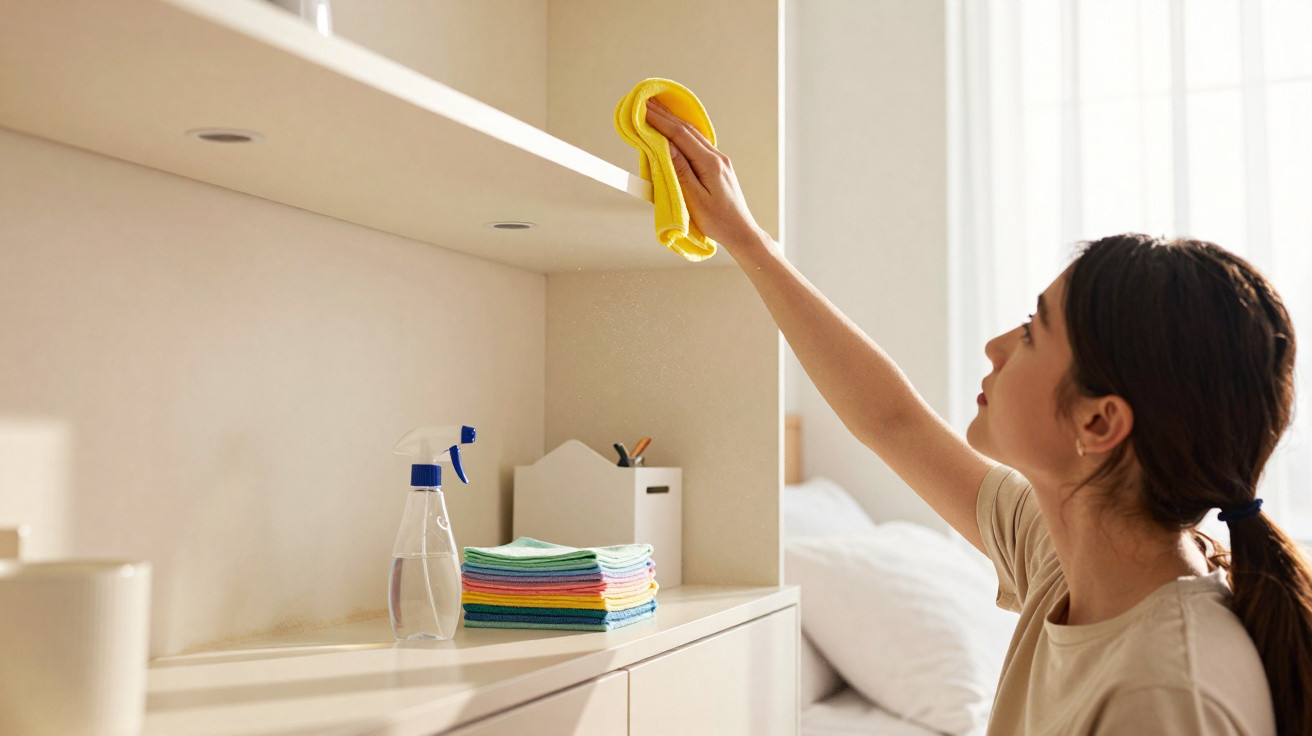
No more endless rounds with a cloth and sneezing fits.
It is a familiar situation: you give everything a thorough wipe on Saturday, yet by Monday a grey film has settled on the living-room table again. Feeling as though the job is never finished is frustrating. Often, though, the issue is not how often you clean, but the order you follow and the cloths you use. Change the system and, within a week, you may find that dust returns more slowly.
Why cleaning from top to bottom matters more than cleaning obsessively
Dust does not disappear; it moves around. It drops from high to low, settles, is stirred into the air and then lands elsewhere. If you start with the coffee table before wiping shelves and ceiling lights, you are unknowingly dusting the freshly cleaned surface all over again.
The simple rule of “top to bottom” avoids doing the same job twice and visibly extends the clean result.
The method is straightforward:
- Clean every high surface first
- Then tackle shelves, window sills and console tables
- Finish with skirting boards and the floor
When you stick to this sequence, there is no need to clean surfaces twice. The dust lifted from above falls below, where one final pass over the floor removes it for good.
The overlooked game changer: a lightly damp microfibre cloth
The material you choose is just as important as the order of cleaning. A conventional dry duster often merely pushes dust about or sends it airborne, allowing it to settle somewhere else.
A microfibre cloth that is only very slightly damp works differently: its fine fibres catch dust and hold on to it. The aim is not vigorous scrubbing, but trapping the particles.
A cloth that feels cool but leaves no droplets behind has the ideal level of dampness.
How to prepare the cloth properly
- Hold the microfibre cloth under lukewarm water
- Wring it out extremely thoroughly, until it is almost dry
- Keep folding it as you work so that you always use a fresh section
Using too much water only creates further problems: it leaves streaks, can soak surfaces and turns dust into a grey smeary layer.
The minimal cleaning kit that genuinely does the job
There is no need for ten different specialist cleaners. A small, well-chosen kit is more useful than a cupboard full of sprays.
| Item | Main purpose |
|---|---|
| Microfibre cloth 1 (lightly damp) | Traps dust on all surfaces |
| Microfibre cloth 2 (dry) | Buffing glass, lacquered finishes and screens |
| Microfibre cloth 3 / floor cloth | Skirting boards, radiators and floors |
One point matters: do not mix up the cloths indiscriminately. Using the same cloth on the floor and dining table simply transfers fine dirt back again. It is better to give each cloth a clear role.
What to avoid
- Feather dusters and standard dusters – these tend to lift dust into the air
- Cloths that are too wet – they cause streaks and marks
- Greasy polishing sprays – they attract dust, especially on high-gloss furniture and stainless steel
Step by step: how to make a room dust-free
1. Start at the very top: ceilings, lights and cupboards
Always begin with the places you rarely notice in day-to-day life: the tops of wall cupboards and wardrobes, ceiling lights, curtain poles and air vents. A thick layer collects here and falls down whenever it is disturbed.
Move the lightly damp microfibre cloth slowly over these areas rather than wiping frantically. The goal is to lift the dust and catch it in the cloth immediately, not blow it around the room.
2. Work at eye level: shelves, window sills and chests of drawers
Next come the surfaces you see every day and find most annoying once they look grey: bookcases, TV units, sideboards, window sills and bedside tables.
A practical tip: place ornaments, candleholders and smaller items on a tray briefly, wipe the surface, then put everything back. That way, you do not have to clean around every object.
One steady, slow pass with a microfibre cloth works better than three hurried wiping movements.
Wipe only across the tops of books rather than taking each one out, unless you are doing a full deep clean. For now, remove only loose dust from delicate displays and screens; use the dry cloth for the finishing touch.
3. Finish at floor level: skirting boards, radiators and floors
Only after everything above is clean should you deal with the base of the room: skirting boards, radiator fins, furniture legs and beneath low shelving, depending on what you can reach. Use a separate lightly damp cloth for this, or a floor mop with a microfibre pad.
The floor is the final step. Vacuum first or use a dry microfibre broom, then mop lightly with a damp cloth if the flooring permits it. If you mop before working on shelves, you will undo the result.
The finishing touch: dry microfibre for delicate surfaces
After the damp pass, smooth surfaces can often retain tiny streaks or a very fine film. This is especially noticeable on:
- Black high-gloss surfaces
- Glass and mirrors
- Stainless steel in the kitchen
- TV screens and monitors, when switched off
This is where the second microfibre cloth, used completely dry, comes into its own. Wipe with gentle pressure and no cleaning product. It removes remaining marks, fingerprints and small smudges, leaving surfaces clearer for longer.
Tricky areas: wood, fabrics and blinds
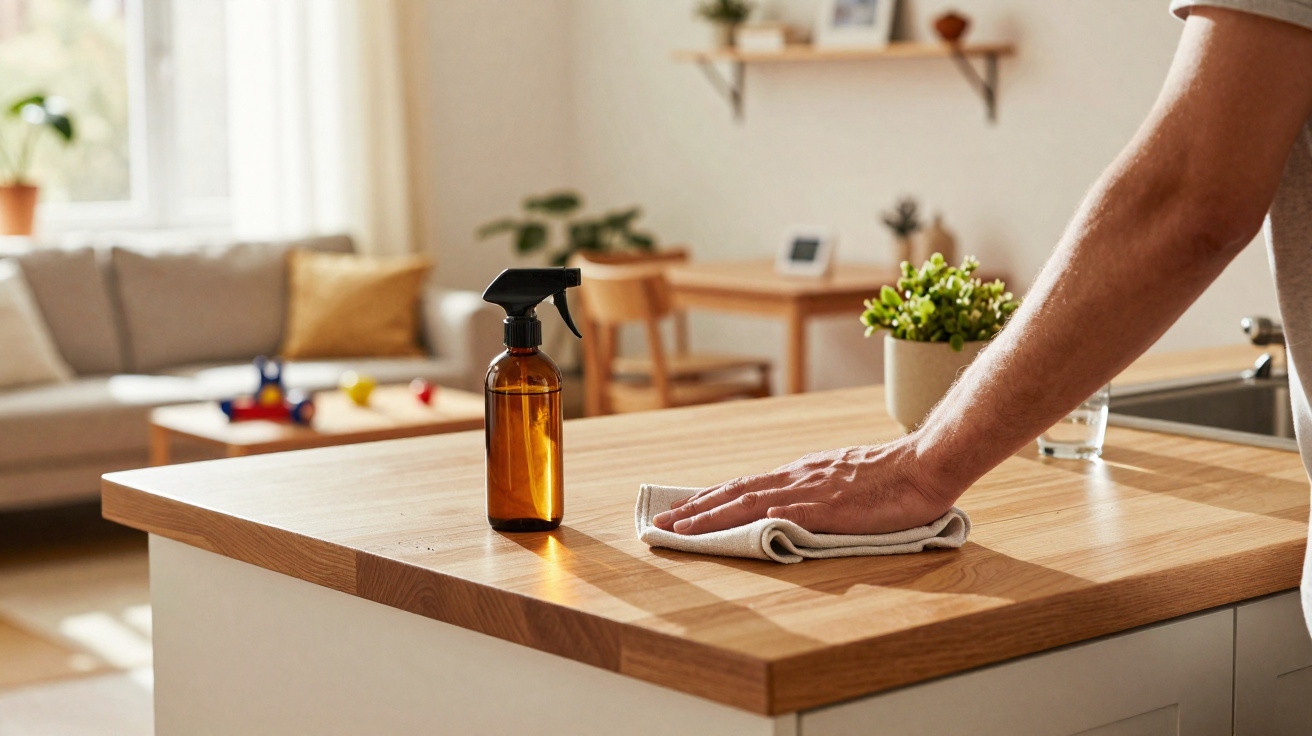
Not all materials tolerate the same approach. Delicate wooden tables or waxed wood need almost no moisture. Use a barely damp cloth, then follow it immediately with a dry one.
Upholstered furniture and textiles attract dust easily. Rather than wiping them, use a vacuum cleaner with a brush attachment. This also removes hair and fluff without sending it into the air.
For venetian blinds, radiator grilles or narrow gaps, use a soft brush or paintbrush. Loosen the dust first, then wipe over the area with the lightly damp microfibre cloth.
How to keep the effect for more than two days
Even the best technique cannot stop household dust entirely. However, a few small habits can slow it down considerably.
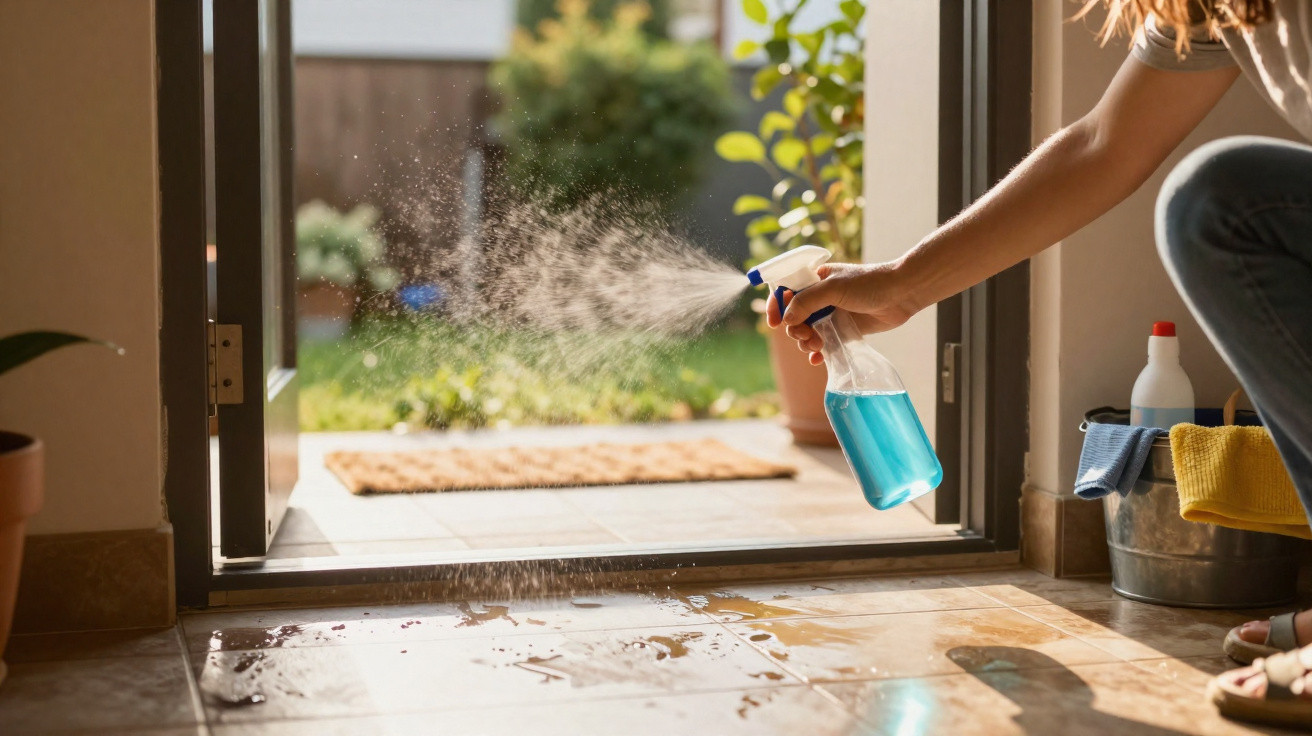
- Use a good doormat at the door – much of the dirt stays outside
- Keep shoes, coats and bags in one designated area – fewer particles spread through the hallway
- Shake out throws and cushions outdoors, not in the living room
- Air rooms regularly, while keeping an eye on window sills
Anyone who spends five minutes wiping purposefully more often will need the major cleaning session less often.
A small routine helps: keep a lightly damp cloth within reach in the kitchen or living room, with a dry one beside it. While waiting for coffee, quickly wipe the coffee table and TV unit, then buff glass or stainless steel – this is enough to keep the usual problem areas looking presentable all the time.
Anyone who gives this system a proper trial for one or two weeks will often notice a clear difference: the dust has not vanished completely, but it returns noticeably more slowly. In everyday life, that can feel almost like hiring a cleaner – except it takes just three cloths and a clear order of work.
Comments
No comments yet. Be the first to comment!
Leave a Comment