
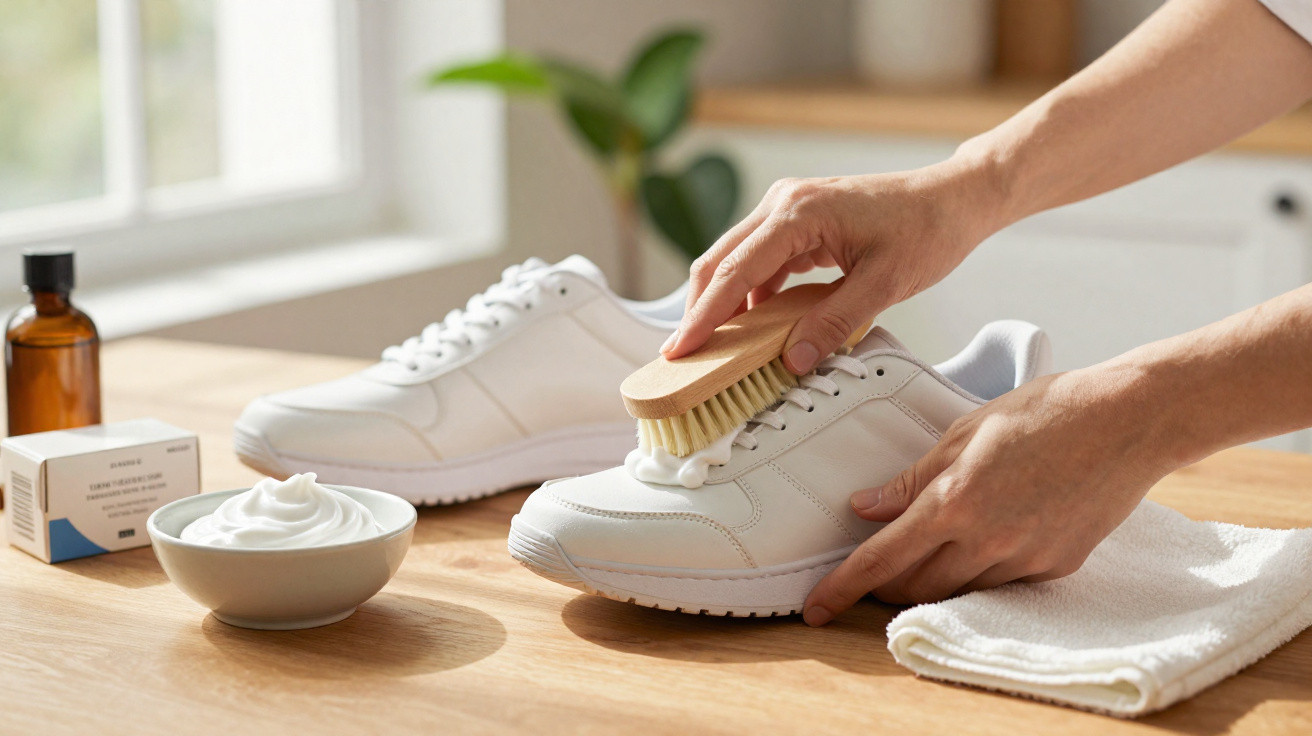
White trainers have long been more than just sports shoes. They work with a summer dress, an office outfit and make almost any look feel more relaxed. The downside is that, after a few weeks of city wear, they tend to look more grey than white. Many people then thoughtlessly put their trainers in the washing machine – only to find damaged stitching or yellow marks afterwards. Yet there is a much gentler, almost free way to brighten them again without ruining them.
Why the washing machine secretly damages white trainers
Heat, friction and moisture: the invisible trainer killer
A 30°C delicate wash may sound harmless in theory. In reality, plenty happens inside the drum that trainers do not cope with well. The shoes constantly knock into one another and against the metal sides. This combination of friction, warmth and prolonged damp attacks the materials.
The adhesives in the sole soften, lose their grip and may gradually come apart. Seams are put under strain they were never designed to withstand. This affects the entire construction, especially in trainers made from several layers.
“Putting trainers through a full machine wash time and again significantly shortens their lifespan – even if they appear clean afterwards.”
The myth of “clean”: where dirt becomes more deeply embedded
There is another issue: water often forces dirt further into the material instead of lifting it out. Once dry, the familiar yellowish tide marks can appear, particularly around the sole and where fabric meets rubber.
Detergent residue can remain trapped in the fibres, especially if the machine was overfilled. These deposits actively attract dust and street grime. As a result, the shoes soon look stained again – sometimes even worse than before.
The natural pair that outperforms chemical cleaners
Sodium bicarbonate: a gentle abrasive with a brightening effect
Rather than reaching for the washing machine, it is worth looking in the cupboard for household cleaning products. The key ingredient in this method is sodium bicarbonate, commonly sold as bicarbonate of soda. Its fine crystals work like an exceptionally mild scouring paste.
They lift ingrained grime from tiny creases in leather or on fabric surfaces without damaging the finish. Sodium bicarbonate also has a mildly brightening action and can reduce some yellowing. It is ideal for white areas that have become dull and grey.
Soft black soap: removes grease while conditioning the material
Its partner is soft black soap, a traditional cleaner made from vegetable oils. It breaks down grease, road dirt, sun cream residue, tar marks and green stains from park grass, while being less harsh on the material than aggressive chemicals.
It is particularly useful for leather and high-quality synthetic materials because it offers two benefits: it cleans while providing a little conditioning, so the shoe is not left looking dry or brittle.
“The combination of sodium bicarbonate and black soap cleans deeply without soaking the shoe – that is the crucial difference compared with the washing machine.”
The cleaning paste for white trainers: how to make it
You only need a small bowl and two everyday ingredients:
- 2 tablespoons of sodium bicarbonate (pure powder, not baking powder)
- 1 tablespoon of soft black soap
The right texture: think toothpaste, not soup
Stir the two ingredients together thoroughly until they form a thick, creamy paste. It should be roughly as firm as shaving cream or stiff toothpaste. If it seems too runny and drips from the spoon, add a little more powder.
This thick consistency matters: the mixture needs to cling to the surface and work there, rather than running into the shoe and soaking everything. A slight fizz while mixing is normal and indicates that the ingredients have started reacting.
Why using less water works better
Too much liquid is the biggest weakness in many cleaning attempts. Anyone using a large bowl and brush to saturate the entire shoe may end up with foam, but also rippled leather, swollen fabric and fresh water marks.
The concentrated paste avoids this. It stays on the surface, loosens visible dirt exactly where it is needed and keeps the inside of the shoe largely dry. That helps the shape remain stable and prevents glued areas from softening.
How to apply the mixture properly to white trainers
Start with problem areas: the sole and crease lines
An old toothbrush or a soft nail brush is all you need for application. Pick up a small amount of paste and work it into the dirty areas using circular movements.
Pay particularly close attention to:
- the rubber sole, especially the edge around the shoe
- the usual crease lines above the toes
- slightly rough fabric sections where dust quickly clings
The more time you spend on these areas, the clearer the white will look afterwards. Even lightly yellowed soles can often regain a noticeably fresher appearance.
Leave it to work: why 15 minutes makes the difference
After applying it, leave the paste on the shoe for around 15 minutes. During this time, the black soap breaks down grease and stubborn residue, while the powder gently brightens the surface.
“Anyone who wipes the mixture away immediately misses out on a large part of its effect. The waiting time is the ‘turbo’ of the whole method.”
Wipe and dry correctly – or new tide marks may appear
Use a microfibre cloth instead of the tap
There is one clear rule when removing the paste: do not give the shoes a full soak. Lightly dampen a soft microfibre cloth, wring it out thoroughly and gently lift away the residue. Rinse and wring out the cloth repeatedly as you go, so that no grey sludge is left behind on the shoe.
Rinsing everything off quickly under running water may seem convenient, but it saturates the whole surface. That is precisely what can lead to unsightly yellow marks later on.
Air-dry in the shade: no heat, no stress on the material
Once cleaned, leave the trainers to dry at room temperature in an airy, shaded spot. Radiators, hairdryers and direct sunlight are all off limits. Intense heat ages adhesives, makes leather brittle and encourages further discolouration.
A practical tip is to loosely stuff the shoes with newspaper. It absorbs remaining moisture while helping them keep their shape. Replacing it after one or two hours speeds up drying without putting the materials under strain.
How to keep your trainers white for longer
Water-repellent spray as an invisible shield
Once the trainers are dry again, an extra quick step is worthwhile: apply a water-repellent spray suitable for textile and/or leather. It creates a thin protective layer over the surface, making it harder for water and dirt to stick.
This not only reduces new stains, but also makes the next cleaning session much quicker. One application can provide several weeks of practical everyday protection, depending on the weather and how often the shoes are worn.
A mini routine after wearing prevents ingrained dirt
Checking your shoes briefly straight after wearing them can save you from a major cleaning session later. Small scuffs on the sole can usually be removed at once with a damp cloth or a melamine cleaning sponge.
- after walks around town: quickly wipe the sole with a cloth
- after rain: allow the shoes to dry, then brush away loose soil marks
- for stains: treat the affected spot with a little paste rather than cleaning the whole shoe immediately
What to consider for different trainer materials
Smooth leather, synthetic leather and fabric: not every surface reacts alike
Smooth leather generally tolerates the paste well, provided you do not scrub aggressively. After cleaning, a thin layer of colourless leather conditioner can be useful to keep the shoe supple.
Synthetic leather usually needs only light pressure with the brush. Here, excessive scrubbing is more likely to cause abrasion. Fabric trainers are sturdier, but should still not be saturated. Take particular care around seams and glued sections.
When it is better not to use this method
Delicate specialist materials such as suede, nubuck or very coarse mesh are more sensitive. Sodium bicarbonate can leave visible traces or alter their texture. For these shoes, specialist cleaners and suitable brushes are the better choice.
| Material | Suitable? | Advice |
|---|---|---|
| Smooth leather | Yes | Brush gently; use leather cream afterwards if needed |
| Synthetic leather | Yes | Do not rub too hard; test on a small area |
| Textile / canvas | Yes | Do not soak; treat the surface only |
| Suede / nubuck | Rather not | Use specialist brushes and sprays |
Why the effort is genuinely worthwhile
Caring for trainers in this way saves money in the long run. The shoes remain wearable-looking for longer, need replacing less often and do not end up in the bin as quickly. It also conserves resources, because every new pair of shoes requires production, transport and packaging.
There is a second practical benefit too: clean, well-kept shoes make every outfit look more polished. Especially in the office or at appointments, a fresh pair of trainers can often make more of an impression than a new jacket.
A thorough clean once a month, with quick touch-ups as needed in between, can keep white trainers looking remarkably “new” for a long time. All it takes is two simple household products that many people already have in their cleaning cupboard.
Comments
No comments yet. Be the first to comment!
Leave a Comment