
When you are washing up after frying, the drain can seem like the easiest place to get rid of used oil.
But that is precisely where an expensive and rather unpleasant problem can begin.
Many people automatically pour frying and deep-frying oil into the kitchen sink. At first, it disappears without any issue – until, months later, the drain fails and an emergency plumber has to be called. One simple kitchen ingredient can prevent this: an unremarkable powder binds used oil so it can be disposed of safely with household waste.
Why cooking oil quickly blocks the drain
Fat is liquid and hot in the pan, but it becomes troublesome once it enters the pipe. When warm oil meets cold water in the drain, it starts to solidify. The fatty residue sticks to the pipe walls, layer by layer.
Liquid fat turns into a hard, sticky layer inside the pipe – the ideal breeding ground for the next blocked drain.
Over time, food particles, coffee grounds, soap residue and limescale collect on it. What begins as a thin coating turns into a thick plug that allows water to drain only slowly – until eventually nothing gets through at all.
Drain cleaners, hot water and a plunger will often solve the issue only temporarily. Particularly in older properties with ageing pipework, just a few months of “oil in the drain” can make costly drain cleaning unavoidable.
There are also consequences that remain out of sight: the fat enters the sewer system, where it combines with other wastewater to form large deposits of grease and pushes treatment works to their limits. Removing it becomes more complicated and energy-intensive – and therefore more expensive for the public.
The kitchen powder trick: making oil solid
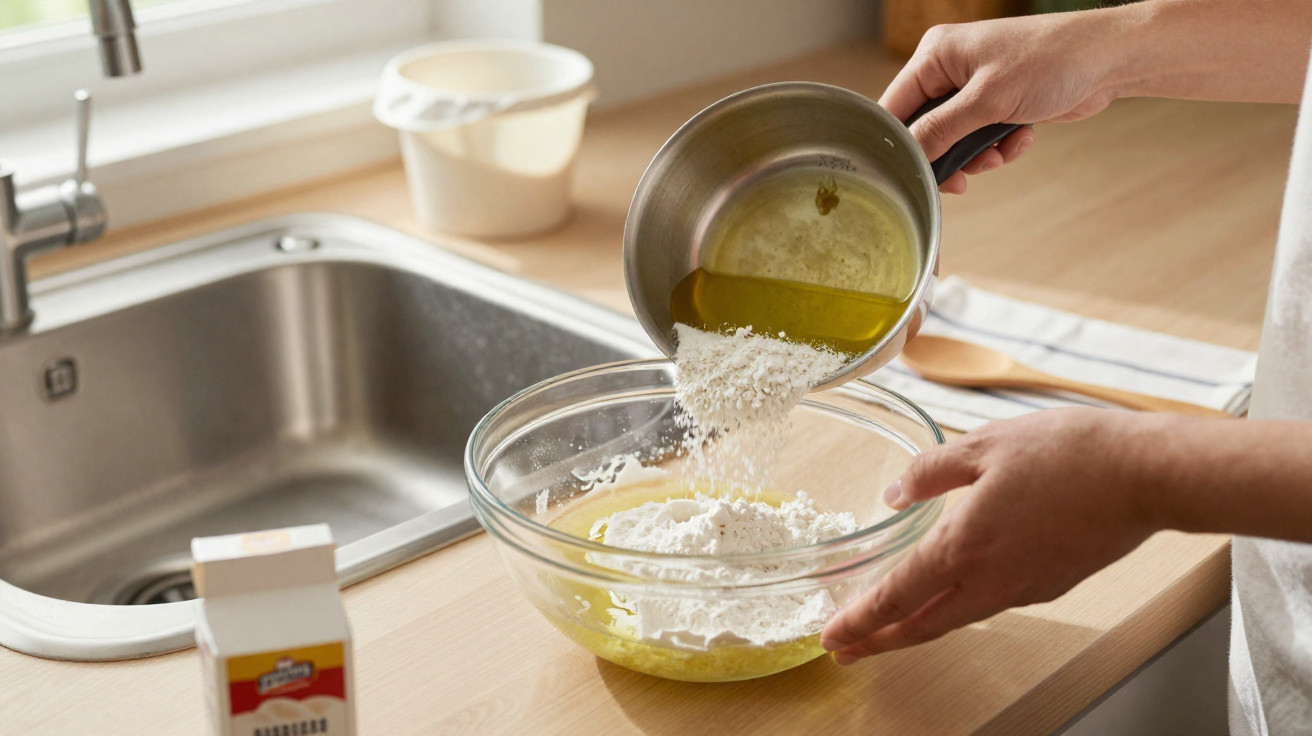
The good news is that used cooking oil can be transformed into a solid mass suitable for disposal with a basic kitchen powder. Ordinary cornflour, or a comparable starch powder, is what is needed.
Its fine particles absorb the oil like a sponge. The mixture thickens, becomes paste-like and eventually firm enough to cut. A slippery liquid is turned into a solid lump that can simply go into the general waste.
A few spoonfuls of starch are enough to turn liquid fat into harmless kitchen waste.
Unlike methods involving boiling water or ice cubes, the entire process takes place in a container rather than in the pipe. There are no temperature shocks, chemical additives or aggressive alkaline products that could damage the pipework.
Step by step: how to make the oil-and-starch mixture
For an average amount of frying oil, you need only a few basic items found in almost every kitchen:
- about 0.5 litres of used frying or deep-frying fat
- 1–2 tablespoons of starch, such as cornflour
- a jar or another container with a secure lid
- a spoon for stirring
Getting the temperature right is crucial
Oil straight from the frying pan is far too hot. Leave it to cool for a few minutes until it is only lukewarm. This protects you from burns and prevents the powder from clumping immediately on the surface.
Stir, wait and allow it to set
Pour the lukewarm oil into the container. Then sprinkle in the starch gradually from above while stirring continuously. The mixture will start to thicken, although it will initially remain somewhat mushy.
The next step is simply to wait: set the sealed container aside at room temperature for at least 24 hours. During this time, the starch combines fully with the oil. By the end, there will be a solid grey-beige mass in the container that is easy to remove.
You can place this directly in the general waste bin. Afterwards, wash the container with hot water and a little washing-up liquid, then reuse it.
Other powders that work besides starch
If there is no cornflour in the cupboard, other dry, fine powders can also be used. The key requirement is that they absorb well and do not react dangerously with the oil.
Suitable alternatives include:
- Wheat flour: works in a similar way, but absorbs more slowly and less effectively.
- Baking powder or dried yeast: their fine texture also binds fat well.
- Food-grade diatomaceous earth: highly absorbent, although it is more of a specialist product.
- Arrowroot starch: especially fine and can shorten the time needed for the mixture to solidify.
Those who are willing to experiment can also use dry coffee grounds or a small amount of fine sawdust from untreated wood. These materials absorb oil too, but they must then be disposed of entirely with general waste – not in compost if they contain a large amount of fat.
Preventing fat from entering the pipes in the first place
The powder method is a useful back-up plan when a larger amount of oil has already accumulated. It is even better to stop anything reaching the drain at all. A few simple habits make a considerable difference:
- Wipe frying pans with kitchen roll after cooking and put the paper into the general waste.
- Always allow large quantities of oil from deep-frying to cool, then deal with them separately.
- Use a sink strainer when washing dishes with a lot of grease on them.
- Take used deep-frying oil that is still relatively clean to a local collection point once enough has been gathered.
This awareness is especially worthwhile in blocks of flats. If several households regularly pour fat into the pipes, the building’s drains will block sooner than many people expect – and the whole building then shares the bill.
Relief for your wallet, water companies and waterways
Less fat in the pipes means less frequent expensive drain cleaning, fewer worries about wastewater backing up into the bathroom and far more peace of mind day to day. Blockages at weekends or on bank holidays are particularly frustrating – exactly when emergency call-out charges can be especially painful.
Municipal infrastructure also benefits when households handle oil more carefully. Wastewater treatment works then need to spend less effort removing fat from sewage. This saves energy, chemicals and maintenance work.
Every litre of oil that does not end up in the drain protects pipes, treatment works and ultimately rivers and lakes.
Many towns and cities have collection points for larger quantities of cooking oil, such as after fondue evenings or using a deep fryer. The fat is often repurposed there, for example by industry or as a raw material for certain fuels.
What else matters when handling used oil
Used oil is more than just an annoying waste product. It can splash, smell and even develop mould if stored incorrectly. A few measures help keep the process safe and clean:
- Always allow oil to cool completely before handling it.
- Keep containers with oil residue out of the reach of children and pets.
- Never try to put out a fat fire with water – cover it with a lid or use a fire blanket.
- For heavily contaminated oil containing breadcrumbs or crumbs, it is better to use the powder method straight away.
Anyone who regularly cooks with a deep fryer or uses a great deal of frying fat can establish a fixed routine: pour cooled oil into a collection container, add powder, leave it to stand, then dispose of it once a week. That removes the temptation to pour “just a little” into the drain.
Starch, flour and similar products cost only a few pence per use, yet they can prevent bills running into three figures. They also help keep kitchen pipes clear, reduce the strain on wastewater treatment works and ensure that the thought of the next washing-up session does not come with a sense of dread.




Comments
No comments yet. Be the first to comment!
Leave a Comment