
You have wiped down the worktop, put the pans away, switched on the kitchen light… and there they are again.
Fingerprints gleaming on the stainless-steel fridge, greasy marks on the hob, handprints across the cooker hood right at eye level. It happens in modest homes, modern flats and magazine-worthy fitted kitchens alike. Stainless steel looks beautiful, photographs well and elevates the room. In everyday life, though, it reveals every touch.
Some people reach for alcohol; others swear vinegar fixes everything. Many simply give up, accepting that finger-marked patina as part of the décor. Between one coffee and the next, the kitchen becomes a record of the household’s hands: a child reaching for yoghurt, a partner opening the oven, a delivery driver touching a surface by accident. And the question keeps nagging at you whenever the afternoon light comes through the window and exposes every fingerprint.
There is a simple, inexpensive and quick trick that breaks this cycle. It is not found on the priciest shelf in the supermarket.
Why kitchen stainless steel seems to attract fingerprints
People who choose stainless steel often picture a restaurant-style kitchen: clean, glossy and grown-up. Reality often arrives during the first weekend of use. The refrigerator handle becomes marked, the door picks up scratches from sponges and the oven develops a map of fingerprints around its display. The disappointment is quiet, almost childlike. “Wasn’t this meant to be the most practical material?”
Technically, stainless steel is an alloy of steel and chromium. It resists corrosion well, lasts for years and suits almost any style. Yet it has one frustrating feature: its smooth, cool surface highlights the natural oils from skin. Every time someone touches it, a little oil is left behind, spreads across the finish and catches the light. It may sound exaggerated, but anyone with a stainless-steel fridge knows it is not fiction.
An internal survey by a major retail chain found that, in after-sales support, the main complaint from buyers of stainless-steel appliances was not noise or energy use. It was the difficulty of keeping the finish free from visible marks. Shop assistants hear the same comment every day: “It’s lovely, but it takes work, doesn’t it?” Many customers try scrubbing with a green scouring pad, leaving stains and scratches before regretting it. Others are tempted by heavily fragranced all-purpose cleaners, which leave the surface greasy and dull.
At a block of flats in São Paulo, a building manager carried out an interesting little experiment. She asked residents in a group chat who was happy with the stainless steel in their kitchen. The replies were almost unanimous: “Only when the cleaner comes.” The obvious truth is that the issue is not stainless steel itself, but the cleaning routine and method. A smooth surface and skin oil, combined with unsuitable cloths and harsh products, create a frustrating loop. You clean, scratch, leave residue behind, and the stainless steel holds on to it all. Kitchen lighting does the rest, revealing every detail. The trick is not to clean more, but to clean differently.
The stainless-steel trick professionals use - and hardly anyone mentions
In many professional kitchens, from bakeries to restaurants, there is no costly secret or imported spray. Behind the scenes, you will often find a very straightforward combination: mild washing-up liquid, warm water, a microfibre cloth and a thin coating of mineral oil or cooking oil, applied correctly. That nearly invisible film is the real answer to persistent fingerprints.
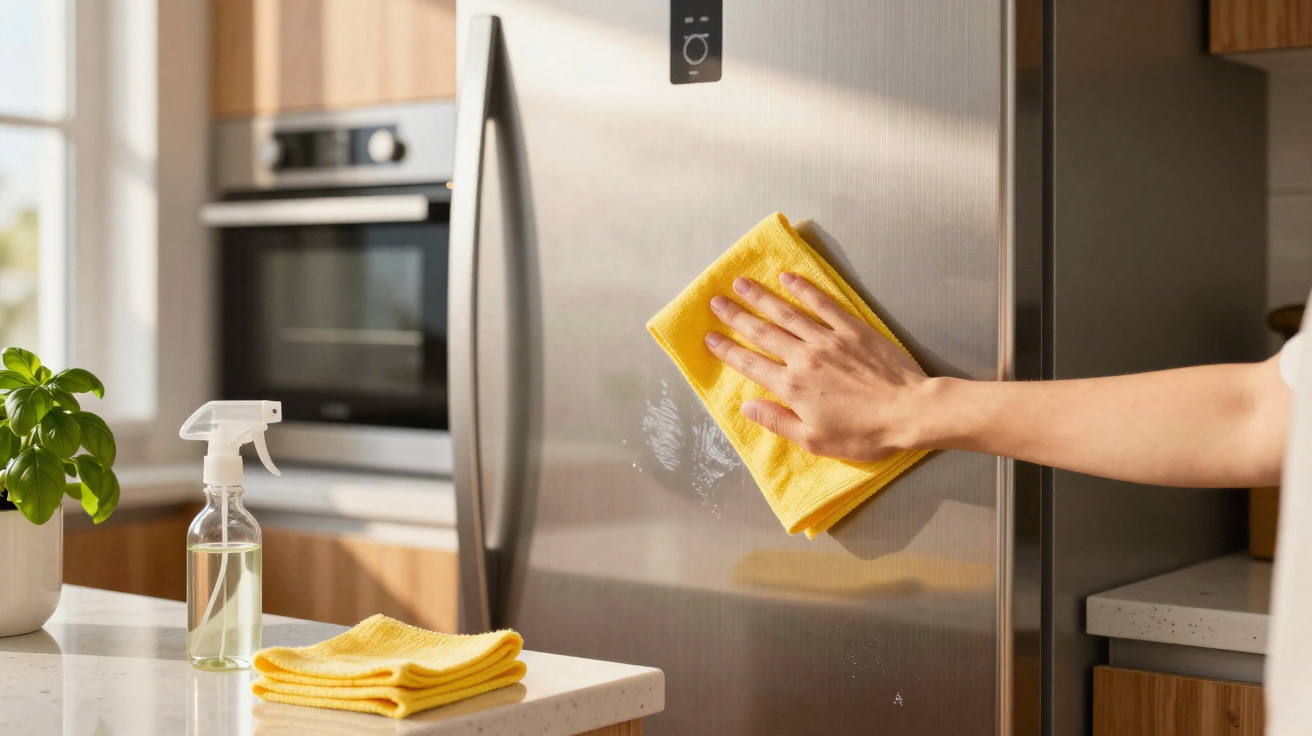
The method is uncomplicated. First remove any visible dirt: sauce splashes, grease and dust. A damp cloth with a few drops of mild washing-up liquid will do the job; always work in the direction of the stainless steel grain, rather than in circles. Next, rinse using a cloth dampened only with clean water, so that no residue remains. Finally comes the key step: put a tiny drop of oil on a dry cloth, spread it thoroughly and wipe the surface in the direction of the grain. The layer is barely visible, but it creates a gentle barrier between fingers and metal.
This is where many people go wrong. They apply too much oil, use kitchen roll that sheds lint, add vinegar to everything, or scrub too hard because they think shine comes from elbow grease. The result is a sticky, smeared surface that attracts dust and looks worse. Let’s be honest: nobody does this every day. Maintenance has to fit into real life, with children running around, deliveries arriving and food cooking on the hob. A useful approach is to make this more thorough clean part of an existing routine: after washing up in the evening or on a quiet Saturday morning.
“The difference is not the product, it is the hand,” said a domestic cleaner who works in high-end flats in Belo Horizonte. “Some people want a thousand expensive solutions, but they use an old cloth from the general cleaning and scratch everything. Stainless steel likes gentle care and microfibre.”
For an easy routine, it is worth putting together a small stainless-steel kit, kept apart from floor and bathroom cloths:
- 1 microfibre cloth for cleaning with mild washing-up liquid
- 1 dry microfibre cloth solely for drying and polishing
- 1 small spray bottle containing water and a few drops of washing-up liquid
- 1 small bottle with a little mineral oil or light cooking oil
- 1 simple label reminding you: “always wipe in the direction of the stainless steel grain”
Small choices that transform the look of the kitchen
Once the stainless steel is clean, mark-free and protected by this ultra-thin film, the kitchen takes on a different presence. The fridge reflects light more softly, the oven looks newer and the cooker hood stops being that permanently greasy, disappointing feature. Interestingly, people in the home tend to touch the surfaces less. There is a quiet respect for that finished feeling. It is rather like putting clean sheets on the bed: you think twice before sitting on it carelessly.
Some families create small, informal rules. Children open the fridge from the lower part of the door, where hands leave fewer marks. Adults avoid resting an arm against the oven front, especially when their skin is damp. Well-placed hooks and handles help considerably because they keep hands away from that central area that is always marked. One honest observation: every kitchen tells the story of the people who live in it. Stainless steel without excessive marks is not about perfectionism; it is about the satisfaction of seeing your space respond to your care.
Cleaning professionals often repeat a simple truth: miracle products sell a promise, while a straightforward routine delivers results. That principle applies to stainless steel, shower screens and any surface that needs to shine without making you a slave to cleaning. When you adopt one method and stop using random combinations of alcohol, strong degreaser, neat vinegar and abrasive sponges, the metal “settles down”. It no longer reacts unpredictably with random stains, halos or duller patches. The kitchen feels calmer, with less visual noise.
| Key point | Detail | Benefit for the reader |
|---|---|---|
| Three-stage cleaning | Mild washing-up liquid, rinse with a damp cloth and dry | Removes dirt without scratching; the foundation for any shine |
| Oil film | Tiny drop of mineral oil or cooking oil on a dry cloth | Reduces fingerprints and prolongs the ‘new’ stainless-steel appearance |
| Dedicated stainless-steel kit | Separate microfibre cloths and a defined routine | Less improvisation, better results with less effort |
FAQ:
- Question 1 Can I use any type of oil to create the protective film on stainless steel? No. Choose mineral oil intended for household use or a light, odourless cooking oil. Always use a small amount and spread it well so it does not feel sticky.
- Question 2 Does hand sanitiser damage a stainless-steel fridge? Frequent use can leave the surface dull and stained, particularly if it contains fragrance or other additives. For everyday cleaning, water and mild washing-up liquid work better.
- Question 3 Does wire wool remove scratches from stainless steel? No. It tends to create new scratches, which are even more noticeable in the light. If scratches already exist, it is best to accept them as part of normal use or seek out dedicated polishing products, used with great care.
- Question 4 How often should I apply the protective oil? In heavily used kitchens, once a week is usually enough. For lighter routines, every fortnight already makes a difference. Watch the appearance: when marks return quickly, it is time to reapply.
- Question 5 Is vinegar with bicarbonate of soda a good solution for stainless steel? The mixture may remove grease, but it increases the risk of staining and loss of shine, especially when used frequently. For kitchen stainless steel, the safest route remains the combination of mild washing-up liquid + microfibre + a thin layer of oil.




Comments
No comments yet. Be the first to comment!
Leave a Comment