
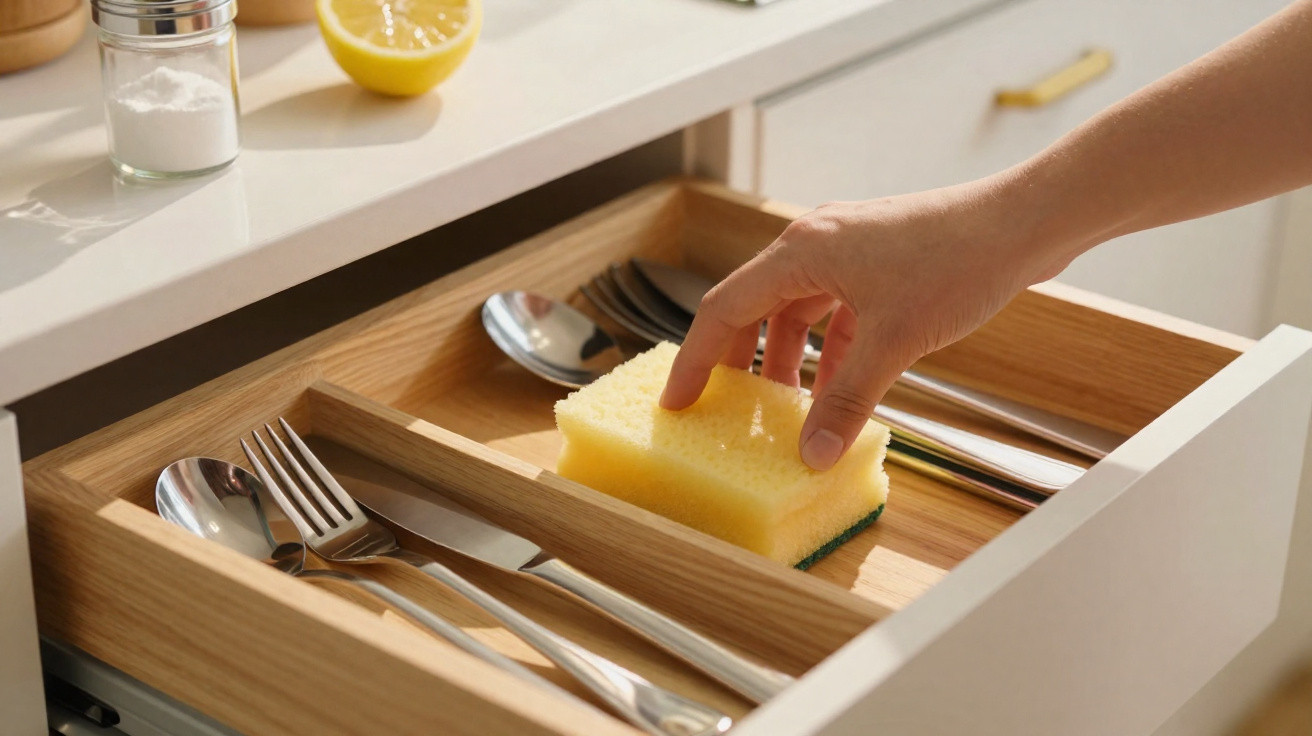
Placing a dry sponge inside the cutlery organiser has become a widely shared household trick. It can minimise dampness and unpleasant smells at the bottom of drawers, using an everyday kitchen item to help prevent mould, stains and musty odours without chemical products.
Why put a dry sponge in the cutlery drawer organiser?
The main purpose of keeping a dry sponge in the cutlery organiser is to manage moisture. Cutlery stored with even tiny water droplets still on it, along with steam from the kitchen, can leave pools of water at the base of the organiser, encouraging mould and odours.
Acting as a “subtle absorber”, the sponge can help prevent rust on lower-quality cutlery, lessen the likelihood of mould in corners and reduce damp smells. It does all this quietly, without affecting everyday use of the drawer.
Which sponge should you use and where should it go in the cutlery organiser?
For a dry sponge in the cutlery organiser to work effectively, choose one that is clean and highly absorbent. Standard kitchen sponges or cellulose sponges are generally suitable, provided they are completely dry and kept exclusively for this purpose.
Positioning makes this tip far more effective, while ensuring the sponge does not obstruct the cutlery compartments or prevent the drawer from closing. The following locations usually work well:
- In a corner of the cutlery organiser that is rarely used for cutlery;
- Under a removable divider, provided it does not affect the fit;
- At the back of the drawer, where there is more unused space;
- In a side gap of the organiser, where it can serve as an “absorption point”.
Watch a video on the Organise Without Fuss YouTube channel about using a dry sponge to retain drawer moisture and prevent rust or mould on cutlery:
https://www.youtube.com/watch?v=X2mB_7V9_kI
How often should you replace or clean the dry sponge?
Replacing the dry sponge at regular intervals is vital to keep this method both effective and hygienic. Over time, it collects not only water but also dust and tiny food particles, which can lead to unpleasant odours.
Ideally, carry out a quick check every week by gently squeezing the sponge to see whether it feels damp or has a strong smell. In heavily used kitchens, replacing it every two or three weeks is worthwhile; in drier settings, once a month may be enough. If it remains in good condition, wash the sponge with water and mild soap, rinse it thoroughly and dry it in the sun. Always dispose of any sponge with dark marks, visible mould or significant wear.
What other measures help keep the cutlery drawer clean?
Alongside a dry sponge in the cutlery organiser, a few straightforward habits can keep the drawer cleaner and tidier for longer. The aim is to pair small daily steps with quick, regular cleaning rather than relying solely on occasional deep cleans.
Dry cutlery thoroughly before putting it away, use a removable plastic or EVA liner, and leave the drawer open for a few minutes after preparing large meals to reduce moisture and staining. Cleaning the organiser each month with warm water and mild washing-up liquid, then drying it completely before returning the cutlery, extends the useful life of the cutlery organiser. Keeping one sponge solely for the drawer, rather than using it at the sink, also helps this small area remain more hygienic and free from odours.



Comments
No comments yet. Be the first to comment!
Leave a Comment