
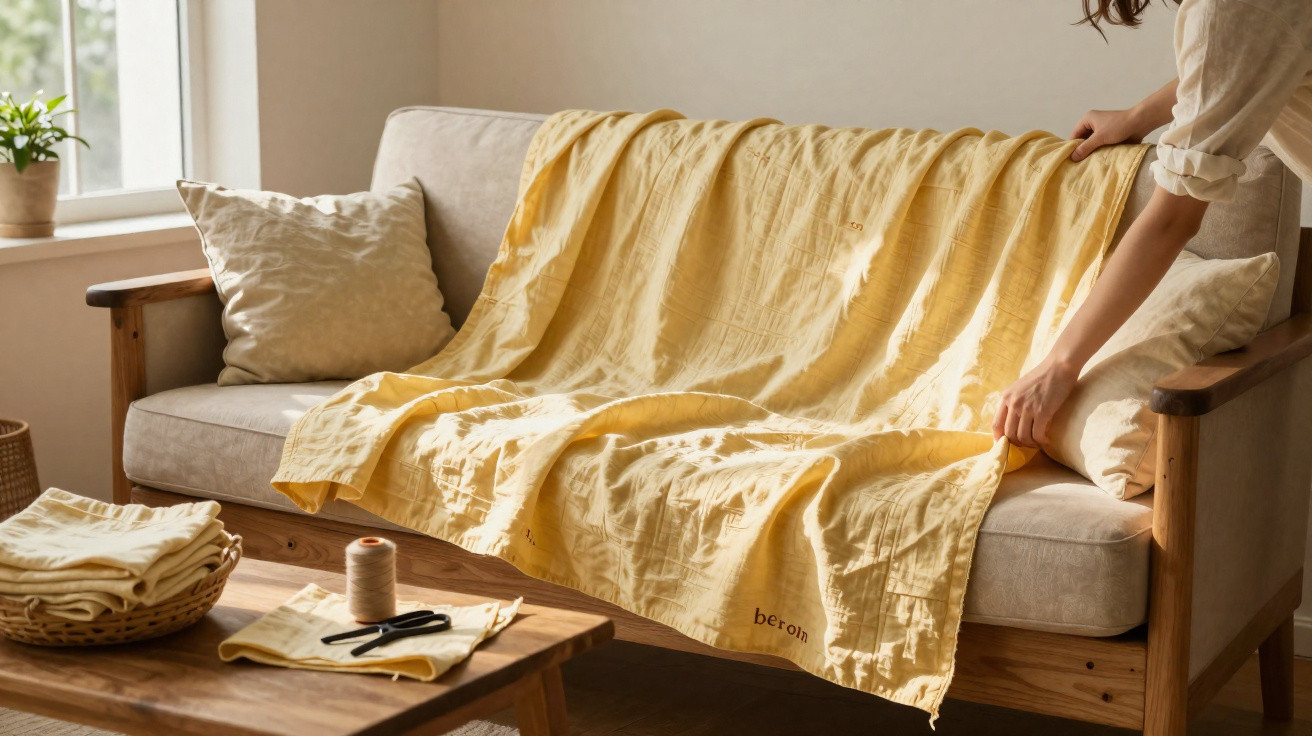
When sorting through cupboards, it is easy to spot yellowed cotton or linen sheets and immediately consign them to the textile donation bag. That is often a mistake. Beneath these unremarkable piles of fabric, there are frequently hard-wearing, high-quality textiles that can be sewn or dyed into contemporary decorative pieces with just a few simple steps – and without costly new purchases.
Why yellowed bed sheets are far too good for the donation bag
At first glance, the yellowish white can look as though the fabric is "ruined" or worn out. Yet in many cases, there is no serious wear at all: only the surface has become discoloured. The fibres themselves remain strong and can readily be put to further use.
The usual scenario is simple: a sheet goes straight from the cupboard into a donation bag or the bin. Older sheets, however, are often made to a better standard than today's inexpensive alternatives. Their threads tend to be thicker, their weave denser and their weight greater – all ideal qualities for a second life as a decorative textile.
What appears to be discarded household linen often proves to be premium material with the potential to last for decades.
Before anything leaves the house, it is worth inspecting it closely: check the quality of the cloth, look for a label and feel the material. Gently stretch the fabric and hold it up to the light to see whether it is even or whether it has become thin and brittle. Only the latter genuinely belongs in recycling.
Why bed sheets turn yellow – and what reliably helps
A yellow tinge is generally caused by several everyday influences working together. Just a few years of unsuitable care or storage can be enough.
Common causes of yellowing
- Perspiration: Salts, acids and proteins build up within the fibres.
- Detergent residue: Excess washing powder or liquid detergent leaves a film that oxidises over time.
- Fabric conditioner: It creates a "false sense of freshness" but leaves deposits behind.
- Damp storage: Bacteria and slight mould growth can discolour the fibres.
- Light and air: UV radiation alters the surface, particularly on natural fibres.
Practical tips for restoring clarity to yellowed sheets
Many yellow stains can be noticeably reduced with household remedies and the right temperature:
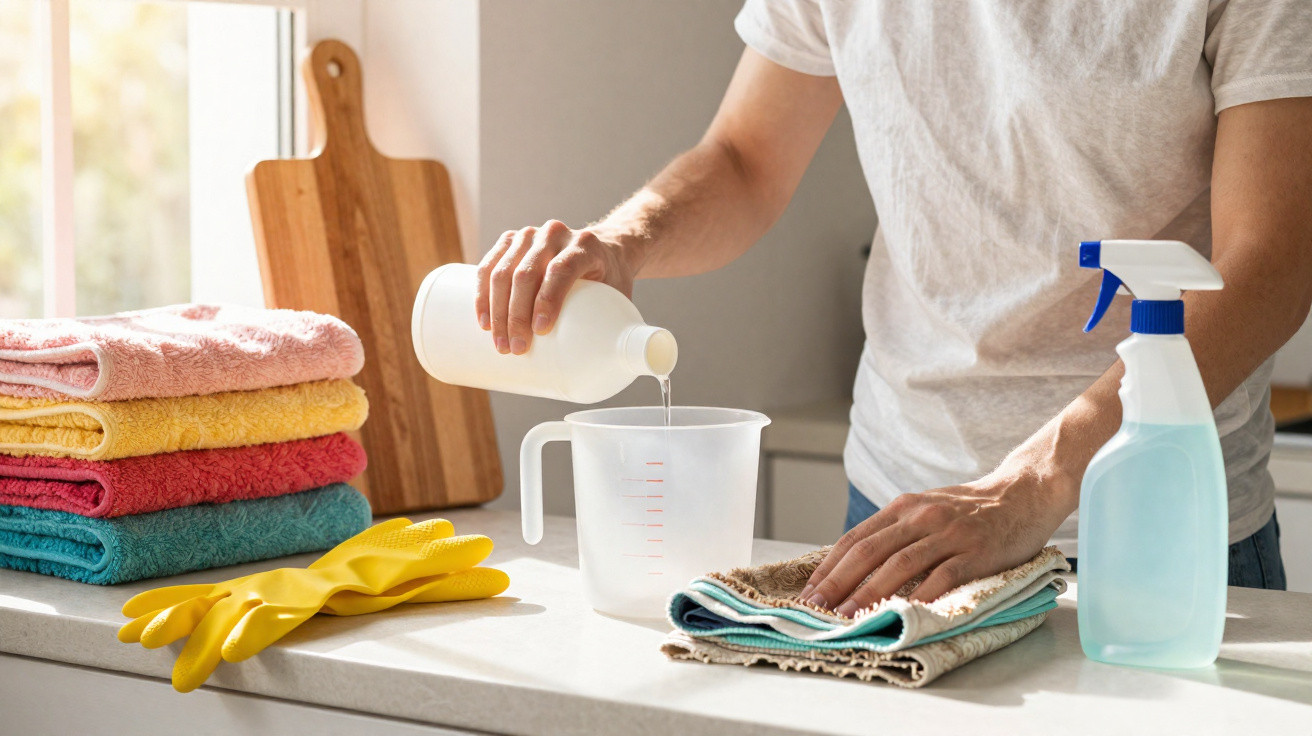
- A vinegar wash in the machine: Add one cup of clear household vinegar to a standard wash cycle. It loosens residue, neutralises odours and refreshes the white tone.
- Active oxygen treatment: Dissolve percarbonate in very hot water, soak the sheets for several hours or overnight, then wash them at 40 to 60 degrees.
- Correct dosing: Measure detergent according to the manufacturer's directions rather than adding extra "just in case". Otherwise, residue is almost inevitable.
- Skip fabric conditioner: Use vinegar or a small amount of bicarbonate of soda in the rinse cycle instead.
- Dry strategically: Where possible, dry sheets in sunlight, as UV rays act like a natural bleaching agent.
Washing sheets every one to two weeks, using detergent sparingly and ensuring thorough drying can significantly extend the life of the fabric.
The overlooked cupboard investment: linen, hemp and blended fabrics
Many homes still contain inherited bed sheets from a period when high-quality natural fibres were standard. Older linen, hemp and so-called blended fabrics are especially interesting, and are often considerably heavier than today's inexpensive cotton.
These textiles commonly have a fabric weight well above 180 g per square metre. This makes them sturdy, gives them an attractive drape and enables them to withstand mechanical strain more effectively. In such materials, yellowing is usually only surface oxidation rather than damaged fibres.
Linen, for instance, can absorb up to around one fifth of its own weight in moisture without feeling clammy. This is precisely why it is so valued for home textiles intended for long-term use, such as table linen, curtains and cushion covers.
Anyone who throws out old linen or hemp sheets is often parting with fabrics that would now be considered "luxury" when bought new.
There is also good reason to take a second look from a climate and resource perspective. The longer a textile remains in use, the more its environmental footprint per use falls. In practical terms, that means not buying new items immediately, but considering what can be made from the material already available.
Teint-Nuage: turning stains into a marbled decorative effect
For yellowed or stained bed sheets, the Teint-Nuage effect – also known as "Cloud Dyeing" – is a particularly appealing technique. Rather than trying to remove every uneven patch, it deliberately incorporates them into a cloudy pattern.
Creating the cloud look step by step
- Initial cleaning: Wash the sheet at 60 degrees with washing soda or laundry crystals to remove old finishes and deposits.
- Prepare the fabric: While still damp, loosely shape the bed sheet into a ball or roll, then secure it with elastic bands or string.
- Prepare the dye bath: Mix textile dye with warm water following the instructions, adding specialist salt if required.
- Dye the fabric: Fully submerge the fabric ball, or apply dye unevenly using a pipette or bottle to create the cloud-like structure.
- Leave to develop: Allow around three quarters of an hour, then rinse thoroughly and give the item another short wash.
The result resembles softly marbled fabric with gentle transitions – perfect for modern country kitchens, boho living rooms or Scandinavian-inspired interiors. Any small remaining marks are barely noticeable within the pattern.
What old bed sheets can be sewn into
Anyone with a sewing machine – or access to somebody who enjoys sewing – can turn one large sheet into a complete collection of home textiles.
Everyday ideas for a second life
- Large tablecloth: A wide sheet can become a rustic tablecloth, for example measuring 240 x 140 centimetres, with only a few cuts.
- Cloth napkins: Offcuts can be made into 40 x 40 centimetre squares – reusable, absorbent and much smarter than paper.
- Tea towels: Linen in particular works exceptionally well for drying glasses or as a hand towel because it sheds very little lint and dries quickly.
- Cushion covers: Elegant covers with an envelope closure or zip can be made to coordinate with the tablecloth or napkins.
- Curtains or Roman blinds: Thinner cotton sheets make a suitable light-filtering solution for windows.
With a little dyeing and sewing, a yellowed sheet quickly becomes a coordinated textile set for the kitchen, dining room or balcony.
How to identify good-quality fabric
When looking through a cupboard or browsing at a flea market, keep several points in mind before reaching for the scissors:
| Feature | Sign of quality |
|---|---|
| Weight | The fabric feels dense and substantial rather than limp. |
| Handle | Pleasantly firm but not scratchy; linen feels slightly cool. |
| Transparency | When held to the light, it is not overly see-through and the threads sit evenly. |
| Seams | They are neatly finished, with nothing coming loose when gently pulled. |
If in doubt, perform a tear test on one corner: if the cloth tears immediately and frays heavily, it may already be too badly aged. If it holds firm, it can usually still be used without difficulty.
Everyday benefits: hygiene, climate and household budget
Checking bed linen regularly and caring for it properly brings several benefits at once. Sheets that are washed more effectively and dried correctly are more hygienic, smell better and contribute to a more comfortable night's sleep. Continuing to use high-quality natural fibres also saves money on replacements over the long term.
From a climate perspective, every further use of an existing textile reduces demand for newly manufactured goods, along with the water, energy and chemicals required to make them. Linen and hemp perform particularly well here because they are robust and can serve in many forms for years – from the bed to the dining table and sofa.
Trying straightforward dyeing methods such as the cloud effect also develops practical craft skills along the way. Mistakes are not a disaster here; they are often the beginning of an individual look. Yellowed bed sheets no longer end up silently in the donation bag, but become fabric projects that guests will talk about and that will bring enjoyment for a long time.

Comments
No comments yet. Be the first to comment!
Leave a Comment