
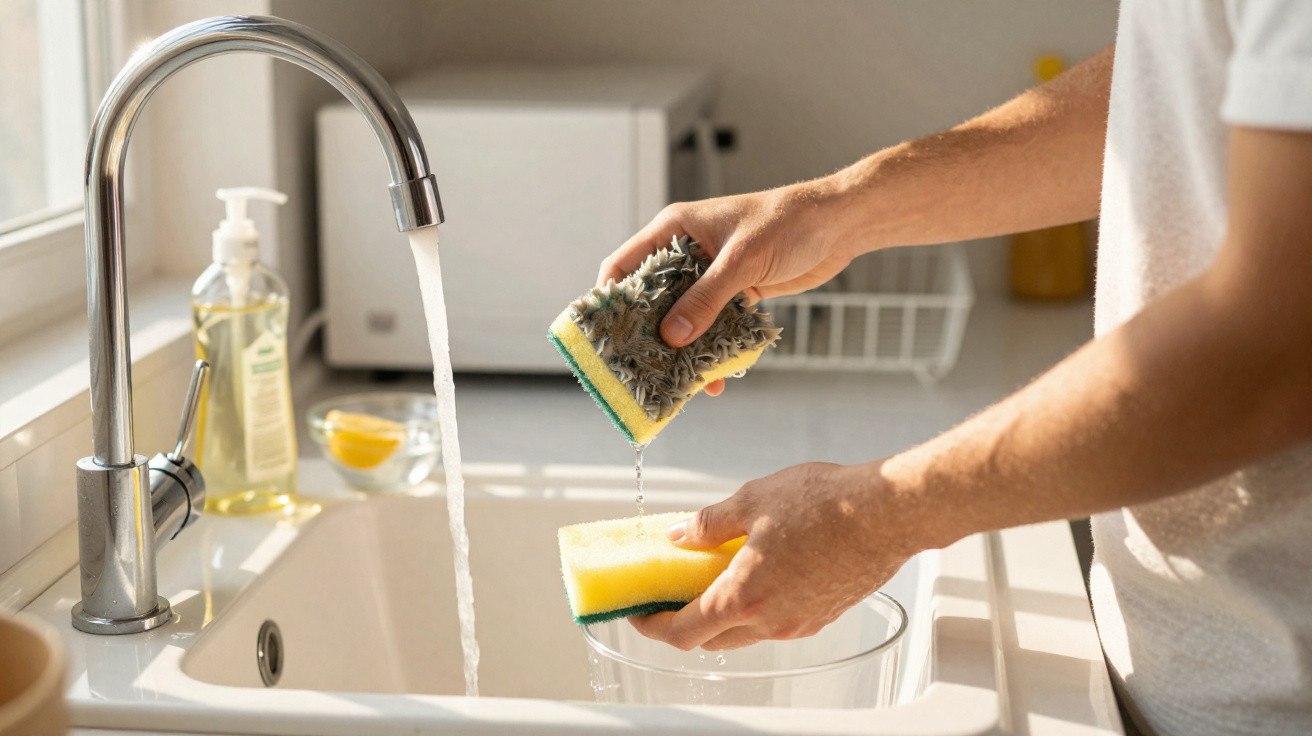
The washing-up sponge is a standard part of many kitchen routines, yet it is also among the items most likely to harbour microorganisms. Its continual exposure to food residue, grease and moisture creates favourable conditions for bacteria and fungi to grow, making correct use, daily cleaning and regular replacement essential.
Why does the washing-up sponge build up so many bacteria so quickly?
A washing-up sponge has a porous structure containing numerous tiny spaces that trap water, food particles and washing-up liquid. Each pore can provide shelter for microorganisms, offering a damp, nutrient-rich setting with limited airflow in which they can multiply rapidly.
It also comes into contact with many different surfaces, including pans, plates, knives, chopping boards and the sink itself. As it moves between these areas, the sponge may carry bacteria with it and spread them rather than remove them, particularly when used in warm water that does not reach a disinfecting temperature.
How often should you replace a washing-up sponge at home and in professional kitchens?
How frequently a washing-up sponge should be changed depends on how heavily it is used and the daily care it receives, but its lifespan is generally short. In household kitchens with regular use, it is advisable to replace it every 7 to 10 days. In homes where meat, fish and eggs are prepared frequently, the interval may need to be shorter still.
In professional settings, such as restaurants and snack bars, sponges are generally replaced every day or at very short intervals, in accordance with food hygiene regulations. To make this easier to manage and prevent it being overlooked, many people use simple routine-control methods:
- Choose a fixed day each week to replace the sponge.
- Keep more than one sponge and assign each one a purpose (washing-up, hob, surfaces).
- Mark the sponge with a permanent pen and the date it was first used.
What signs show that a washing-up sponge has reached the end of its useful life?
Even before the suggested replacement date, visual signs and odours can show that a washing-up sponge is no longer suitable for use. The earliest warning is often a strong smell, commonly sour or musty, caused by bacteria and fungi feeding on the trapped residue.
Other frequent signs include pronounced discolouration, dark or greenish marks, a worn texture and sections that are crumbling away. A sticky feel, reduced lather when using washing-up liquid and a lingering sense of dirtiness after rinsing also indicate that it is time to throw the sponge away rather than try to restore it.
How can you clean a washing-up sponge and reduce daily contamination?
Between replacements, a few measures can help lower the number of microorganisms in a washing-up sponge and reduce the risk of cross-contamination. No home method can guarantee complete sterilisation, but certain habits make everyday use safer in domestic kitchens.
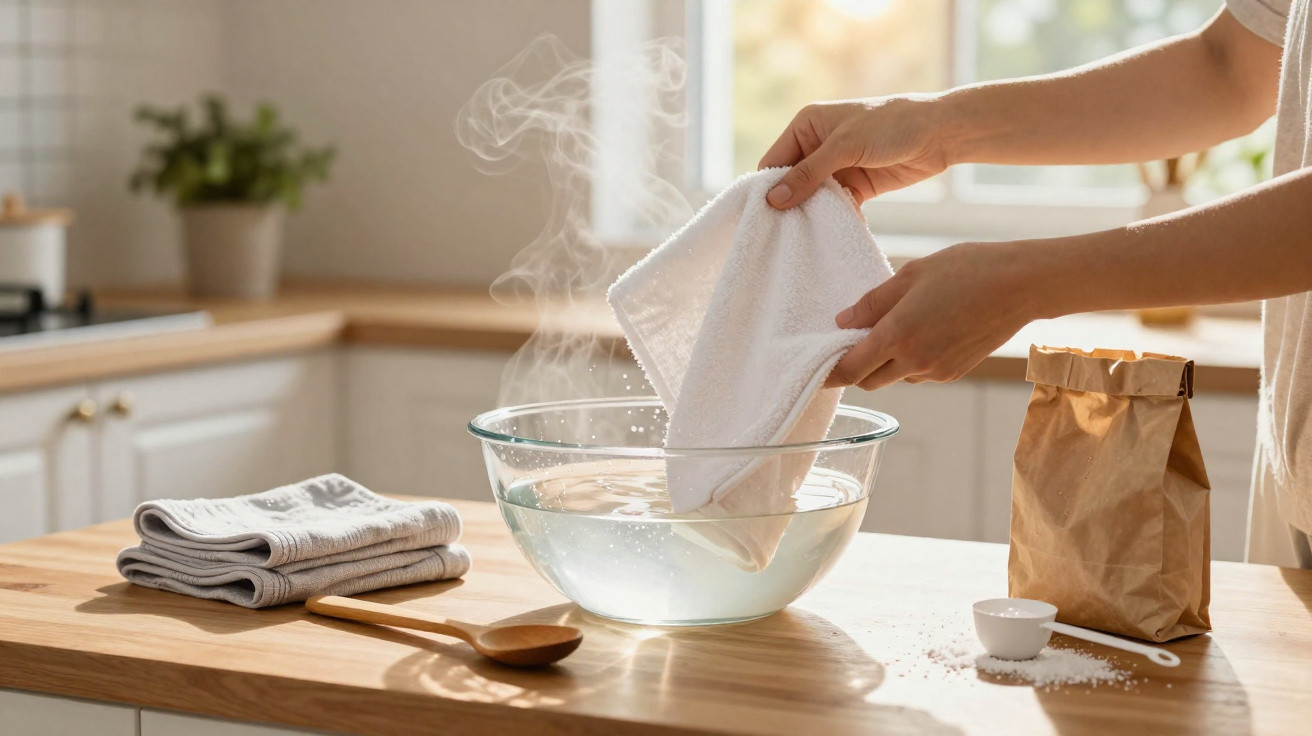
Rinse the sponge thoroughly after use, squeeze out excess water and leave it to dry in a well-ventilated place, rather than in a closed container. Boiling the sponge for a few minutes may reduce some microorganisms. Using separate sponges for different tasks, such as washing-up, the hob and the sink, also limits the transfer of dirt around the kitchen and supports the safety of food prepared at home.
Comments
No comments yet. Be the first to comment!
Leave a Comment