
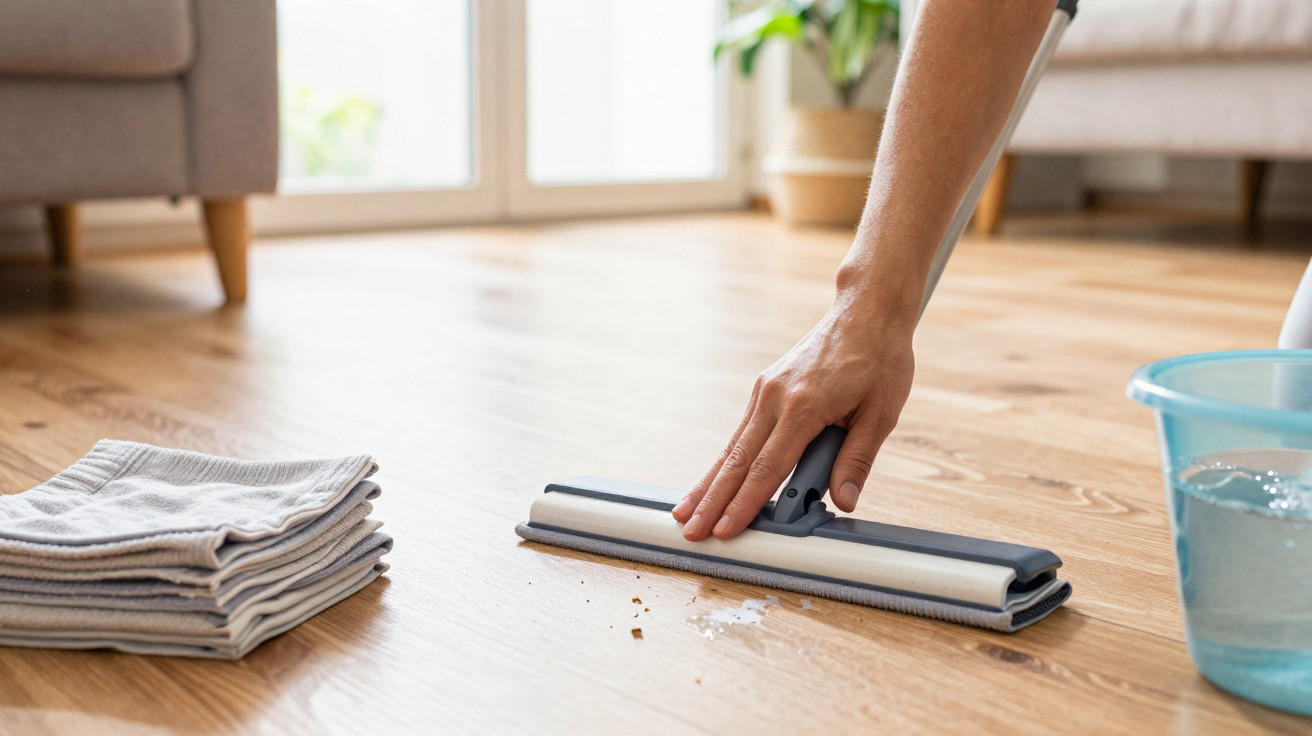
Reusing household items is becoming increasingly prominent in home-maintenance routines, offering creative and highly economical solutions. Securing unused fabric to the base of a squeegee handle can transform conventional sweeping, creating an excellent reusable cloth.
Why does fitting fabric to a squeegee make daily cleaning easier?
Firmly attaching a piece of fabric to the lower end of the handle stops the accessory from continually slipping during repeated movements. This straightforward approach helps collect small amounts of built-up debris, removing fine dust efficiently.
What is more, the wrapped structure reaches awkward corners and glides smoothly close to vertical surfaces. This clever technique holds dirt more effectively, making daily cleaning considerably quicker.
What makes old socks such remarkable cleaning tools?
These seemingly useless items conceal an impressive ability to absorb and stay in place, which can transform your routine… Read more
How does the fabric hold particles and strands from the floor?
The texture of textile fibres attracts debris that would normally become airborne while sweeping throughout the home. Gentle friction against the surface provides immediate retention, easily gathering loose pet hair across residential rooms.
As a result, hair strands and fluff remain trapped in the reusable fabric instead of spreading back over the clean floor. Cleaning becomes much more practical and thorough, ensuring excellent continuous removal without the need for expensive disposable cloths.
Below is a video from the YouTube channel Se vira nos 50 – Recipes and Tips that explores the points discussed in this topic in greater depth:
Which surfaces and areas benefit from this technique?
Smooth wooden, vinyl and ceramic floors can receive this care without harsh friction or unwanted scratches. The fabric moves gently over the floor, preserving its natural sheen and keeping the surface protected throughout the process.
Hard-to-reach areas, including spaces beneath low furniture and narrow gaps, can be cleaned without excessive effort. The flexibility of the wrapped material ensures a close fit, reaching hidden dirt in the home’s most neglected corners.
Essential Kit
Benefits of use
Here are the main benefits of adding this practice to your routine:
- A drastic reduction in the unnecessary disposal of used fabrics;
- Genuine savings from replacing expensive disposable cloths;
- Easier cleaning of narrow corners and low skirting boards.
How can you optimise the use of lightly dampened fabric?
Applying a fine mist of water to the cloth enhances its ability to attract dust particles. Controlled moisture prevents dirt from dispersing into the air, ensuring efficient cleaning in just a few minutes each day.
This simple spray holds debris in the fabric, preventing it from returning to the floor as the tool passes over it. The method is ideal for quick cleaning before visitors arrive, keeping the house clean with complete practicality.
Follow these simple steps to prepare the tool before cleaning:
- Secure the clean piece of fabric to the end of the squeegee base;
- Spray a small amount of water over the textile surface to create light moisture;
- Move the tool gently across the floor using continuous strokes.
What are the advantages of reusing materials for cleaning?
Choosing to reuse old textile items directly helps reduce waste accumulating in the environment. This sustainable alternative turns worn objects into excellent household allies, encouraging conscious consumption at home.
Alongside the environmental benefits, this practice creates considerable financial savings over months of continued use. Investing in smart homemade solutions simplifies daily tasks and delivers excellent results with reusable resources always close at hand.

Comments
No comments yet. Be the first to comment!
Leave a Comment