
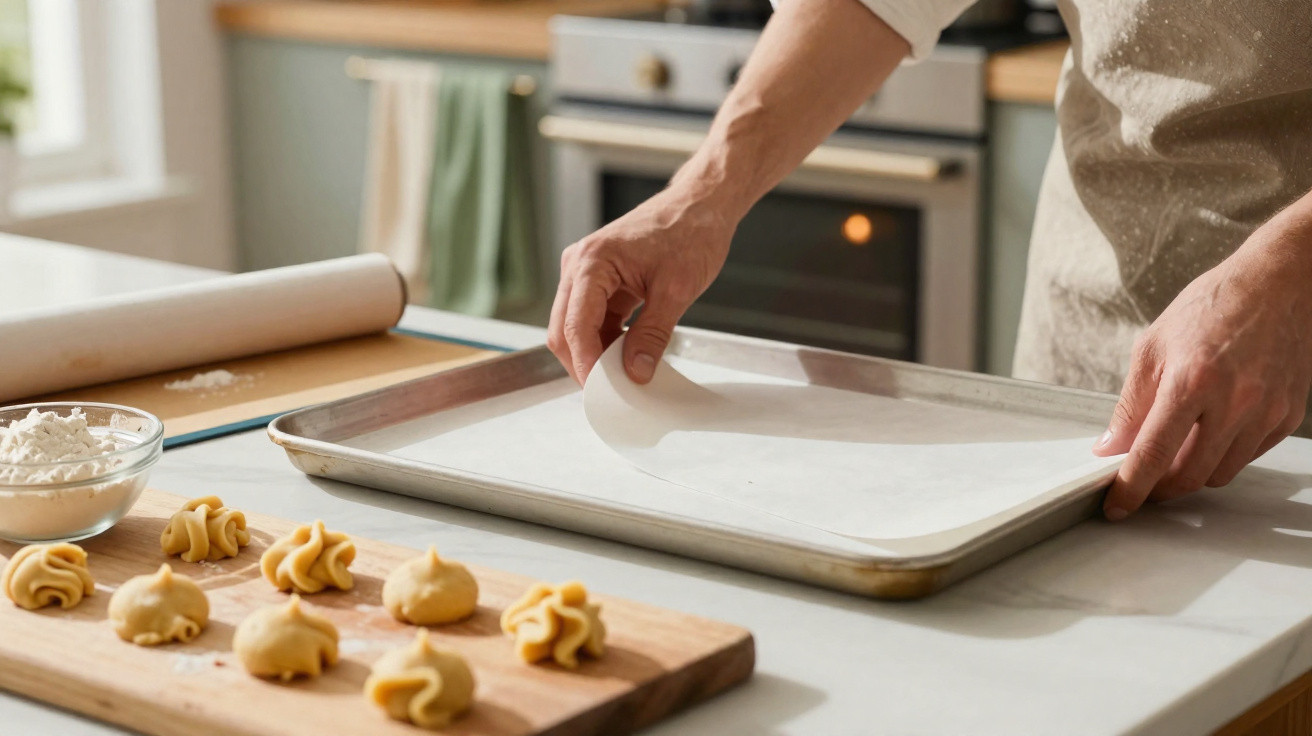
In everyday cooking, many people wonder whether the two sides of baking parchment differ and whether this can affect the outcome of recipes. The question commonly arises when lining tins for cakes, biscuits or roasted vegetables, and knowing how this material is made and responds to heat helps establish which side should touch the food in each preparation.
What is baking parchment, and why does it seem to have two different sides?
Baking parchment is made from cellulose treated to withstand high temperatures and is often given a silicone coating. This layer provides its non-stick properties and makes the material suitable for direct contact with food in the oven.
On some rolls, silicone is applied to only one side, while other papers are silicone-coated on both sides. Where just one surface is coated, it is generally smoother and shinier, whereas the reverse is more porous. With double-sided silicone-coated versions, there is almost no visible distinction, so either side may be placed against the food.
Watch a video on Chef Taico’s YouTube channel covering kitchen curiosities and the correct way to use utensils and protective papers in baking trays:
https://www.youtube.com/watch?v=uK8n_b_2jxE
Does the correct side of baking parchment affect recipe results?
With baking parchment that has a silicone coating on one side only, selecting the surface can influence the result. Placing food on the uncoated side makes it more likely to stick, which can make it harder to remove delicate biscuits, meringues and thin doughs from the tray.
For parchment coated with silicone on both sides, performance is usually the same whichever side is used. What genuinely matters is the combination of factors such as oven temperature, total baking time and the fat content of the mixture, rather than the side of the paper selected.
How should baking parchment be used correctly for different preparations?
As a general rule, the smoother or shinier side should be placed against the food when the paper is silicone-coated on only one side. This is especially useful for recipes requiring accuracy in shape or texture, including cookies, meringues, Swiss rolls and very thin doughs.
For everyday oven recipes, a few practical measures can help make better use of baking parchment while reducing mess and waste. Here is how to adapt its use in common situations:
- Baking biscuits and meringues: place the silicone-coated side facing the food, with no need to grease it.
- Lining a cake tin: cut the paper to fit the base, with the non-stick surface facing upwards; the sides can be greased and dusted with flour.
- Roasting vegetables and meat: position the smooth side against the food; fatty recipes do not require extra oil on the paper.
- Making parcels (papillote): fold the paper with the non-stick side facing inwards, leaving room for steam to circulate.
Which materials can replace baking parchment in the kitchen?
Alongside baking parchment, other kitchen materials can help manage sticking and heat resistance. Each has its own properties, so using the right one affects texture, moisture and how easy it is to clean up after cooking.
Aluminium foil is useful for retaining moisture in roasted dishes, but it is not non-stick; silicone baking mats, such as Silpat, are reusable and completely non-stick; non-stick tins in good condition may remove the need for paper; and thicker, reusable versions of baking parchment are also available. By understanding these alternatives, cooks can select the most practical option for each recipe, keeping food neatly shaped and ensuring baked items release easily.

Comments
No comments yet. Be the first to comment!
Leave a Comment