
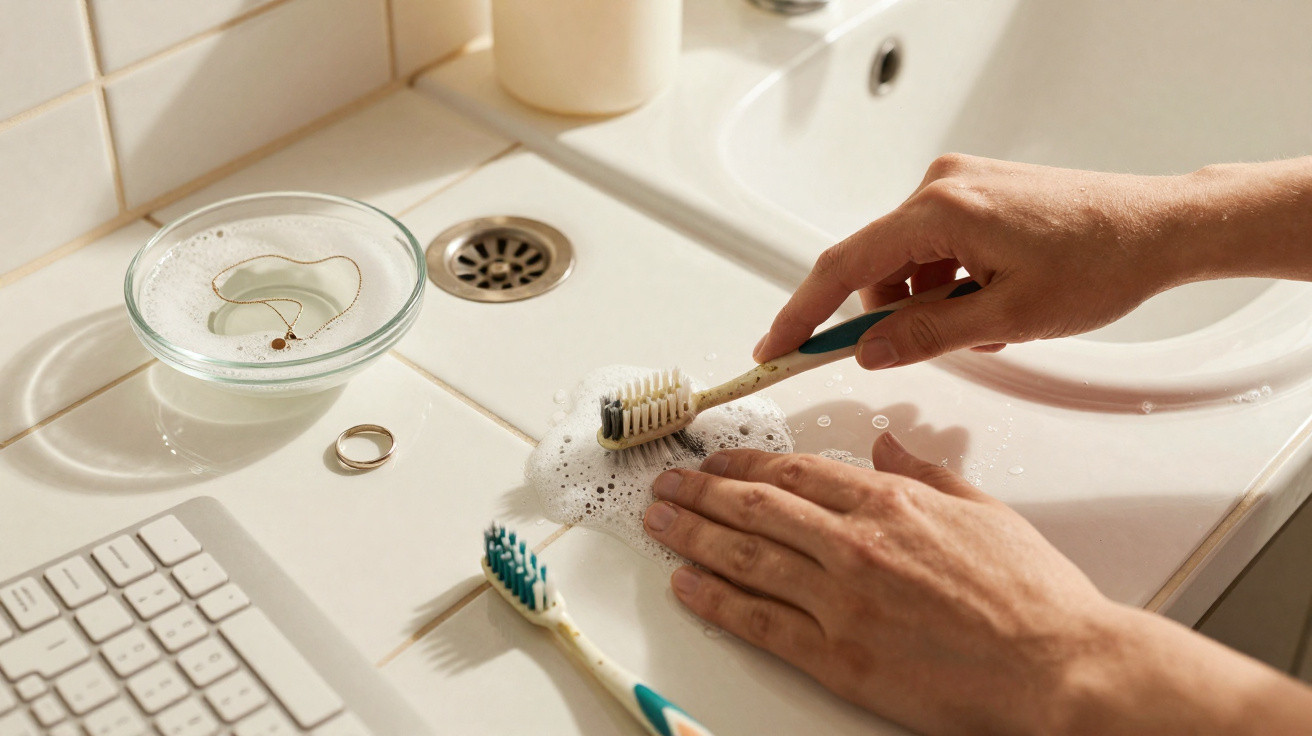
Before throwing a used toothbrush away, consider setting one or two aside for household cleaning. Its compact shape and bristles can reach gaps that cloths and sponges rarely access, turning an item that has lost its original purpose into a practical tool for grout, drains, keyboards and even certain items of jewellery.
Why does an old toothbrush work so well for cleaning?
Its main benefit comes from the combination of a small head and tightly packed bristles. While a sponge is suited to larger surfaces, a toothbrush focuses pressure on a small area and can get into tiny uneven sections, corners and joins.
Before reusing it, wash the toothbrush thoroughly, allow it to dry completely and mark the handle so that nobody uses it again for personal hygiene. Toothbrushes set aside for the bathroom should not later be used on personal belongings either.
How can you use a toothbrush to clean grout and drains?
Grout lines and drain edges collect residue precisely in places that are difficult to reach. A toothbrush lets you work directly on these areas while using only a small amount of the appropriate cleaning product:
- Apply a cleaner that is suitable for the surface to the grout;
- Scrub with short strokes along the lines between the tiles;
- Use the tip of the toothbrush in corners close to the walls;
- Around the drain, remove hair and larger debris first;
- Brush the edges and narrow gaps before rinsing;
- Keep this toothbrush exclusively for bathroom cleaning tasks.
Can a toothbrush help to clean a keyboard?
Yes, provided that it is entirely dry. With the computer switched off and unplugged, the bristles can lift dust and small particles from between the keys, particularly from spaces a cloth cannot reach.
The key precaution is not to spray liquids directly on to the keyboard or dip the toothbrush into cleaning products. For electronics, it is most effective as a dry-cleaning tool, used with gentle movements to avoid loosening or damaging delicate keys.
How can you reuse a toothbrush for cleaning jewellery?
A soft-bristled toothbrush can reach the details of some jewellery, particularly raised patterns and small spaces where cosmetic residue builds up. However, not every material can withstand water, washing-up liquid or brushing:
- Choose toothbrushes with soft bristles that have already been thoroughly cleaned;
- Brush gently, without pressing on stones or settings;
- Avoid brushing pearls, opals and other delicate gemstones without specific guidance;
- Do not use abrasive products on plated pieces;
- If stones are glued in place, avoid soaking the jewellery;
- If in doubt, follow the manufacturer's recommendations or consult a jeweller.
When should the toothbrush finally be thrown away?
Reuse has its limits too. Once the bristles are badly splayed, broken or saturated with residue that can no longer be removed, the toothbrush becomes less effective and may spread dirt instead of lifting it away. The same applies to toothbrushes used with strong products, which should remain dedicated to one purpose only.
Keeping an old toothbrush for cleaning is a straightforward way to extend the usefulness of something that would otherwise be discarded immediately. Grout, drains, keyboards and jewellery details demonstrate how a small object can take on new roles around the home because it reaches places that almost no cloth can access.
Comments
No comments yet. Be the first to comment!
Leave a Comment