
The first time you notice it, your mind briefly pauses.
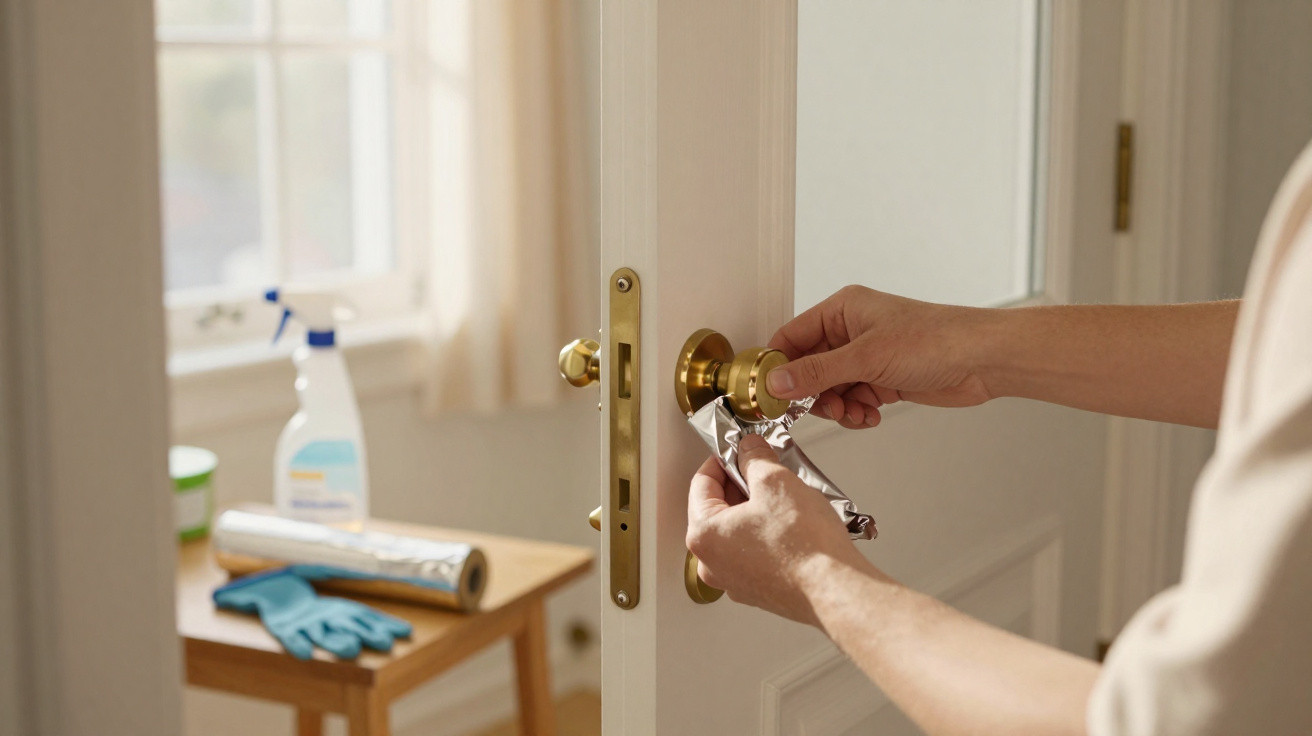
A completely ordinary front door on an entirely ordinary street has a rumpled strip of aluminium foil tightly wound around its handle. It is neither festive decoration nor a prank: simply a piece of kitchen foil catching the daylight like a small distress signal.
Then you notice one two houses away, followed by another in the next road. Somebody brings it up in the building WhatsApp group, while another person insists they saw the same thing on TikTok. Before long, one question has taken hold: what is happening with all this foil?
You carry on walking, but cannot shake the sight of it. It is an inexpensive supermarket roll twisted around the spot every hand touches. The idea seems makeshift and almost too basic to have any significance. Still, it is quietly altering several things at once.
There is a reason this glinting strip is turning up, and it is not merely a quirky choice.
Why aluminium foil is appearing on more and more door handles
After spotting it a few times, it becomes easy to see the pattern. Aluminium foil on door handles is most common in similar settings: crowded apartment blocks, student accommodation, shared workplaces and older homes with temperamental locks. These are doors with a rapid flow of life and constantly changing hands.
Hygiene is one part of the explanation. Following the pandemic, high-touch surfaces such as handles became minor villains in our collective imagination, and that association has not simply disappeared. Foil wrapped around a handle provides an obvious barrier that takes seconds to replace: a low-tech kind of “reset button” for anyone conscious of germs.
There is a subtler psychology involved, too. In its slightly ungainly fashion, a band of foil announces that this door is looked after. It suggests that somebody has considered what takes place at the exact point where the outside world meets a private space.
A London property manager told me that she first saw the habit in an older block where delivery drivers and cleaners came and went constantly. The communal entrance handle was perpetually smeared, a little sticky and endlessly used. One tenant began replacing its foil covering every few days. At first, people rolled their eyes. Afterwards, they followed suit.
After a month, half the flats had adopted their own approach. Some used a plain, rough wrap, while others made immaculate smooth covers. One resident even cut small designs into the foil, turning it into a homemade craft project. That door generated fewer maintenance reports: there was less dirt and fewer complaints about “gross” marks on the handle.
The practice is not confined to cities. On suburban cul-de-sacs, parents have started wrapping the back-door handle used by children racing in and out of the garden, particularly if somebody at home is unwell. They may renew the foil each morning and evening, making a small but unexpectedly comforting ritual of it. It is not a miraculous protective shield, only a routine that offers a little sense of regained control.
In practical terms, aluminium foil provides a cheap, throwaway outer layer for a surface touched hundreds of times daily. Treat it as a temporary handle covering that can be removed as soon as it begins to look worn. This has three unexpectedly significant results.
First comes hygiene: foil itself is not magical, but changing it often greatly shortens the period in which one dirty surface remains in use. Second is damage limitation: old handles that are peeling, chipped or rusty no longer leave paint flakes or rust on users’ hands. Third is awareness: foil’s mere presence makes people stop for a split second, and that tiny pause can encourage cleaner hands, gentler movements and slightly more regard for a shared area.
There is also the deterrent possibility that people discuss quietly in online forums. A newly wrapped, gleaming handle may imply that somebody is monitoring the property, replacing things and paying attention. To opportunistic intruders searching for the most neglected-looking home in a street, that understated sign of vigilance could steer them elsewhere, even where security was never the reason for applying the foil.
How this aluminium foil door-handle trick works in everyday life
The basic technique could hardly be simpler. Pull off a strip of aluminium foil roughly the length of your hand and slightly wider than the handle. Wind it firmly around the section people grip, using your thumb to smooth it down and avoid large creases or sharp edges. Press the ends together securely, allowing the foil to stick to itself.
Rounded handles may need two shorter overlapping pieces, arranged a little like scales. A single longer strip will generally suit a bar-style handle. Some people prefer to fold the foil once before using it, which makes the covering stronger and tidier. The entire task takes under a minute, and that is part of the appeal.
Its real value lies in what follows: replacing the foil. In a busy corridor, that might mean every few days; in a peaceful household, once a week; or immediately after illness has moved through the family. It becomes a modest domestic prompt, a quick check that says, “Time for a fresh layer.”
This approach is particularly useful in homes where many people touch one handle: student flats, communal kitchens, homes with children and visiting rooms in care homes. The foil acts as a visible time marker. When it is ripped, dull or heavily dented, it is clear that many fingers have used it since the previous replacement.
Psychologically, its effect can be surprisingly strong. A handle that plainly looks freshly covered makes people pause before grasping it. They may wipe their hands on a sleeve, use that sleeve to operate the handle, or simply become aware that many others have touched the same place. Behaviour changes through these minute, almost imperceptible actions, which rarely appear in statistics but can still matter in daily life.
Naturally, there are ways to do it badly. Foil applied too loosely will crease, slip and frustrate everybody opening the door. Make the layer too thick and the handle feels unusual, causing users to turn it harder and, ironically, wear it out more quickly.
Let’s be honest: nobody really keeps this up every day. Most people begin enthusiastically, forget for a week, and then suddenly find a forlorn, shredded piece of foil still hanging on. The important thing is not perfection but routine. Link the task to something already familiar, such as putting out the rubbish, cleaning the kitchen or locking up at night.
Expectations also need to be realistic. Foil on a handle will not sterilise a home or take the place of proper cleaning. It does not instantly destroy viruses on contact. Treated as a silver bullet, it will only disappoint. Instead, regard it as an inexpensive, low-effort nudge that improves many small details: less grime, fewer smudges and greater awareness of a shared touchpoint that is normally overlooked.
“What surprised me wasn’t the cleanliness,” says Ana, a nurse who started wrapping the handle to her elderly father’s room. “It was how much calmer he felt. He’d say, ‘I know you were here, I can see you changed my handle.’ The foil became proof that someone was looking out for him.”
That is the emotional dimension behind the trend. To the touch, foil feels cooler, cleaner and almost clinical. Visually, it interrupts the familiar routine. Returning home late, when a porch light catches that silver band, can create the impression that the home is not simply running on autopilot. Somebody has carried out this small, almost affectionate act.
- What it does: Provides a visible, disposable outer layer on a high-touch surface.
- What it doesn’t do: Take the place of handwashing, thorough disinfecting or fundamental security precautions.
- Who it helps most: Busy households, shared environments, carers and people who appreciate visual reminders.
- Biggest benefit: It combines hygiene, awareness and quiet reassurance in a single 30-second action.
Why this small ritual can feel far more significant than it is
In theory, wrapping a door handle in aluminium foil is insignificant: a scrap of kitchen material doing a job it was never intended to do. Yet the language people use in forums, group chats and comment threads tells a different story. It often sounds unusually protective, even faintly proud.
On an exhausting weekday evening, spending a minute smoothing foil over cold metal can feel like marking a faint boundary between disorder outside and care within. It is a low-tech ritual performed at the threshold. Everyone knows the moment when the front door finally clicks closed and the weight of the day seems to fall away. Using a handle that has visibly been cared for strengthens that sensation: this is my space, and somebody has thought about it.
The idea is also highly shareable. It works neatly in a short vertical video: a before-and-after shot of a dirty handle made shiny by its foil cover, perhaps captioned “my weird house rule that actually works.” That visibility sends the practice bouncing from home to home, until a small and slightly eccentric hack begins to resemble a quiet collective experiment in living together.
| Key point | Detail | Why it matters to the reader |
|---|---|---|
| Hygiene boost | Foil forms a disposable layer over a high-touch surface | It limits lingering grime and makes resetting the handle fast and inexpensive |
| Psychological signal | Bright, newly wrapped handles communicate active care and attention | It makes homes appear better looked after and may gently discourage casual intruders |
| Emotional ritual | Replacing foil becomes a small, repeatable caring action | It brings comfort, routine and visible evidence that somebody is looking after the space |
FAQ:
- Does aluminium foil on door handles actually kill germs? Not on its own. Aluminium is not naturally strongly antimicrobial in the way copper is. Its value comes from replacing a disposable surface regularly, so dirt and germs are not left on the same handle for days.
- How often should I change the foil on my door handle? Every few days is a sensible routine in a busy home or shared corridor. In a quieter household, once a week, or after an illness has passed, is generally enough to notice a difference.
- Can foil on door handles prevent burglaries? Foil by itself will not stop a determined intruder. It may quietly indicate that a property is occupied and actively looked after, which could make an opportunistic person hesitate, but it is no substitute for proper security.
- Will aluminium foil damage my door handle over time? Short-term use should not cause issues on most modern metal or coated handles. If a handle is antique, fragile or already corroded, test a small patch first and avoid keeping foil on it for extended periods.
- Is this better than using disinfectant wipes or sprays? It is not a contest. Wipes and sprays clean the existing handle, whereas foil supplies a fresh surface that can be removed. Many people find that the best approach is combining them: clean occasionally and replace the foil more often.
Comments
No comments yet. Be the first to comment!
Leave a Comment