
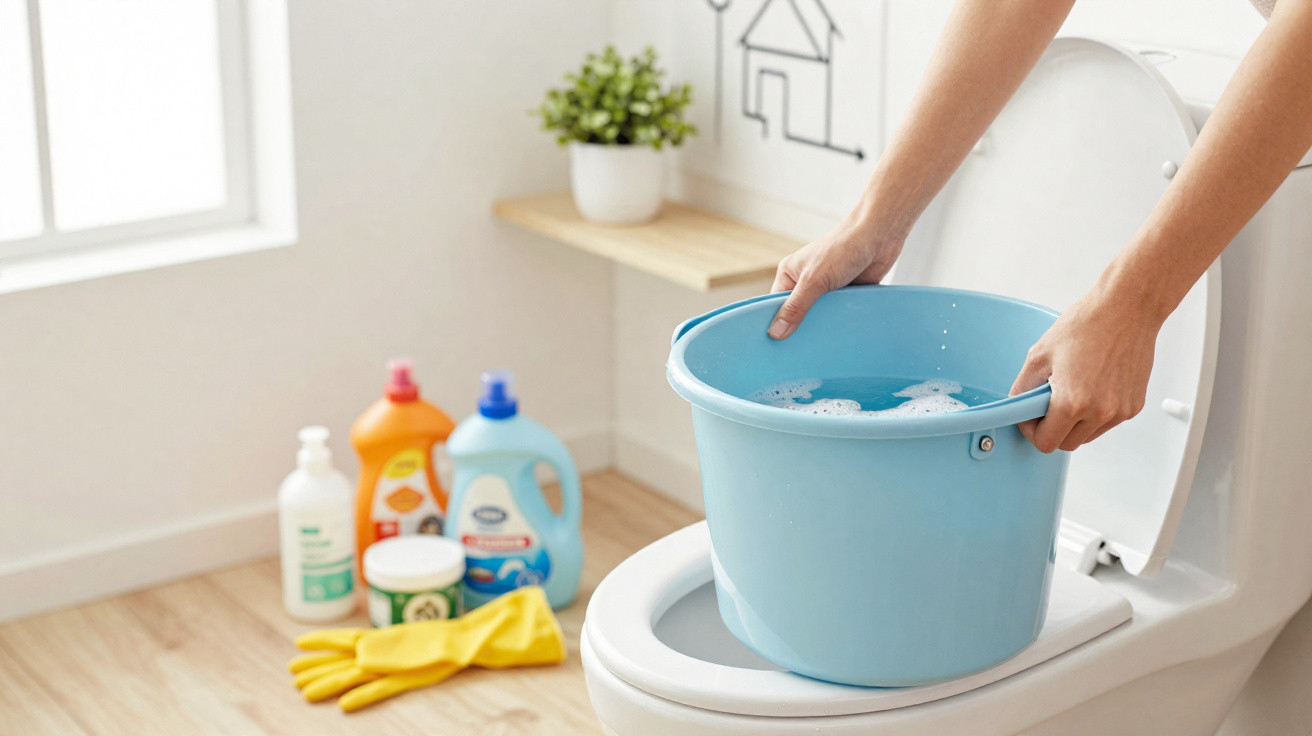
Pouring soapy water into the toilet may seem harmless, yet it is not always the right option for pipework, a septic tank or the sewerage system. Very small, highly diluted amounts will usually flush away without much effect. However, water containing large amounts of laundry detergent, fabric conditioner, bleach or cleaning residues can create foam, smells, build-up and bacterial imbalance in septic systems.
When can soapy water be poured into the toilet?
Soapy water may be poured into the toilet on occasional occasions if it is thoroughly diluted and contains no grease, paint, solvents, concentrated bleach or heavily fragranced products. For instance, a small bucket of water from straightforward washing is generally less troublesome than a thick solution of laundry detergent.
The key precaution is not to use the toilet as a cleaning drain. It is designed for human waste, suitable toilet paper and flush water; regularly putting other waste into it raises the likelihood of blockages and faults.
Why does laundry detergent require greater care?
Laundry detergent may contain surfactants, fragrances, bleaching agents, enzymes and additives that produce substantial foam as they move through toilet water. The risk is lower when a small amount is diluted, but excessive quantities can interfere with flushing and leave deposits on the inside surfaces of the pipes.
The concern is greater in homes with a septic tank, as harsh cleaning products can disrupt the bacteria that break down organic matter. Specialist septic-system sources advise choosing biodegradable, low-foaming products and using them sparingly.
Which liquids should not be poured into the toilet?
Some mixtures look like ordinary dirty water, but they can harm plumbing, affect a septic tank or contaminate the sewerage system. The toilet should not be used for products that harden, stick to surfaces, react chemically or destroy microorganisms that are useful in waste treatment.
- Water containing paint, solvent, thinners, varnish or oil.
- Water containing cooking grease, food scraps or sour milk.
- Mixtures with large amounts of bleach, chlorine or concentrated disinfectant.
- Water with a large quantity of fabric conditioner, which may leave oily residues.
- Chemical drain unblockers, unless professional guidance has been provided.
How should cleaning water be disposed of correctly?
The most suitable disposal method depends on the type of dirt involved. Water used only to wash floors with mild soap and little foam can go into an appropriate drain, where local drainage rules allow it. Liquids containing strong cleaning products, paint, oil or solvents require specific disposal, as they do not belong in either the toilet or an ordinary drain.
To limit bathroom risks, follow a safer routine:
- Use only a small amount of soap or detergent in cleaning water.
- Avoid emptying large buckets into the toilet in one go.
- Thoroughly dilute any foamy water before any permitted disposal.
- Do not mix chlorine with other cleaning products.
- In homes with a septic tank, select products compatible with septic systems.
What is the safest way to prevent problems?
The safest approach is to keep the toilet for its intended purpose and use drains, utility sinks and appropriate disposal routes for cleaning water. Extra care is necessary where a home has a septic tank, because too much detergent, disinfectant or antibacterial product can upset the system’s balance.
If the water is only lightly soapy and contains no hazardous residues, occasional disposal in the toilet is likely to be less concerning. Nevertheless, to protect pipework, seals, the grease trap, sewerage and the septic tank, the practical rule is straightforward: the more chemicals, foam, grease or strong smell a bucket contains, the less suitable it is for the toilet.
Comments
No comments yet. Be the first to comment!
Leave a Comment