
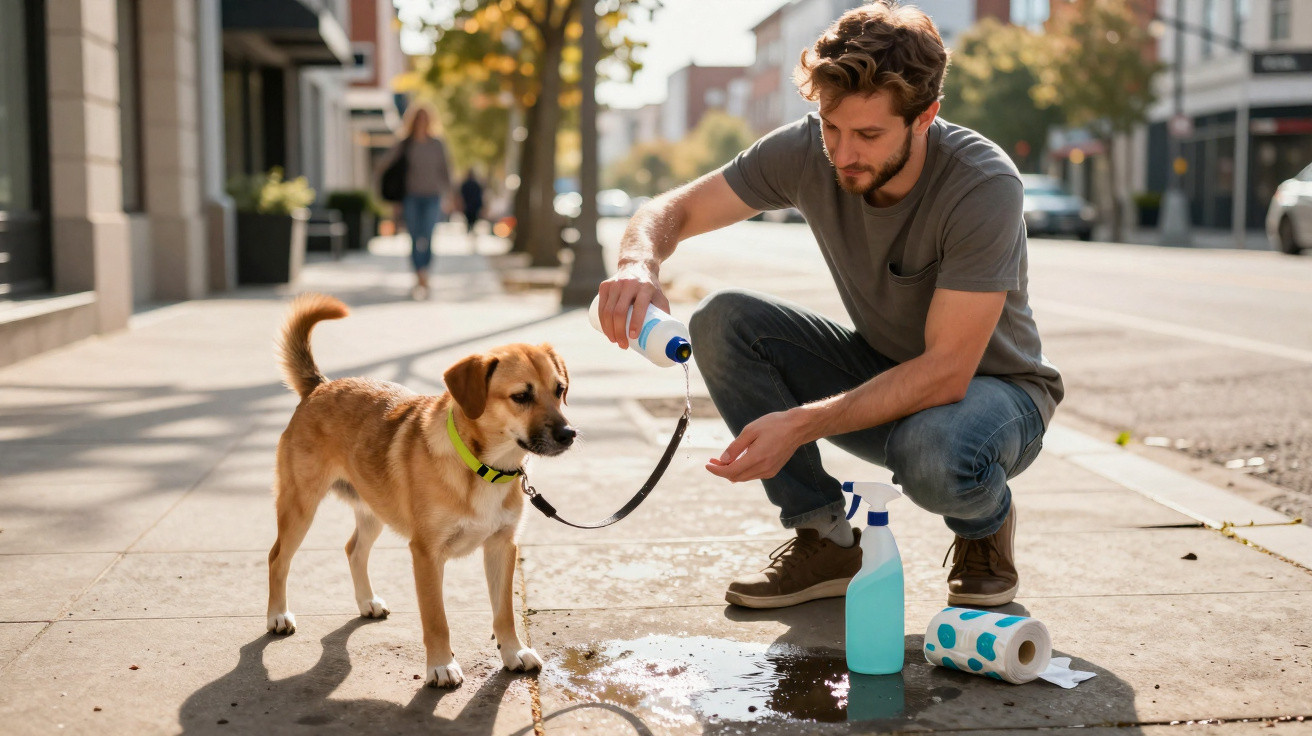
The debate around dog urine on the pavement has returned to the spotlight after several cities began requiring owners to carry a bottle of water while walking their pets. The measure is intended to lessen odours and improve the cleanliness of public areas, although specialists question how effective it truly is. According to infectious disease specialist Matteo Bassetti, simply pouring water over urine achieves very little from a sanitation perspective. Knowing what works in practice can help dog owners adopt more responsible and effective habits for urban life.
Does water really clean dog urine on the pavement?
Specialists explain that water on its own has no meaningful disinfecting ability. Applied to urine, it merely dilutes the residue left on the surface, without fully removing bacteria or the compounds responsible for unpleasant smells.
Consequently, an area may look cleaner, but it has not actually been properly sanitised. For this reason, many professionals believe the practice offers limited value when the aim is to improve public health or get rid of bad odours.
Why do some cities require owners to carry water?
Local authorities have introduced this requirement to reduce the effects of frequent urine on lampposts, building fronts, walls and pavements. The intention is to make shared public spaces more pleasant for residents, businesses and visitors.
The main reasons behind these rules include:
- Reducing the build-up of residue on pavements.
- Lessening the perception of bad smells in busy areas.
- Protecting building fronts and urban structures.
- Encouraging owners to act responsibly during walks.
What are the more effective alternatives for reducing odours?
Experts note that certain solutions perform better than rinsing with water alone. One of the best-known recommendations is an equal-parts mixture of water and white vinegar, which helps neutralise odours more effectively.
For more thorough cleaning, there are specialist products designed to break down organic compounds. The most commonly used options generally provide the following benefits:
- More effective odour neutralisation.
- Action against persistent organic residue.
- A greater sense of surface cleanliness.
- Fewer recurring strong smells.
What is the best way to keep public spaces clean?
Keeping urban areas clean depends far more on owners being aware of their responsibilities than on the simple obligation to carry a bottle of water. Promptly picking up faeces, preventing a dog from urinating repeatedly in the same places and following local council rules all help create a more harmonious shared environment.
Although the debate over water's effectiveness continues, specialists agree that combining responsibility, education and sound hygiene practices delivers more meaningful results for everyone. In this way, dog walks can take place in a balanced manner that respects both animals and the people sharing the same urban spaces.


Comments
No comments yet. Be the first to comment!
Leave a Comment