
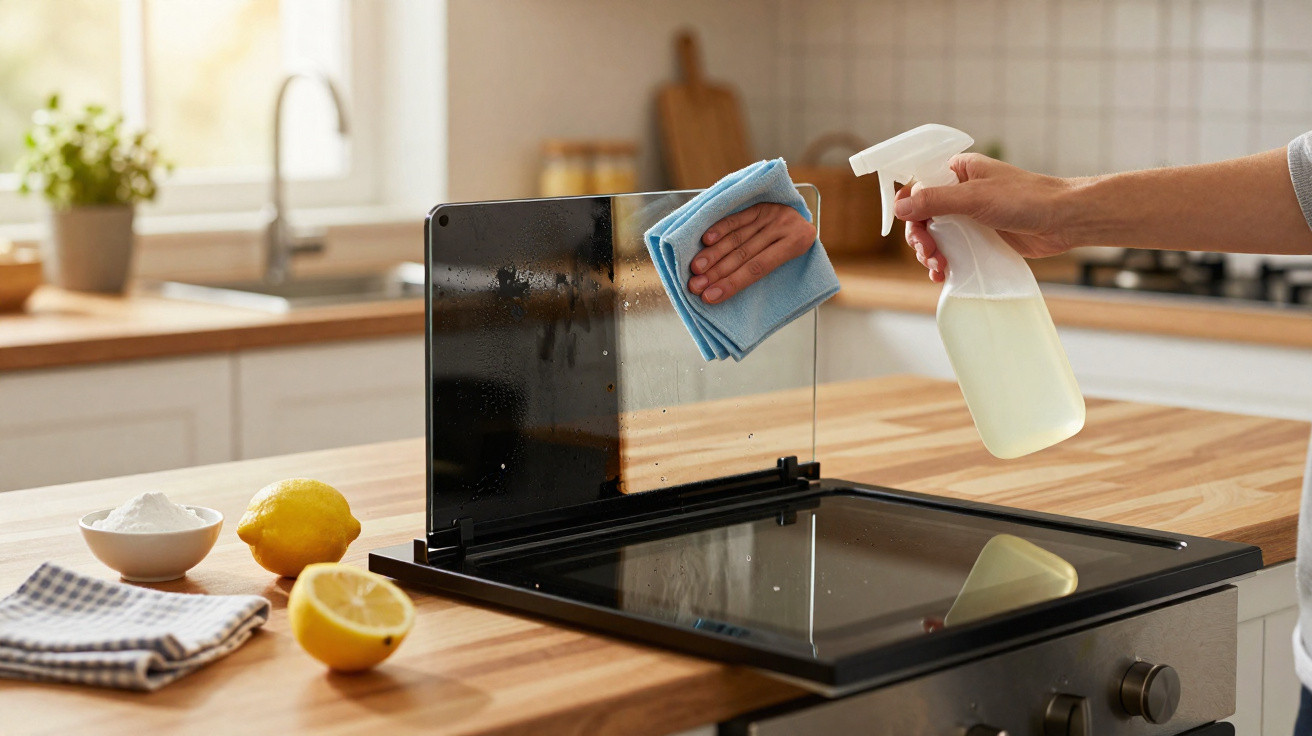
The oven door often becomes darker over time, developing a layer of hardened grease that makes it difficult to see inside the appliance. This build-up comes from oil vapour and food residue released while meals are cooking, which settles on the heated glass. As this film is repeatedly baked on, it becomes tougher and will not come away with ordinary water and washing-up liquid.
Why does the oven door blacken so easily?
An oven door blackened by grease results from the combination of high heat, oil vapours and tiny food splashes. While the oven is in use, grease rises as fine particles, hits the hot glass, sticks to its surface and is baked on repeatedly, gradually darkening the material.
Because the door area often receives less attention during a quick clean, the inner glass can be neglected for weeks. Over this period, the grease hardens and forms a crust that is difficult to shift with mild soap alone. The glass can become almost completely opaque, making it appear permanently stained.
Watch a video on the Organize Sem Frescuras YouTube channel explaining how to clean greasy oven glass with easy homemade pastes, without scratching the surface:
https://www.youtube.com/watch?v=J3mCbyE8nco
How to clean an oven door blackened by grease without scratching the glass
To restore shine to the oven door without damaging the glass, it is worth using a gentle homemade combination that softens baked-on grease before scrubbing. These ingredients are usually already in the kitchen and, when used patiently, remove the need for very harsh products or abrasive scourers.
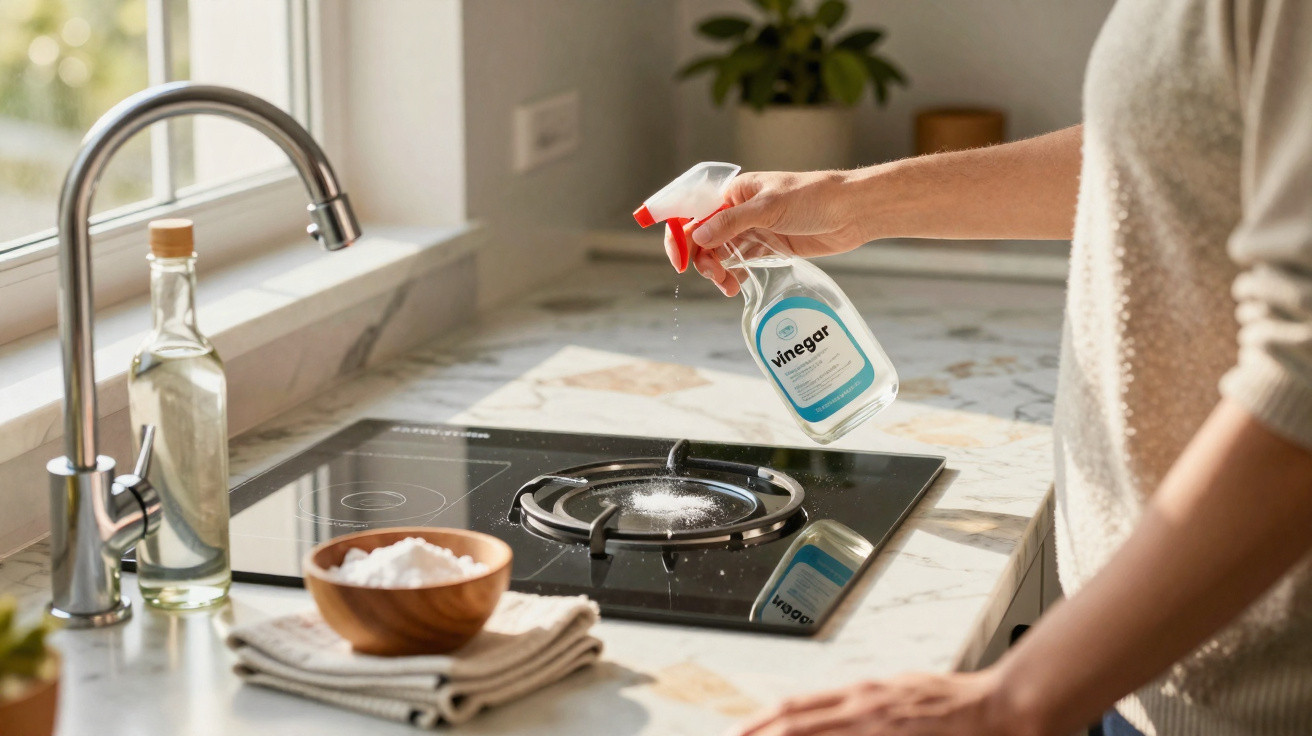
One widely used method combines bicarbonate of soda, white vinegar and a little water to make a mild paste. The bicarbonate of soda works as a lightly abrasive agent, the vinegar helps break down grease, and the water adjusts the consistency so the mixture spreads easily over the whole glass surface.
What is the step-by-step method for cleaning the oven door at home?
Before starting, make sure the oven is completely switched off and cold. This prevents accidents and ensures the mixture works properly. Follow these simple steps to divide the task into short stages and reduce the risk of marks on the glass.
- Make the paste: mix around 3 tablespoons of bicarbonate of soda with water until it forms a thick paste.
- Add 1 to 2 tablespoons of white vinegar, stirring until the ingredients are thoroughly combined.
- Open the oven door and place a cloth around the surrounding area to prevent splashes during application.
- Apply the paste with a plastic spatula or soft cloth, paying particular attention to the darkest areas.
- Leave it to work for 15 to 30 minutes, allowing longer for thicker crusts.
- Rub with a damp cloth, soft sponge or soft-bristled brush, using circular motions.
- Rinse using a clean damp cloth until all residue has been removed, then dry with a microfibre cloth to prevent streaks.
How can you prevent oven glass from becoming dark again?
Once the glass is clear again, a few simple habits can help it stay clean for longer. Quickly wiping the inside after particularly greasy cooking with a damp cloth and mild washing-up liquid will already reduce build-up and prevent new, stubborn crusts from forming.
It is also helpful to use baking trays in good condition, prevent leaks and, where the recipe allows, cover food with aluminium foil to reduce splashes. Checking the door seal and watching for changes in the colour of the glass over the following weeks creates a visual “thermometer” for oven cleanliness, making small maintenance cleans easier before the door becomes fully darkened again.
Comments
No comments yet. Be the first to comment!
Leave a Comment