
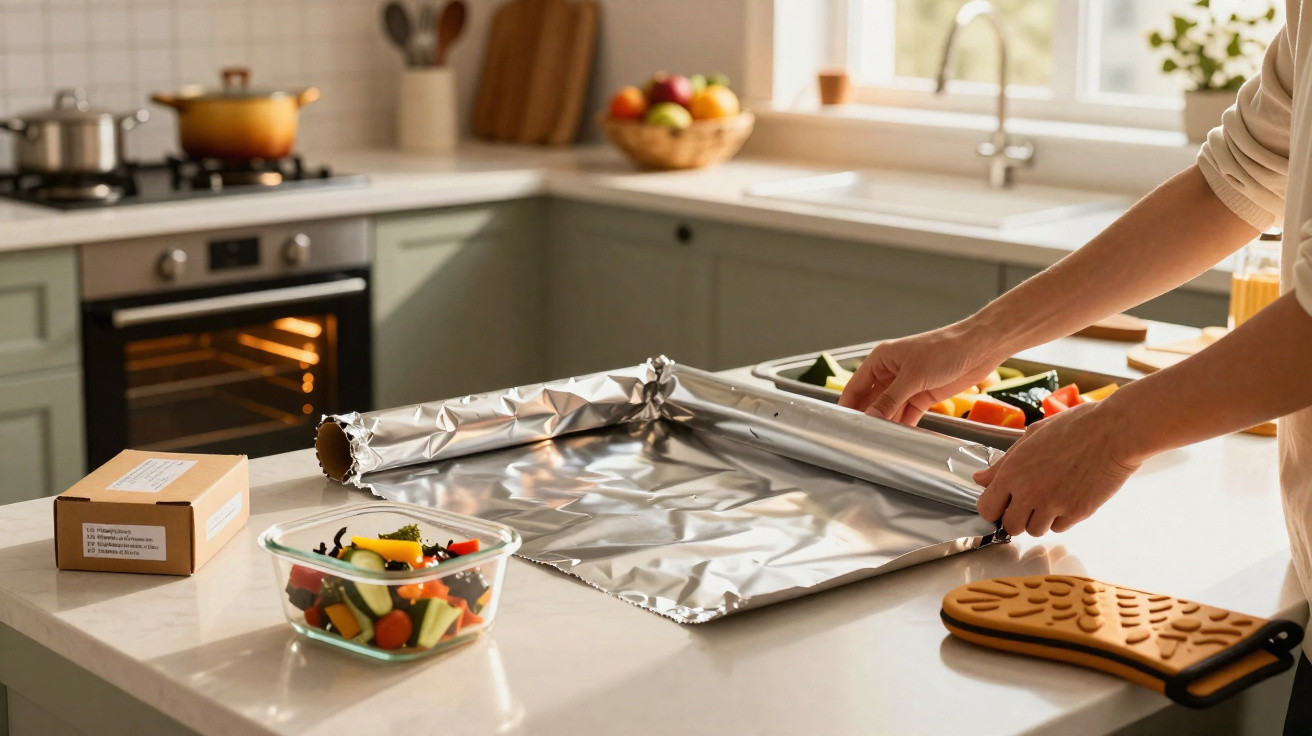
Aluminium foil is a staple in many kitchens, whether it is used for baking, grilling or storing leftover food in the fridge. Flexible and easy to shape, it withstands high temperatures, yet it often raises questions about which side to use, whether it affects cooking, and how to make the most of it when preparing and preserving food.
How is aluminium foil made, and why does it have two different sides?
Aluminium foil begins as large sheets of aluminium, which are rolled repeatedly until they become extremely thin. During the final stage, two sheets are pressed together between steel rollers, naturally producing the contrast between the shiny and matt sides.
The side that touches the polished roller becomes shiny, while the side facing the other sheet has a duller, more matt finish. Despite looking different, the two sides have virtually identical composition, thickness and heat-conducting properties, so they perform very similarly in most recipes.
Watch a video on the Almanaque SOS YouTube channel explaining the science behind which side of aluminium foil should face the food in the oven:
https://www.youtube.com/watch?v=M9mF2c5R9U4
How should you choose the side of aluminium foil for the oven and food storage?
With standard aluminium foil that has no additional treatment, the shiny and matt sides transfer heat in much the same way. When roasting meat, vegetables or fish, food is heated chiefly by the oven’s hot air and contact with the baking tray, so the position of the shiny side makes almost no practical difference.
The situation is slightly different with non-stick foil, as a special coating is usually applied to only one side. It is therefore important to follow the instructions on the packaging. In general, the coated side-often the matt side-should touch the food to prevent sticking and make cleaning easier after cooking.
What are the main everyday uses for aluminium foil in the kitchen?
In everyday cooking, aluminium foil, also known as aluminium sheet, is widely used for lengthy roasting, freezing and dividing food into portions. It can help meat retain moisture, shield food from cold air and reduce mess in ovens and on grills, making preparation more convenient.
Certain uses are common in both homes and restaurants, particularly where thermal protection, improved storage and less mess during cooking and food storage are needed.
- Baking and grilling: wrapping meat, chicken, fish and vegetables.
- Protecting tins: lining baking trays to make cleaning easier.
- Storing food: covering containers and serving dishes in the fridge.
- Freezing portions: wrapping pre-divided items for later use.
- Reducing mess: creating temporary barriers in ovens and on grills.
What safety precautions matter when using aluminium foil?
Although it is versatile, aluminium foil requires a few precautions to avoid problems. In microwave ovens, it should only be used if authorised by the manufacturer, as metal can create sparks. For very acidic or salty preparations, such as marinades containing plenty of lemon and salt, it is advisable not to leave food in prolonged contact at room temperature, reducing the risk of unwanted reactions.
Disposal also deserves consideration, as aluminium foil can be recycled when it is clean or has only small amounts of residue. Whenever possible, send aluminium foil for recycling, and compress heavily crumpled or greasy sheets so they do not break up into small pieces, helping to reduce the volume of household waste.

Comments
No comments yet. Be the first to comment!
Leave a Comment