
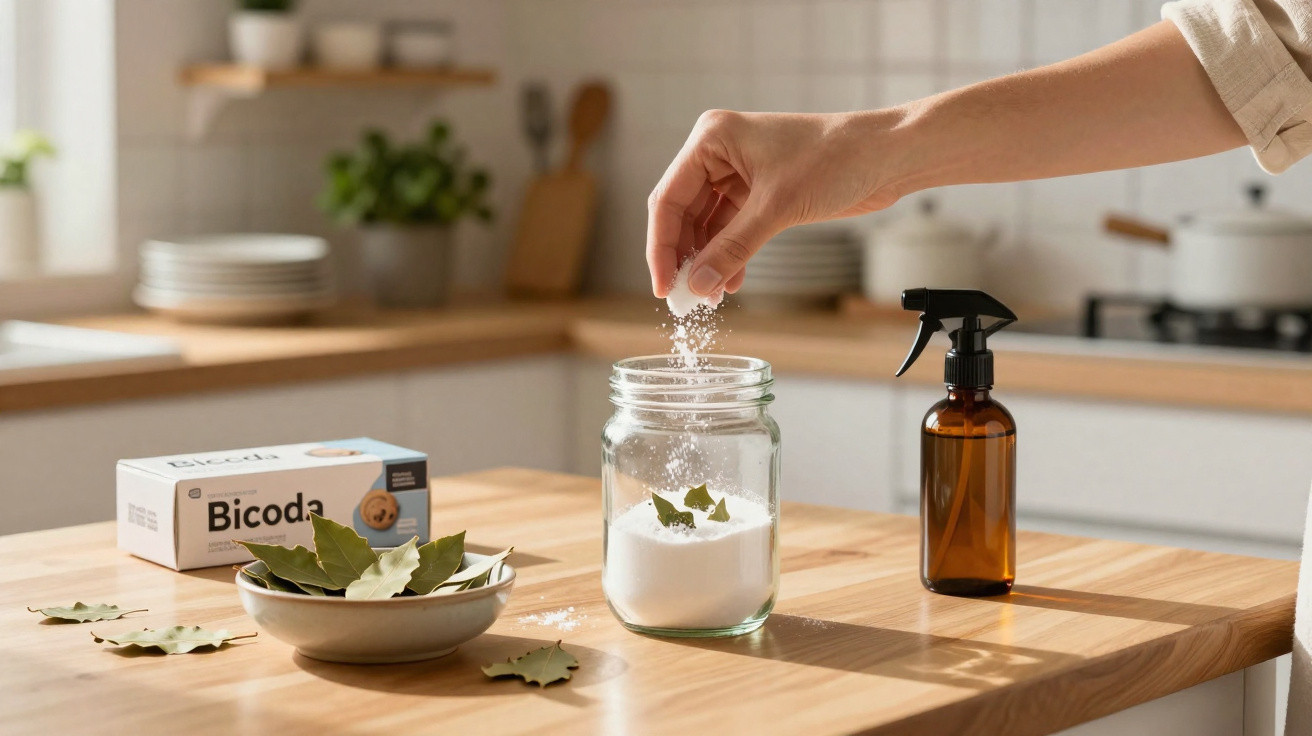
In many homes, combining bicarbonate of soda with bay leaves has become an increasingly popular, straightforward way to look after indoor spaces. This homemade mixture is chiefly used in cupboards, kitchens and other enclosed rooms where smells can build up, providing an affordable addition to efforts to keep the air feeling fresher.
What is the bicarbonate of soda and bay leaf mixture, and how does it work?
A mixture of bicarbonate of soda and bay leaves combines bicarbonate’s ability to neutralise odours with the mild scent released by dried leaves. In practical terms, the bicarbonate acts as an odour absorber, while bay leaves provide a subtle fragrance linked with a sense of cleanliness in enclosed areas.
Rather than creating a strong perfume, it is a method intended to lessen unpleasant smells in the air and in compact spaces. The ingredients are usually placed in jars or open containers so that air can circulate around the bicarbonate and leaves, encouraging contact with odour-causing particles in the room.
Watch a video from the Mum's Tips YouTube channel about household tricks using dried plants and cupboard staples to remove dampness and scent closed cupboards:
https://www.youtube.com/watch?v=m_09zT1hC7E
What is bicarbonate of soda with bay leaves used for in home cleaning and organisation?
Bicarbonate of soda and bay leaves are commonly used in poorly ventilated places or areas where smells collect, including cupboards, pantries and utility rooms. Even when cleaning is kept up to date, damp odours, food residue smells or a stuffy atmosphere can remain; in these situations, the mixture is generally used as a supporting measure.
This combination can be used simply and strategically in several parts of the home to help manage odours and create a fresher feeling:
- Inside cupboards and wardrobes: small jars can help lessen enclosed smells around clothes, shoes and bed linen.
- Near rubbish bins: it can help reduce lingering odours, even after bin bags have been changed.
- Spaces with limited air circulation: pantries, storage rooms and small bathrooms can use a jar as an extra measure.
- Kitchens and utility rooms: it is often placed near the cooker, sink or in corners where cleaning products are stored.
How can you prepare and use the bicarbonate of soda and bay leaf mixture at home?
Making it is straightforward and can be adjusted to suit the size of the room, with no water required. Typically, an open jar is filled with bicarbonate of soda at the base, then topped with several dried bay leaves, either whole or lightly crushed to release more fragrance.
A basic method involves selecting a clean, dry container, adding two to four tablespoons of bicarbonate of soda and three to six bay leaves. Put the jar in the chosen spot, beyond the reach of children and animals. Its contents are generally replaced every three or four weeks, or once the scent becomes less noticeable.
What precautions should be taken when using bicarbonate of soda and bay leaves indoors?
Although this mixture is simple, it should not be swallowed and must be kept away from young children and pets. Bicarbonate of soda should not be used directly on sensitive surfaces because its mildly abrasive properties may damage delicate materials, including certain metals, varnished wood or natural stone.
It is also worth remembering that this method does not replace essential routines such as emptying rubbish, washing fabrics, ensuring suitable ventilation and addressing damp or mould problems. If smells persist, it is best to investigate their source, such as leaks or hidden food remnants, and regard bay leaves with bicarbonate of soda only as a practical extra for making small spaces more pleasant day to day.

Comments
No comments yet. Be the first to comment!
Leave a Comment