
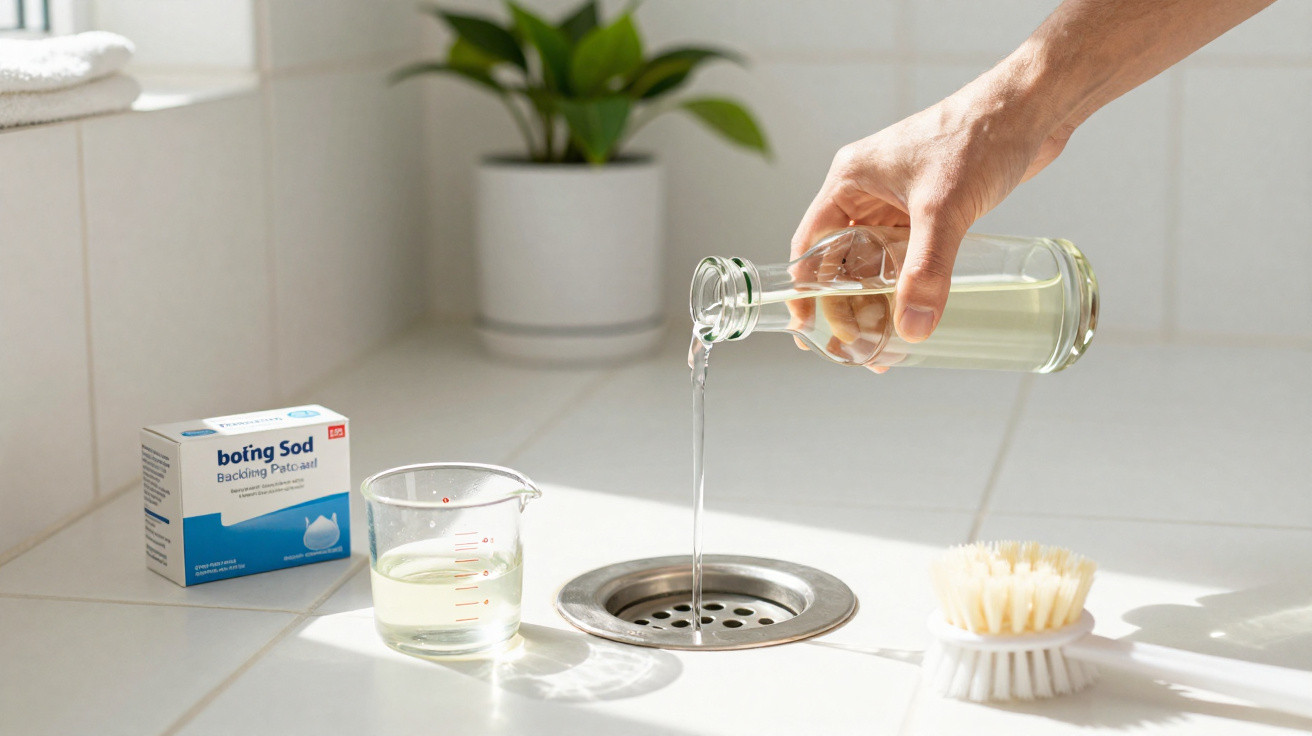
Pouring vinegar down the bathroom drain once a week can help cut unpleasant smells, soften recent deposits of soap, toothpaste, conditioner and body oils, and make it harder for grime to build up on the inside of the pipe. This routine works best as preventative maintenance, rather than as a fix for major blockages or clumps of hair lodged in the plumbing.
What does vinegar dissolve in a bathroom drain?
Because vinegar is acidic, it can help break down light build-ups of soap, dirt and mineral residue that water alone may not remove. Healthline notes that vinegar is not an effective disinfectant, but it can work well as a cleaner because its acidity helps lift dirt, soap and limescale deposits.
Bathroom drains collect hair, soap, cream, toothpaste, dead skin and hair-product residue. Cleaning sources identify hair, toothpaste and soap residue as common causes of dirt build-up and blockages in bathroom drains.
Why do this every week?
Weekly cleaning stops minor dirt deposits from becoming a stubborn crust. If a drain is left without maintenance for several weeks, the combination of hair, soap and body oils can create a dark, sticky layer that slows the flow of water and causes unpleasant odours.
- Reduces smells caused by organic residue inside the pipe.
- Helps loosen fresh films of soap and conditioner.
- Prevents water from starting to drain slowly.
- Reduces the need for harsh chemical products.
- Makes the drain easier to clean by hand.
What is the right amount of vinegar?
For weekly maintenance, pour roughly half a cup to one cup of white vinegar into the drain. Half a cup is generally enough for small drains, while one cup may be more effective for shower drains or drains with a stronger smell.
Ordinary white vinegar, with no sugar or colourings, is the best option. Dark or flavoured vinegars are unnecessary and may leave a stronger smell or unwanted residue behind.
How should you use vinegar in a bathroom drain for real results?
Before adding the vinegar, remove the drain cover, clear away any visible hair and dispose of the debris in the bin. This matters because vinegar does not dissolve clumps of hair effectively; it works better on light residue stuck to the pipe. A specialist drain-maintenance source points out that vinegar has very little effect on hair, although it may help with recent films of soap and conditioner.
- Remove the drain grate or cover, where possible.
- Use gloves or paper to take out visible hair and dirt.
- Pour in half a cup to one cup of white vinegar.
- Leave it to work for 20 to 30 minutes.
- Rinse with hot, but not boiling, water.
- Put the cover back only after cleaning around its edges.
Can I mix it with bicarbonate of soda?
Vinegar and bicarbonate of soda can be used together when there is a mild smell or slightly slow drainage, as the fizzing action helps loosen surface-level dirt. The Spruce explains that this mixture can help with small build-ups and as a preventative measure, but it is not powerful enough for difficult blockages.
If you want to use both, add 1/4 to 1/2 a cup of bicarbonate of soda to the drain first, then pour in 1/2 to 1 cup of vinegar. Allow it to fizz for a few minutes, leave it to work, then finish with hot water. Do not use excessive amounts, as the foam may overflow.
What should never be mixed with vinegar in a drain?
Never combine vinegar with bleach, chlorine or chemical drain cleaners. Mixing acids such as vinegar with bleach can release chlorine gas, which is dangerous to breathe in. ECOS warns that vinegar and bleach must not be combined because of this risk.
You should also avoid using vinegar immediately after commercial drain-unblocking products. If a chemical product has been used in the drain, rinse it thoroughly, ventilate the bathroom and follow the manufacturer's instructions before trying any other method.
When will vinegar not solve the problem?
If water is already backing up, draining very slowly or making bubbling noises, there may be a larger blockage. The Spruce lists slow drainage, unpleasant odours and gurgling sounds as signs that a drain may need unblocking, even if some water is still getting through.
In these situations, it is best to remove debris from the drain manually, use a suitable plunger or seek professional help if the issue continues. Weekly vinegar use helps prevent build-up, but it does not replace mechanical cleaning when hair is trapped or there is a deep obstruction.
A simple routine that improves bathroom hygiene
Pouring vinegar down the drain once a week works because it targets what surface cleaning cannot reach: the thin film of residue inside the pipe that starts creating unpleasant smells before it becomes a blockage.
With the right quantity, sufficient contact time and a final rinse, the drain stays cleaner, the bathroom smells fresher and water is less likely to stop flowing because of accumulated dirt. The key is to repeat it as maintenance, remove visible hair whenever it appears and never mix vinegar with harsh chemical products.

Comments
No comments yet. Be the first to comment!
Leave a Comment