
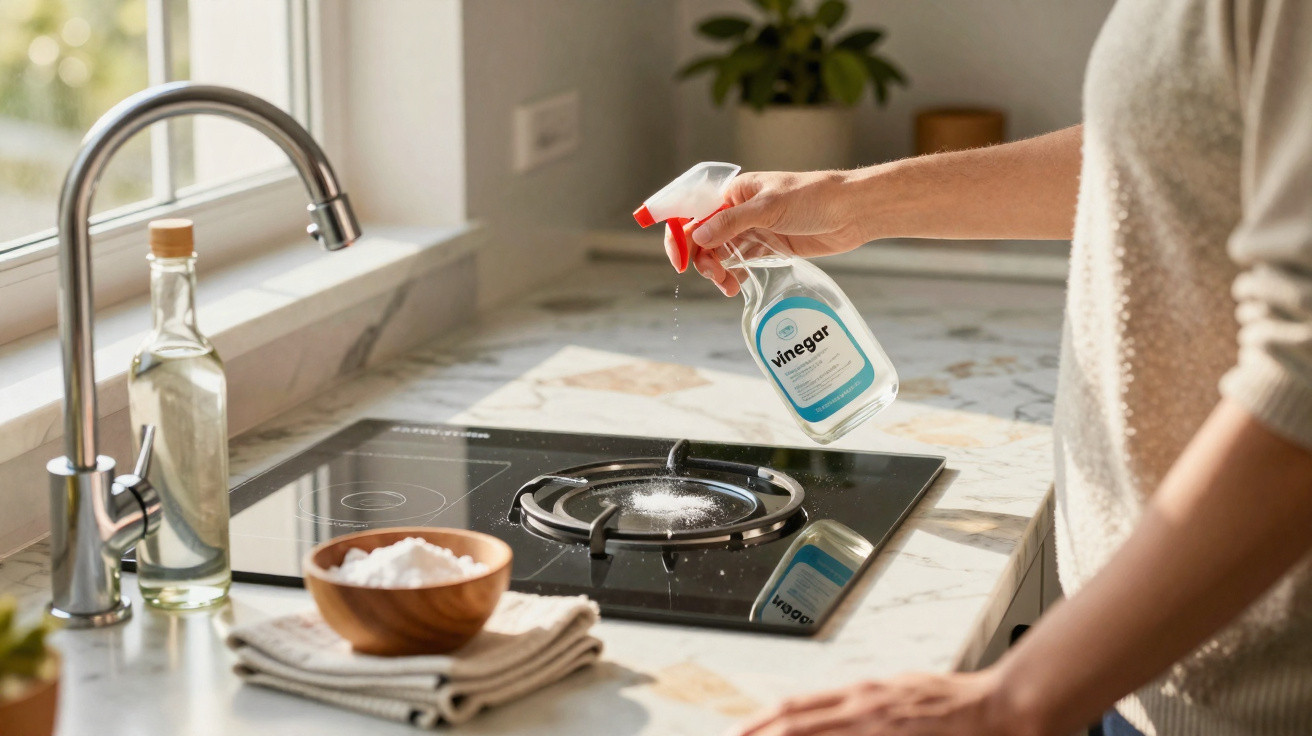
Vinegar can be useful for household cleaning because its acidity dissolves water marks, mineral deposits and light dirt on hard-wearing surfaces. However, it is not suitable for everything: repeated use on natural stone, wood, rubber, screens and certain metals can cause staining, corrosion, drying or damage to the finish.
Why should vinegar not be used on every surface?
Vinegar is acidic, and that quality is precisely what makes it effective at lifting limescale, hard-water splashes and light grease. The drawback is that the same acidity can harm sensitive materials, especially if it is used neat or left in contact with a surface for too long.
On worktops, floors and appliances, damage does not always become visible after the first clean. Regular use may dull the shine, wear away sealants, leave cloudy patches and allow moisture to penetrate porous areas.
Where does vinegar work well for cleaning?
Vinegar is most effective on smooth, washable surfaces that tolerate moderate acidity. Even on these materials, diluting it with water is generally safer than using it neat, particularly for routine cleaning.
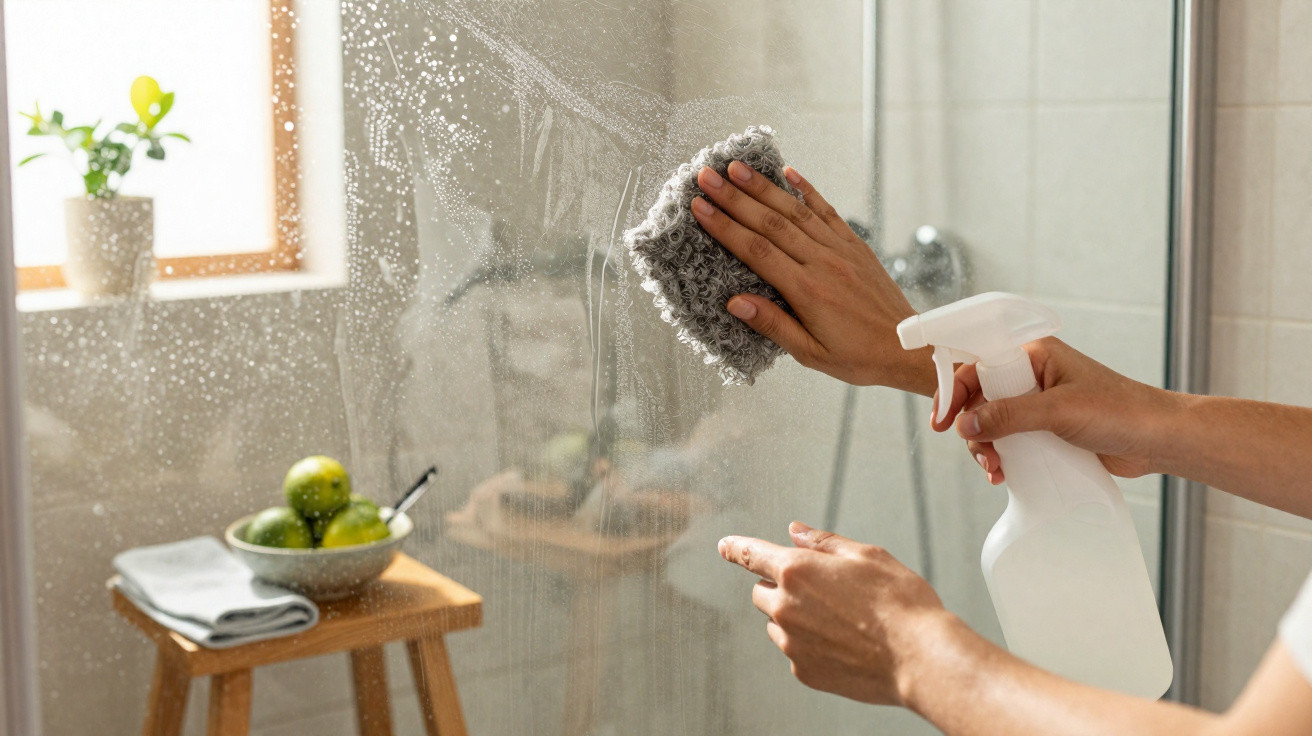
- Glass, windows and mirrors, provided only a small amount is used and it is wiped away thoroughly.
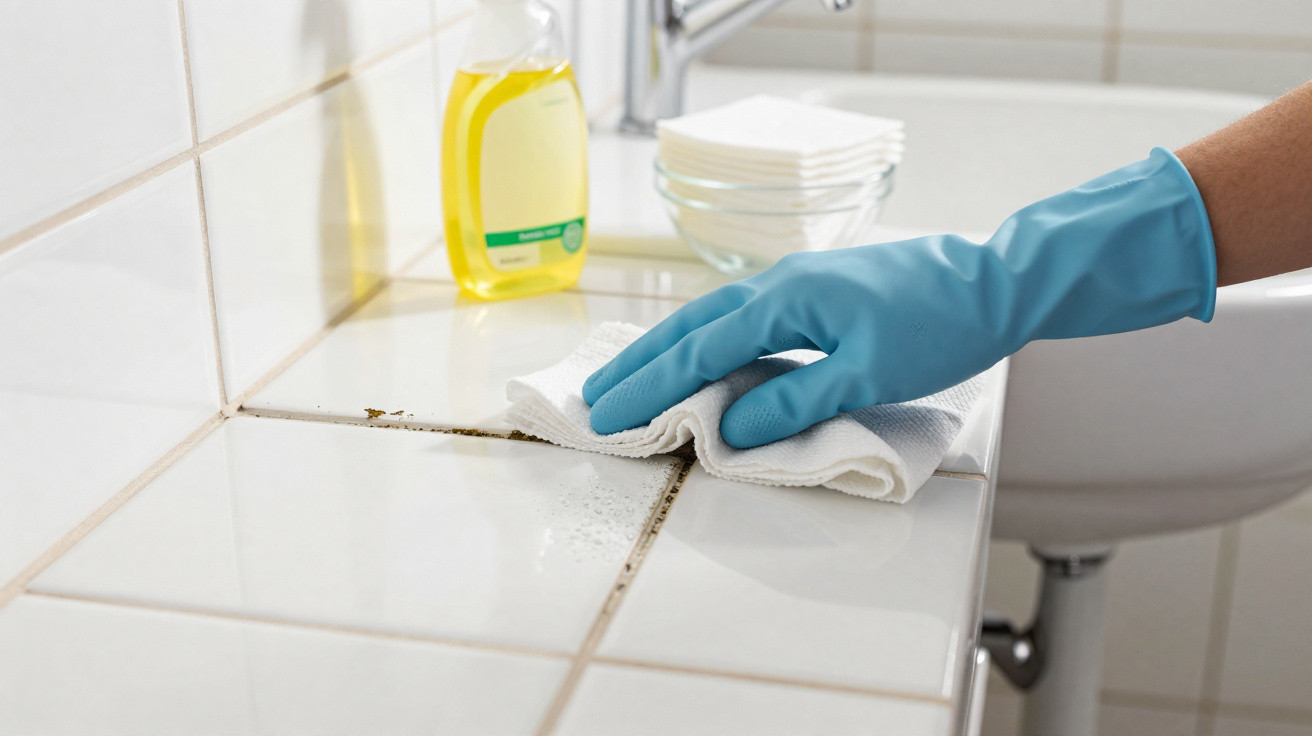
- Ceramic tiles and durable porcelain surfaces, without prolonged exposure to porous grout.
- Taps and chrome fittings, only for removing light water marks and followed by a quick rinse.
- The inside of bins, to reduce odours after washing with soap and water.
- Washable plastic surfaces, as long as they are not dry, brittle or cracked.
Which surfaces should be kept away from vinegar?
Natural stone is among the main materials to avoid. Marble, granite, travertine, limestone and slate can lose their sheen or develop surface etching, particularly when they have a polished finish or worn sealant.
It is also best not to use the product on the following materials:
- Waxed, varnished or laminated wood, as the acidity may damage the finish.
- Natural-stone floors, sensitive polished porcelain tiles or sealed surfaces.
- Television, mobile phone, laptop and monitor screens, which have delicate anti-reflective coatings.
- Rubber seals in washing machines, dishwashers and small appliances.
- Aluminium, copper, iron and knives, since acidity can encourage staining and corrosion.
Which vinegar mixtures are safe, and which should be avoided?
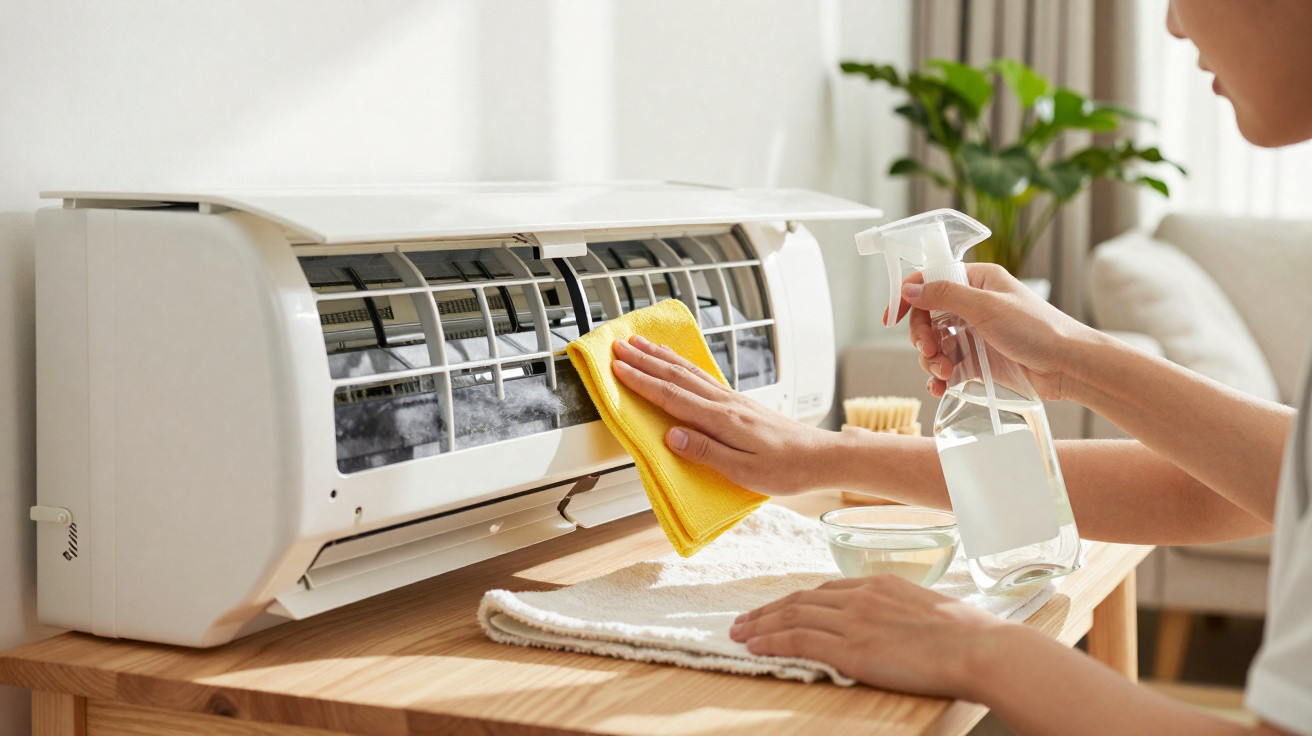
For light cleaning, vinegar can be diluted with water and applied using a microfibre cloth. For more stubborn dirt, it may be used after cleaning with a mild washing-up liquid, although everything should be rinsed well first to prevent a build-up of residue.
- Vinegar and water can help with glass, mild odours and superficial mineral marks.
- Vinegar used after mild washing-up liquid may assist with light grease, provided the products are not excessively combined.
- Vinegar and bicarbonate of soda create foam, but the reaction weakens both ingredients when they are mixed before application.
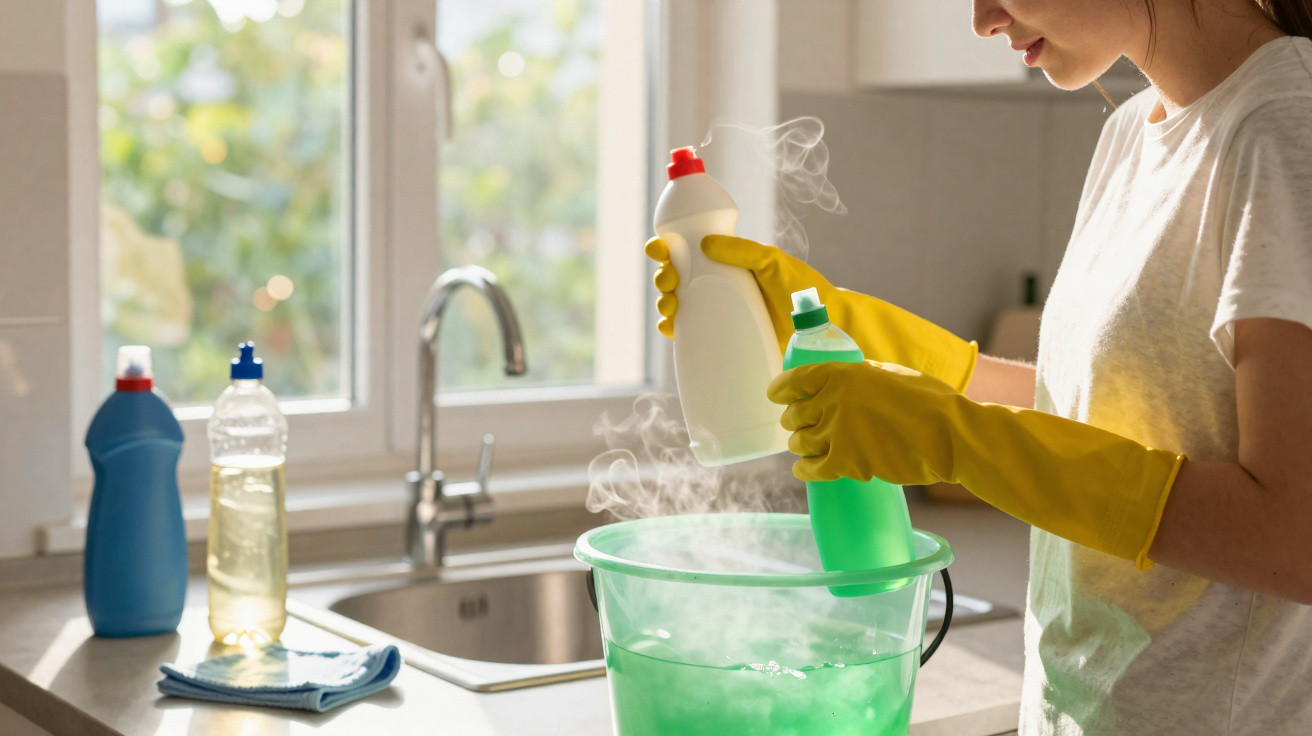
- Never mix vinegar with bleach, as this combination can release toxic gas.
- Avoid combining vinegar with ammonia, strong disinfectants or unknown products.
How can vinegar be used without damaging the home?
The safest approach is to test it in a hidden area first, dilute it with water and keep contact time brief. After applying it, wipe the surface with a clean damp cloth and dry it, especially on metals, tiles with old grout and areas close to wood.
Vinegar should be regarded as an occasional cleaning aid rather than a universal replacement for washing-up liquid, disinfectant, stone cleaner or products made specifically for wood and appliances. Using the right product for each material keeps the home clean without sacrificing shine, sealing, texture or durability.
Comments
No comments yet. Be the first to comment!
Leave a Comment