
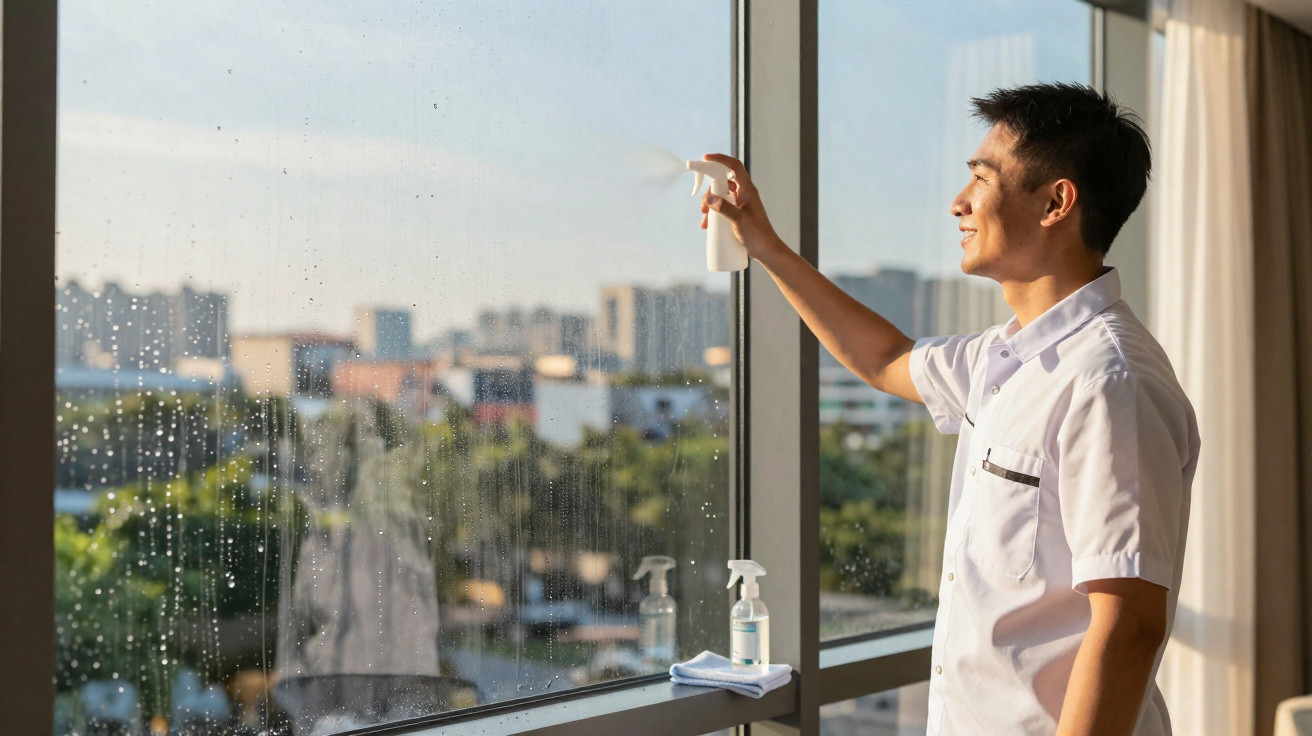
Marked by hands, scuffed by suitcase wheels, coated in road dirt and sea salt, glass attracts blemishes. Guests spot them. Managers worry about them. Daily cleaning takes staff time, ladders and money. Yet some hotels keep their windows looking pristine for days, even after wind and rain. There is no overnight crew wielding squeegees, and no miraculous cloth. Instead, one understated measure makes dirt less likely to stick.
At 6:42 a.m., the porter held open the revolving door while the city was still waking up. Two housekeepers passed with a trolley, their coffee cups perched on folded towels. Beyond them, a man in a hi-vis jacket inspected the pavement for chewing gum. I waited beside the front windows as rush-hour light folded across the glass like silk. Not one smear showed. It had rained hard and sideways the previous day. Taxis had splashed the kerb. You would expect drips and tracks, yet there were none. It was as though someone had polished the sky. When I asked the duty manager how they did it, he shrugged as if the explanation were self-evident. The solution could not be seen.
The invisible shield hotels swear by
In any busy hotel corridor, the same principle appears: heavily handled surfaces demand regular attention, while less frequently touched ones benefit from smart protection. Glass occupies an awkward middle ground. It is handled, breathed on, affected by the weather and settled on by dust. Managers therefore take a different approach. Rather than simply cleaning it, they alter the way the glass performs. The trick is a microscopic, invisible shield on the glass. It may sound like marketing jargon, but it is surface physics quietly at work.
At a Brighton seafront hotel, salt spray once left faint curved marks across the lobby frontage within 48 hours. Staff experimented with different detergents, replaced squeegee blades and even scheduled cleaning around the tides. During a refurbishment, they eventually applied a hydrophobic coating. The wind, gulls and sea air remained exactly the same. What changed was that the windows began to cast off water like a waterproof coat. Everyone knows the frustration of cleaning a window only for it to look dull again by the afternoon. In this case, that point moved to the end of the week. One manager said the team could delay cleaning by “a couple of days, sometimes more,” a minor miracle in hotel operations.
Viewed under a microscope, untreated glass resembles a rough landscape. Its tiny ridges and hollows hold water, dirt and greasy fingerprints. A modern glass sealant, commonly silica-based, fills those minute gaps and reduces surface energy. Water forms beads and runs away before it can dry into spotted rings. Dust has fewer places to attach itself. Fingerprints also wipe away more readily, as oils encounter a smoother surface. The coating is not a thick film; it is chemistry designed to make adhesion more difficult. Less sticking means fewer streaks and longer intervals between thorough cleans.
How the hydrophobic glass sealant works at home
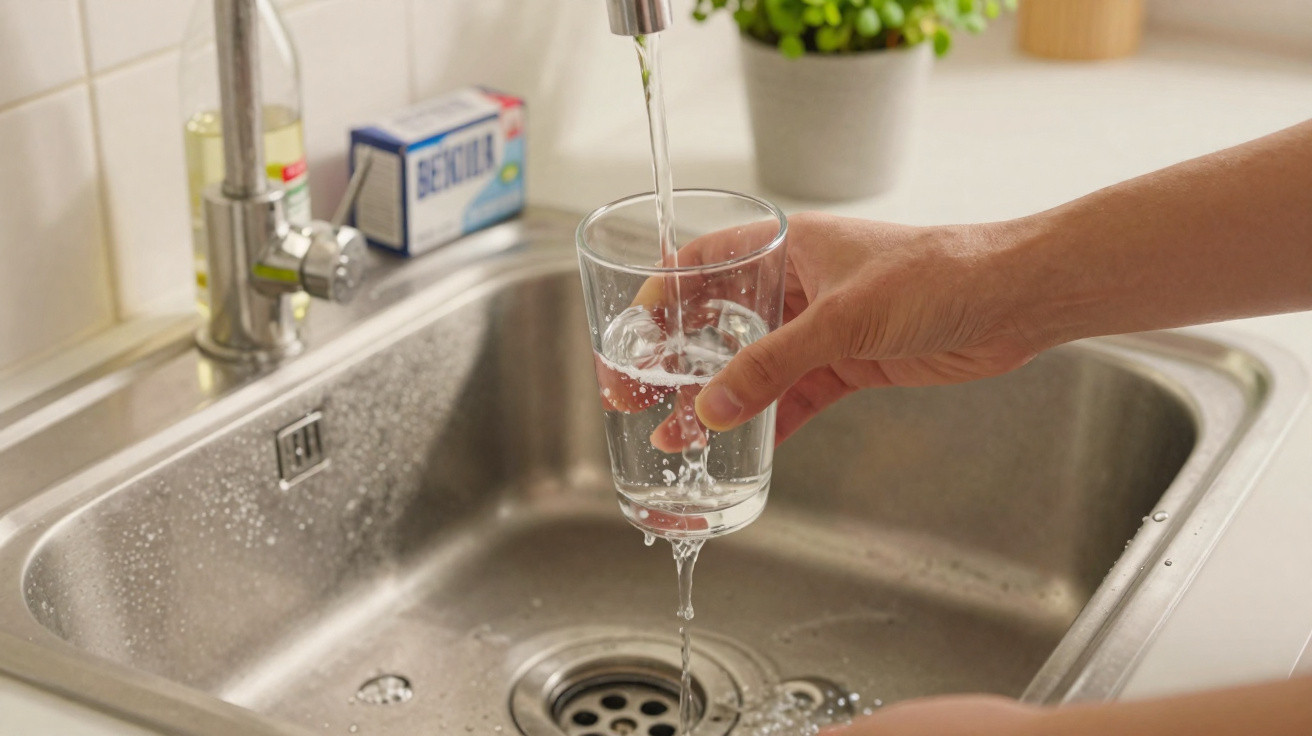
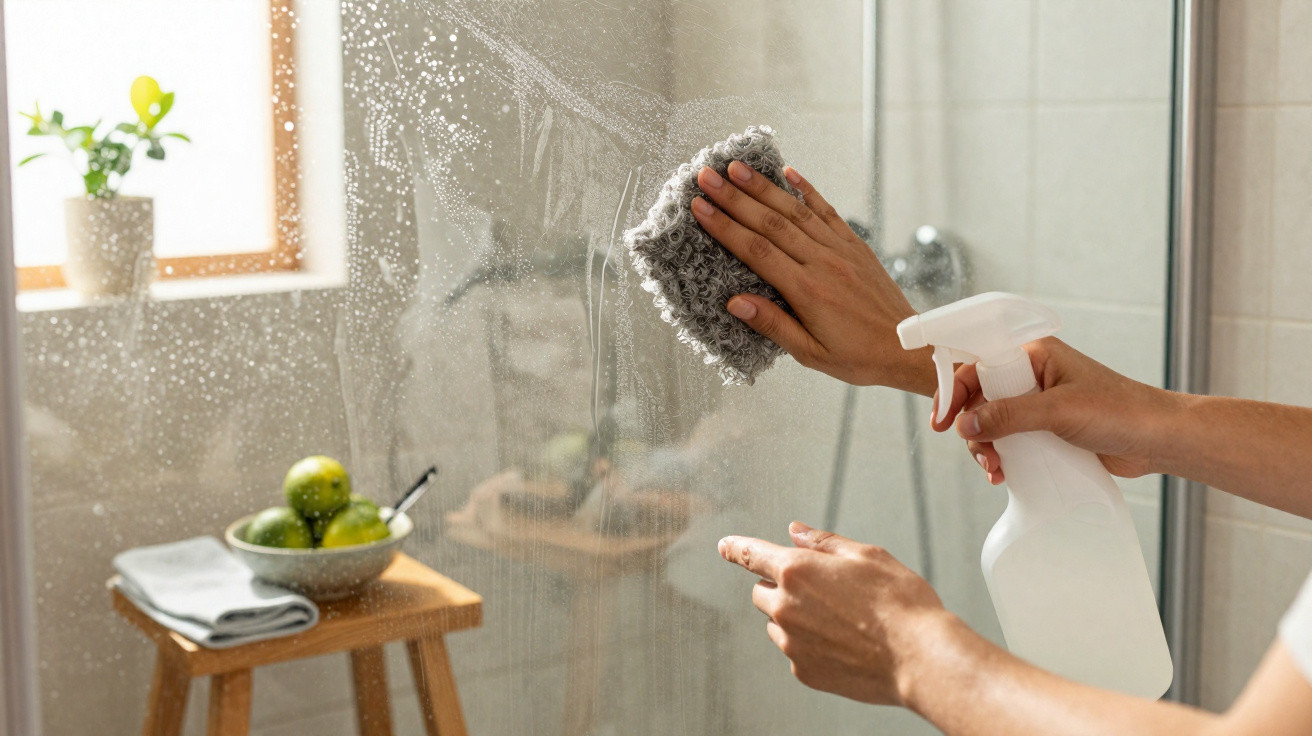
The hotel method is straightforward when reduced to its essentials. First, clean the glass normally so that no dirt is trapped beneath the treatment. Rinse it using deionised water if available, or at minimum use freshly changed, cool water in the bucket. Next, apply the protector: either a hydrophobic glass sealant intended for windows or a light, diluted application of dishwasher rinse aid spread thinly over the pane. Use a hydrophobic glass sealant or a tiny splash of diluted dishwasher rinse aid. Polish the surface with a clean microfibre cloth until it appears completely normal. The remaining layer is too fine to see, but it changes how dust and droplets behave for days.
Most problems arise from using too much product. An excessive coating can leave a haze that resembles mist when sunlight reaches it. Apply only the thinnest possible amount. Work in shade to prevent the product from drying too quickly and creating streaks. Avoid putting five different brands on top of one another; choose a single product and keep the process uncomplicated. Clean cloths make a greater difference than many people realise, because worn fibres hold residues. The frames also deserve attention. Wipe along the upper gasket with a dry cloth to stop trapped water running down afterwards. Realistically, no one does that every day. Do it properly once, however, and it is needed far less often.
When discussing glass, hotel operations teams can sound like engineers. They are not being overly particular. They are saving time.
“You’re not cleaning harder,” a head housekeeper told me, “you’re protecting the bit between cleans. That’s where the savings live.”
- Keep the application thin: a few drops per square metre are sufficient.
- Apply in shade rather than sunshine.
- Buff until the cloth no longer catches on the surface.
- Renew the treatment every few weeks, rather than daily.
Why this small change punches above its weight
There is something reassuring about glass that remains clear. Guests interpret it as a sign of care, even when they do not consciously register it. A lower-energy surface does more than repel rain: it changes how dust settles and allows fingerprints to release without fuss. Less stick, less streak, less scrubbing. This results in fewer trolleys moving through the lobby during busy check-in periods, fewer cones and warning signs, and fewer occasions requiring ladders. In a city hotel with constant footfall, that is not indulgence; it is smoother operation.
The financial benefit is understated but genuine. Each cleaning round avoided frees labour for other tasks: bathrooms can be turned around more quickly, rooms can be made available sooner and late arrivals create less pressure. Products go further because they are applied sparingly. One bottle of sealant can treat a lobby more often than expected. Since the glass resists spotting, there is no repeated cycle in which a light drizzle demands a complete re-clean. It is not magic, merely a small advantage that accumulates.
The most appealing aspect is its tactile quality. Run a fingertip across a treated pane and there is almost nothing to feel; then splash water on it and watch it form beads that slide away like mercury. The science is hiding in full view, while the effect is felt as atmosphere: a lobby that seems to breathe and a view not clouded by traces of yesterday’s weather. That fine layer changes the impression a building makes from the pavement. When the world beyond the glass looks sharp, people are more inclined to enter.
Try it once and bare glass is difficult to return to. There is no lecture attached to it, only the comfort of replacing firefighting with prevention. Around day four, when the light still looks clean and all you have done is walk past with a coffee in hand, your future self will be grateful that it is still working.
| Key point | Detail | Benefit for the reader |
|---|---|---|
| Invisible shield | A hydrophobic coating or diluted rinse aid creates a micro-thin layer | Windows resist water marks and dirt for longer |
| The right routine | Clean, rinse with cool water, apply sparingly, buff thoroughly and renew periodically | Repeatable steps that save time without needing new tools |
| Practical benefits | Fewer cleans, less disruption and a smoother impression for guests | Less effort and better-looking glass day after day |
FAQ:
- Does the coating make windows slippery or unsafe? On glass, yes, water beads more, but the surface isn’t a floor. Frames and handles aren’t treated, so day-to-day use feels the same.
- Will it leave a rainbow or haze in sunlight? If you over-apply, it can. Work very thin, buff until the cloth glides, and avoid direct sun during application to keep the finish clear.
- How long does a treatment last? In a busy lobby, expect one to three weeks of easier maintenance. On upper floors away from touch and traffic, it can hold for longer.
- Is dishwasher rinse aid really OK on windows? Used sparingly and diluted, it mimics the sheeting effect hotels seek. Dedicated glass sealants are purpose-made and last longer.
- Can I still use my usual glass cleaner later? Yes. Neutral cleaners won’t strip the layer in one go. Strong abrasives will, so keep things gentle if you want the shield to persist.
Comments
No comments yet. Be the first to comment!
Leave a Comment