
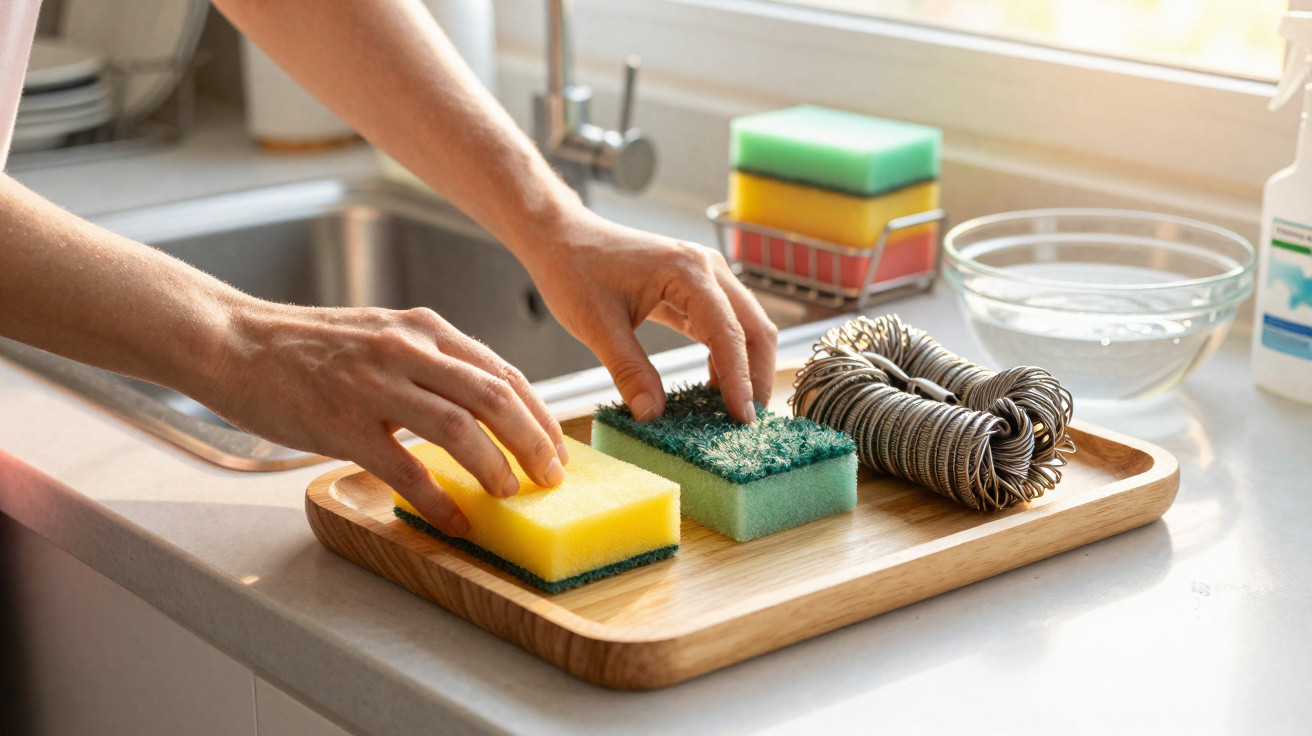
Choosing the best sponge for washing dishes and cleaning the kitchen may seem like a minor decision, yet it directly affects hygiene, the condition of utensils and even the time spent at the sink. The distinction between an ordinary sponge, a steel scourer and steel wool is not limited to their materials: it also includes durability, cleaning abrasiveness, the chance of bacterial build-up and even the amount of water and washing-up liquid used.
What are the differences between an ordinary sponge, a steel scourer and steel wool?
The kitchen sponge found most often in homes is the standard type, normally made from synthetic foam or cellulose and frequently featuring one soft side and one rougher side. It is suitable for plates, glasses, cutlery and delicate containers because it cleans without leaving noticeable scratches. It also holds washing-up liquid effectively, which can help reduce product use.
A steel scourer, meanwhile, consists of coiled metal strands and is suited to pans, grills and baking trays with burnt-on grease or firmly stuck residue. Steel wool is more abrasive still and can reach deep corners and gaps. It is useful for hob grates, barbecues and very greasy surfaces, although it carries a greater risk of wearing down the material.
When should each type of kitchen sponge be used?
Using each kitchen sponge correctly depends on the surface material and how dirty it is, helping to prevent scratches as well as avoiding wasted time scrubbing. For wine glasses, decorated mugs, glass containers and non-stick pans, an ordinary sponge is the recommended option. Use its soft side for light dirt and its rougher side with moderate pressure.
For burnt food, dried grease or old deposits, a steel scourer is generally more effective on sturdy pans, barbecue grills, skewers and robust roasting tins. Steel wool should be kept for genuinely demanding jobs, such as grates with thick layers of accumulated grease and heavily soiled outer pan surfaces. Always test it first on a small area.
How should kitchen sponges be chosen and organised?
Many households choose to keep more than one type of sponge beside the sink, allocating each one according to the material and type of dirt. Some current products also show specific uses on their packaging, such as stainless steel, non-stick cookware or heavy-duty cleaning, helping to prevent unnecessary damage.
A practical way to organise the routine is to use ordinary sponges in different colours or shapes for separate kitchen areas. This limits cross-contamination between dishes and dirtier surfaces. The system also makes it easier to identify when a sponge is worn out, as deterioration generally appears first on those used for heavier dirt.
- Ordinary sponge: plates, glasses, cutlery, containers, cups and delicate utensils.
- Steel scourer: sturdy pans, grills and roasting tins with thick crusts.
- Steel wool: heavy-duty cleaning of hob grates, barbecues and deteriorated surfaces.
- Sponges in different colours: one for dishes, another for the sink and worktop, and another for the hob.
How can kitchen sponges be kept more hygienic?
Whatever the type, every dishwashing sponge can collect microorganisms when it stays damp and contains food debris, increasing the likelihood of unpleasant smells and contamination. Leaving it inside the sink or on wet surfaces, where it remains in contact with standing water, is a common mistake that creates an ideal environment for bacteria and fungi.
To minimise this issue, rinse the sponge thoroughly, squeeze out excess water and leave it to dry in a ventilated holder so that it can drain. It should be replaced without hesitation when its colour, smell or shape changes. Some people also add hot water or dedicated sanitising solutions to their routine, always following the manufacturer's instructions to avoid wearing out the material too soon.
Comments
No comments yet. Be the first to comment!
Leave a Comment