
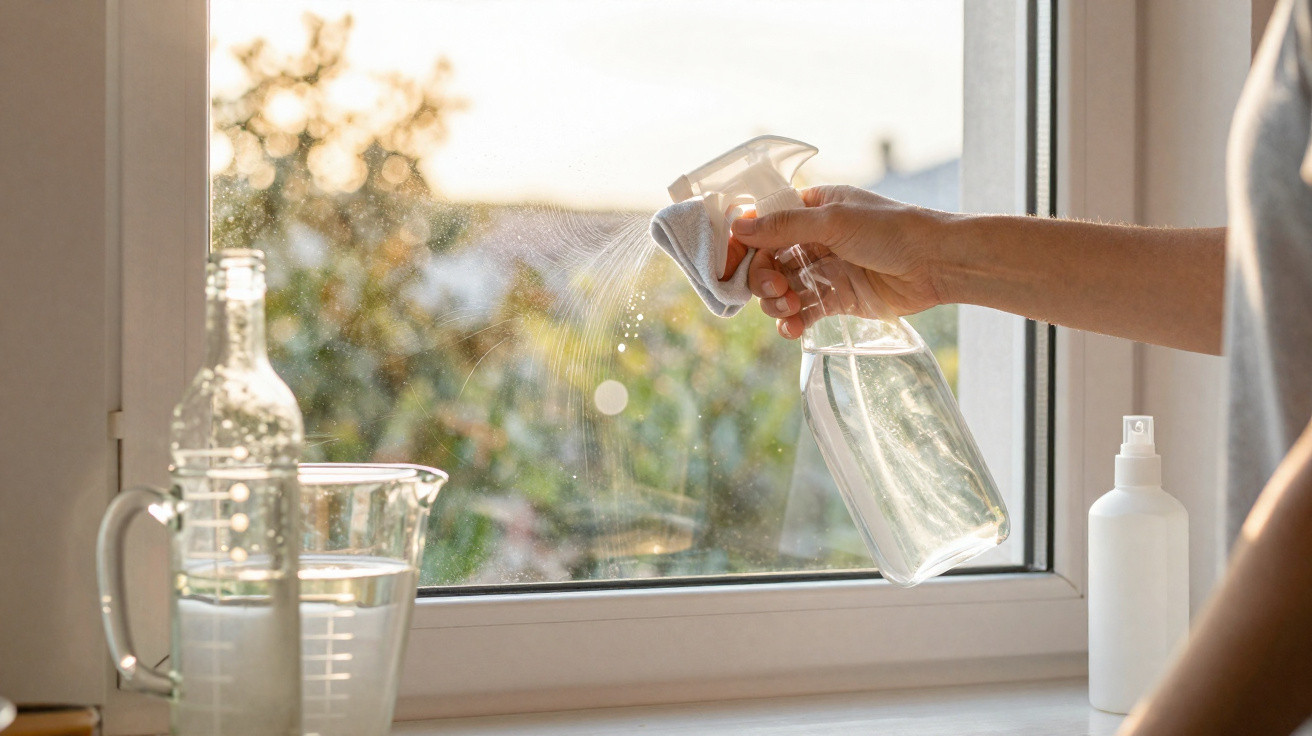
The homemade glass cleaner made with warm water, white vinegar and a very small amount of neutral washing-up liquid helps lift grease, fingerprints and mineral residue. To prevent streaks on windows, mirrors and shower screens, however, the cloth chosen, the amount used and the drying method matter just as much as the mixture itself.
Why do vinegar and washing-up liquid help to clean glass?
White vinegar contains acetic acid, which helps loosen water marks and light mineral deposits. Its acidity also makes it easier to remove residue left on glass when raindrops or shower splashes evaporate.
Neutral washing-up liquid works on grease from fingerprints, kitchen steam and body-care products that build up on shower screens. Just one drop is enough to support the cleaning process, as too much creates foam and leaves a film that shows up as a halo once the surface has dried.
How do you make homemade glass cleaner in the right proportions?
The formula can be mixed in a clean spray bottle, using equal quantities of warm water and vinegar. Prepare only an amount suitable for immediate use, rather than leaving the solution in the container for extended periods:
- Pour one cup of warm water into the bottle;
- Add one cup of white spirit vinegar;
- Add just one drop of neutral washing-up liquid;
- Close the bottle and combine the ingredients with gentle movements;
- Label the container and keep it out of children’s reach;
- Never mix the solution with bleach or other cleaning products.
Why is the glass still streaky after cleaning?
Many marks develop when the product dries before it has been spread and wiped away. This often occurs on sun-warmed windows, because the water and vinegar evaporate quickly, leaving visible streaks before the glass can be polished.
The material used also affects the finish. Cotton cloths, worn flannels and kitchen roll may shed fibres, while applying too much product saturates the surface. A clean microfibre cloth absorbs the solution more effectively and limits the residue that causes streaks.
How should the homemade glass cleaner be used on windows, mirrors and shower screens?
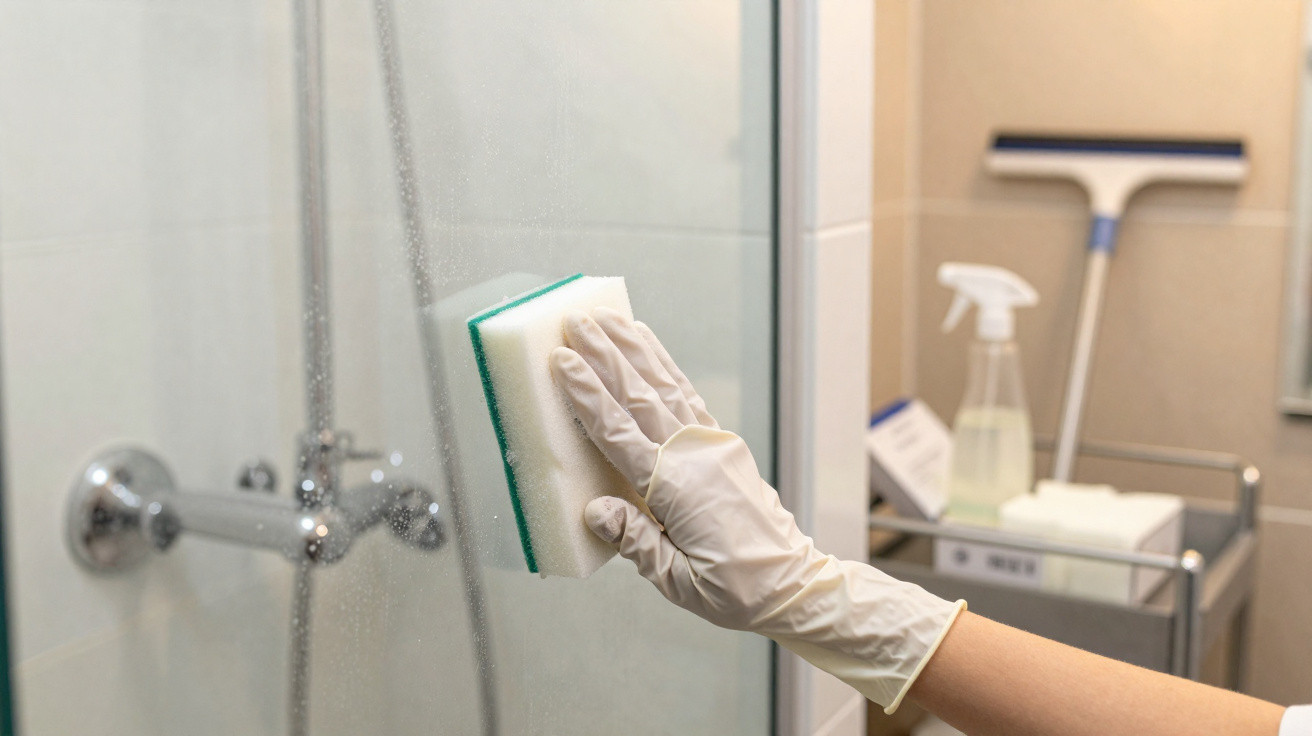
Before applying it, remove dust and loose particles so that dirt is not dragged across the surface. Spray on only a small amount of solution and wipe it off promptly, using the appropriate method for each area:
- On windows, wipe with the microfibre cloth and finish with a squeegee from top to bottom;
- On mirrors, spray the cloth instead, to avoid liquid collecting around the edges;
- On shower screens, leave it to work for a few minutes on light mineral marks;
- Dry the squeegee blade after every pass;
- Use another dry cloth to polish corners and trim;
- Clean glass when it is cool and out of direct sunlight.
Proper drying completes a streak-free clean
Move the squeegee across the glass in continuous strips, starting at the top. Wiping the blade between passes stops dirty water from being spread back over the surface, while a dry microfibre cloth removes droplets left along the edges and where the glass meets the frames.
This method for leaving windows gleaming works best with minimal washing-up liquid, moderate application and immediate polishing. When the homemade glass cleaner is used on a cool surface, the combination removes grease and residue without creating the film responsible for halos after drying.
Comments
No comments yet. Be the first to comment!
Leave a Comment