
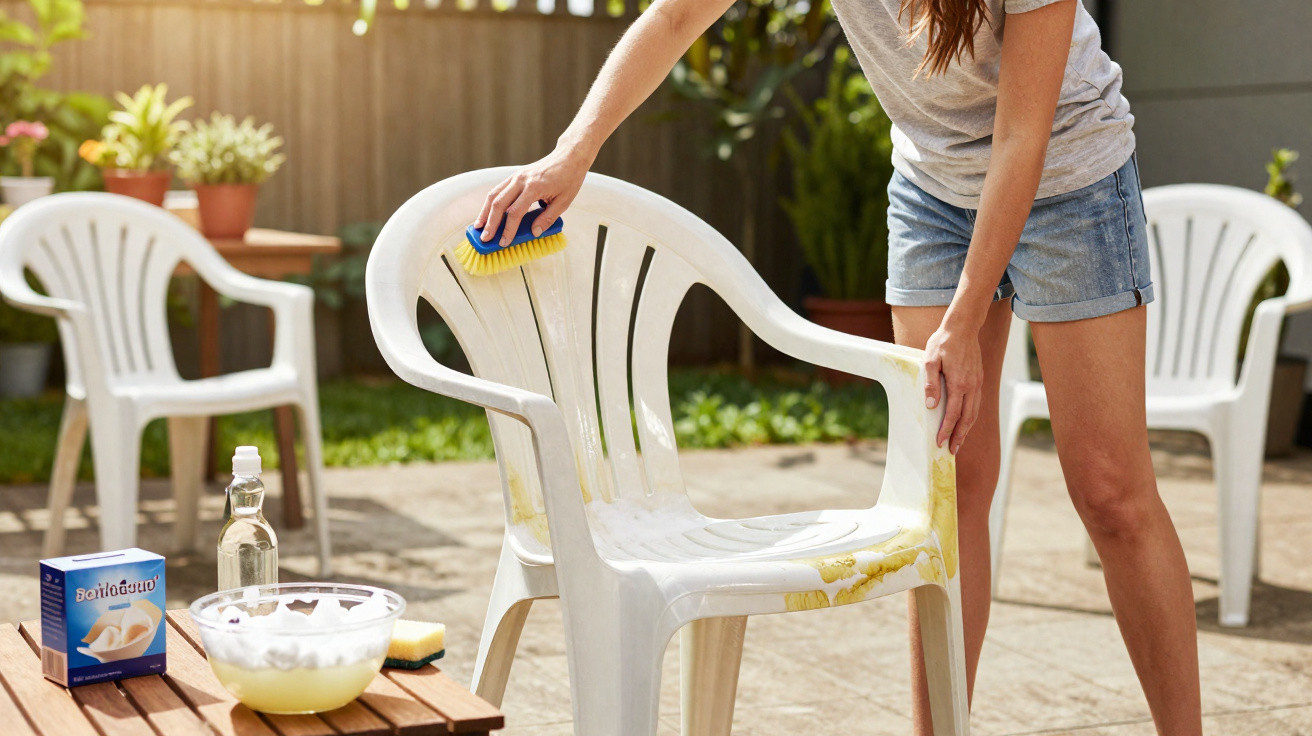
Those once-bright plastic chairs may now look dull and yellow, while the table is marked with stains and the entire set appears fit only for the tip. However, an inexpensive cleaning process using everyday household products can frequently restore tired plastic furniture and extend its useful life.
Why your plastic garden set fades, yellows and looks so tired
Outdoor plastic furniture is exposed to every kind of weather and contamination: intense sunshine, frosty winters, driving rain, traffic pollution, barbecue smoke and constant dust. Eventually, this combination takes a visible toll.
Ultraviolet (UV) light gradually harms the outer layer of plastic. Its surface becomes a little more uneven and porous, allowing pollen, soot and general grime to settle into it. Rather than looking fresh and clean, the furniture can become grey, blotchy or yellowed.
White PVC is particularly likely to develop a cream-coloured or yellow cast. Coloured plastics tend to lose their strength of colour instead, so rich greens and blues may become pale and faded where the material was not UV-treated during manufacture.
Sunlight doesn’t just fade plastic – it changes the surface, making it grab onto dirt, stains and pollution far more easily.
Other garden furniture materials deteriorate as well, although in different ways. Metal can rust once its protective finish is damaged. Timber becomes rough and silvery, requiring regular oiling and gentle sanding to retain its appearance. Natural rattan does not cope well with repeated rain and direct sunlight, and can crack or break after only a few seasons.
Provided it remains structurally intact, plastic is among the simplest materials to restore. If the seat has not become brittle and the legs are free from cracks, there is often plenty worth trying before throwing the furniture away.
The two-step homemade method that revives dull plastic
A frequent error is to use aggressive chemicals or abrasive scourers immediately on yellowed plastic. This may score the surface, causing it to weather even more quickly. A gentler, more systematic method is usually more effective.
Step 1: basic clean to remove surface grime
First, sweep away loose soil, leaves and cobwebs with a soft brush or broom. Removing this debris beforehand stops mud from simply being spread across the furniture.
Next, make up a bucket of warm water with a small amount of mild washing-up liquid. Wash all areas using a soft cloth or non-scratch sponge, paying attention to the undersides of armrests and the edges of seats, where dirt often collects. Rinse thoroughly with clean water to remove every trace of soapy residue.
A thorough wash with warm, soapy water is the foundation: the brighter-cleaning mix only works properly on a surface that’s already free of grease and mud.
Step 2: the vinegar and bicarbonate mix that brings back brightness
When the furniture is clean but still a little damp, proceed with the brightening treatment. This stage uses a straightforward homemade mixture.
Put the following into a spray bottle:
- 500 ml of warm water
- 1 tablespoon of white vinegar
- 2 tablespoons of bicarbonate of soda (baking soda)
- A small squeeze of washing-up liquid
Shake the bottle gently until the bicarbonate has dispersed evenly, then apply the solution liberally to the plastic, treating one area at a time.
Rub the surface in circular motions with a soft sponge. The mild abrasive quality of bicarbonate helps release embedded grime, while vinegar works on limescale deposits and old residue. Allow the mixture to remain for a few minutes before rinsing it away completely with clean water.
For white furniture, deeply set marks from leaves, pollution or long-standing dirt may occasionally require a slightly stronger option. A cleaning “clay stone” or comparable product, typically containing mineral powder, soap and glycerine, may be useful. Work it gently over the surface with a damp sponge, then rinse well. With coloured plastic, first try any more abrasive cleaner on an inconspicuous spot to ensure that it does not fade or dull the finish.
When to repair, when to bin, and how to protect for next year
Check the structure before you invest time
Before devoting an afternoon to cleaning, inspect every item carefully. A cracked chair leg, an overly flexible seat or deep splits in the plastic can mean that the furniture may give way beneath someone’s weight.
If the plastic is cracked or brittle, cleaning won’t fix the risk: in that case, the safest option is to let it go.
Small appearance-related flaws are another matter. Fine scratches, patchy colouring and a chalky texture can often be improved. Using fine-grit sandpaper, around 120 grit, very lightly can smooth the plastic surface. Sand in a single direction with minimal pressure, and remove all dust before applying paint.
Painting tired plastic instead of replacing it
Furniture that remains sturdy but still looks worn after cleaning can be renewed with spray paint or specialist plastic coatings. Such paints are generally formulated with ingredients that adhere to smooth synthetic materials, along with UV-resistant pigments.
For the best finish, clean the furniture, allow it to dry completely, sand it very lightly and then use thin, uniform coats. A deeper colour can disguise yellowing that cannot be fully removed, while giving an old-fashioned design a more contemporary look.
How to keep your garden set bright for more than one season
A little forethought can substantially lengthen the life of your furniture. When buying a set, look on the label for terms such as “UV-stabilised” or “colour in the mass”. They indicate that the colour runs through the material instead of being applied only to the surface, and that additives have been used to slow damage from sunlight.
Thereafter, storage and everyday care have a major effect. The following habits can help:
- Use a breathable cover over the furniture throughout autumn and winter.
- Keep stackable chairs in a shed, garage or beneath a dry balcony when they are not in use.
- Wash off bird droppings, tree sap and barbecue grease promptly, before they have time to set.
- During summer, give the set a quick soapy-water wash every few weeks.
- Do not use oily polishes, as they can leave the plastic sticky and draw in further dirt.
Despite common recommendations, kitchen oils and “miracle” shine sprays are unsuitable for plastic. They can produce an impressive result initially, but leave behind a greasy coating that attracts dust and may speed up yellowing over time. Plastic generally ages more successfully when it is clean, dry and shielded from the strongest sunshine.
Understanding what’s happening to the plastic itself
PVC and polypropylene are used for many garden chairs. They are both light and comparatively inexpensive, but each responds to exposure to oxygen and light. UV radiation breaks down some chemical bonds in the uppermost surface, resulting in mild chalking and a rougher feel.
The vinegar-bicarbonate mixture cannot undo this chemical ageing. What it does is clear away the accumulation lodged in the newly roughened surface, including soot, pollution particles, fine dust and mineral deposits left by rainwater. Once this layer has been removed, the furniture can look much closer to its original shade, even though the plastic beneath has aged to some degree.
Beyond the garden: using the same method on other plastic surfaces
This affordable cleaning approach can also be useful elsewhere at home. Warm soapy water followed by the vinegar and bicarbonate spray may refresh plastic window frames, exterior storage boxes, children’s plastic tables and certain patio accessories.
As with garden furniture, carry out a small trial on an area that cannot be seen first. Certain glossy coatings and printed details can be delicate, requiring no more than mild soap. Do not use this technique on car bodywork or lacquered finishes, as even gentle abrasives may leave noticeable scratches.
What could go wrong – and how to avoid it
There are several potential problems to keep in mind. A harsh scourer may create permanent scratches that become obvious in the light. Vinegar must never be mixed with bleach, even though some people may do this during intensive cleaning, because the combination produces toxic fumes.
With heavily sun-damaged or very old furniture, cleaning may expose the full extent of the deterioration. Once dirt has gone, a chair can seem worse if the plastic below is badly chalked or unevenly coloured. In these circumstances, painting it or choosing to recycle it may be the more practical solution.
For many plastic garden sets, however, the first proper wash of the year, followed by a basic homemade brightening treatment, can transform furniture that seemed destined for the bin into a practical and even appealing part of the patio once more.


Comments
No comments yet. Be the first to comment!
Leave a Comment