
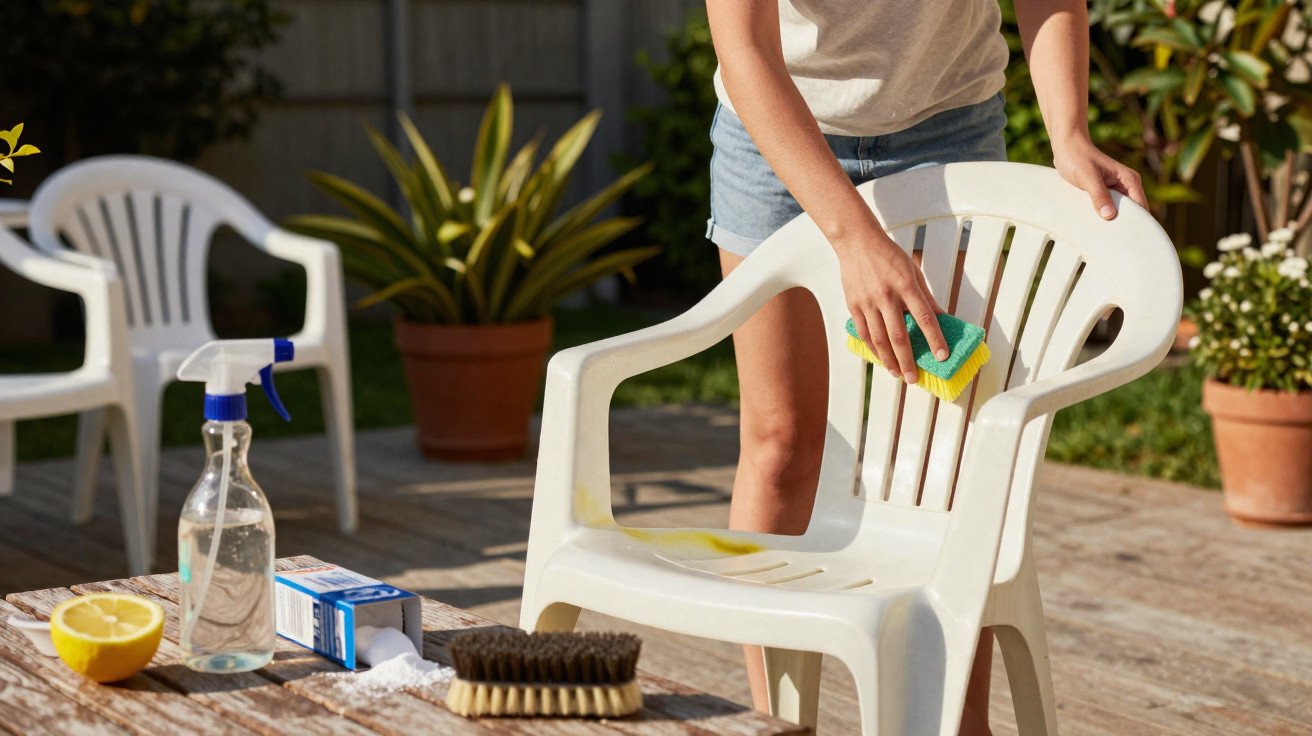
A small household trick can still make a difference.
Many chairs look far older than they really are after just one winter. Sand, UV exposure, damp and microalgae all take their toll. Yet a straightforward blend of everyday household ingredients can restore a surprising amount of shine, without specialist equipment or repainting.
Why plastic garden furniture turns grey so quickly
UV radiation breaks down polymers at the surface and leaves them rougher. This makes the material seem porous, so it picks up dirt more readily. Damp conditions encourage green deposits, mould and black specks. Even relatively new PVC or polyrattan sets can therefore look dull after one wet season.
Dirty or damaged: a quick check
Signs of surface dirt include a dull film, green staining or yellowish shadows while the surface still feels smooth. More serious deterioration is indicated by a chalky residue that wipes away, crumbling material or cracks. A split chair back may only appear to be holding together.
Where there are structural cracks or a crumbling surface, safety comes first: a weakened plastic shell can suddenly break under weight and should be disposed of.
The kitchen-cupboard mix for dull and yellowed plastics
The effective combination uses warm water, vinegar, a little soap and a pinch of bicarbonate of soda. It removes limescale, neutralises organic residue and remains gentle on the material.
Ingredients and quantities
- 3 litres of warm water
- 250 millilitres of clear household vinegar (5–8%)
- 3 tablespoons of bicarbonate of soda (baking soda)
- 1 generous squirt of liquid soap, black soap or mild washing-up liquid
- Optional for heavily yellowed white furniture: a little washing soda or, for localised marks, a clay cleaning stone
Mix the water and soap first, stir in the vinegar, then add the bicarbonate of soda last. The mixture will foam briefly – use it straight away and do not store it in an airtight container.
How to clean plastic garden furniture
- Remove dust and cobwebs with a dry broom. Use a soft brush first in joints and crevices.
- Apply the solution generously and work in the shade so it does not evaporate.
- Leave it for 10–15 minutes. During this time, the acid and surfactants loosen the deposits.
- Wipe in the direction of the grain with a soft sponge. Treat corners using an old toothbrush.
- Rinse thoroughly with clean water, then soak up remaining water with a microfibre cloth.
White or coloured: small changes, major results
For white furniture, using slightly more bicarbonate of soda acts as a mild polish. Localised yellowing can be dampened briefly with washing soda, then rinsed away promptly. Reduce the bicarbonate of soda on coloured surfaces to prevent pigments from looking dull. In this case, the water, vinegar and soap do most of the work.
Common mistakes to avoid
- Do not use chlorine bleach, strong solvents or descalers: they can strip colour or weaken the material.
- Avoid abrasive pads, wire wool and wire brushes: their micro-scratches make surfaces even more likely to attract dirt.
- Use a pressure washer only carefully and from a distance; never direct it at already weathered areas.
- Do not use cooking oil for “shine”: it leaves a sticky layer that attracts dust.
Never combine vinegar with chlorine cleaner. This creates toxic chlorine gas. Always rinse away residues with plenty of water.
A routine that preserves the shine
Seasonal care plan
- Every two weeks: wipe briefly with warm soapy water, then dry the furniture.
- After heavy rain: remove standing water and dry the surfaces to prevent water marks.
- In summer: where possible, keep furniture under a parasol, shade sail or pergola. Less UV exposure means slower ageing.
- In autumn: clean thoroughly, allow everything to dry completely, then store under a cover or in a garage or cellar.
Quick help at a glance
| Problem | Mix adjustment | Contact time | Tool |
|---|---|---|---|
| Grey film, dust | Basic recipe | 5–10 min. | Soft sponge |
| Green deposits | Slightly more vinegar | 10–15 min. | Soft brush |
| Yellowed white plastic | More bicarbonate of soda, localised washing soda | 15 min. locally | Microfibre cloth |
| Dull coloured plastic | Less bicarbonate of soda | 10 min. | Sponge, plenty of rinsing |
Why the mix works
Vinegar dissolves limescale marks and mineral particles that anchor deposits to the surface. Soap separates greasy films from the plastic and keeps dirt suspended in the solution. Bicarbonate of soda buffers the acid, provides gentle abrasion and loosens organic residue. Warm water speeds up the process and helps surfactants work more effectively.
When cleaning is no longer enough
The appearance of chalky, weathered surfaces can only be improved to a limited extent. A plastic treatment from the automotive aisle containing UV blockers can deepen the colour and smooth the surface. For heavily aged pieces, use a plastic adhesion primer followed by paint designed for outdoor use. Load-bearing parts with cracks should be discarded, as cosmetic treatment cannot prevent them from breaking.
Safety, environment and practical use
- Protect plants from splashes and do not allow wastewater to run into ponds.
- Wear gloves, particularly when handling washing soda. The powder is alkaline.
- Do not mix vinegar and bicarbonate of soda in sealed bottles. The gas produced creates pressure.
- Test each step on an inconspicuous area first, so you can see how the plastic responds.
Useful to know: understand materials and save money
Garden furniture is usually made from polypropylene, PVC or painted ABS blends. Polyrattan, a plastic weave, also tolerates the solution described above, although its weave needs a brush rather than a sponge. Painted surfaces are more sensitive, so work more gently and avoid washing soda.
The financial saving can be considerable. A family plastic garden furniture set can easily cost €150–€400. The vinegar, soap and bicarbonate of soda mix costs less than one euro per clean. Two hours of manual work and a tub of cleaning solution can often bring back the “like new” effect, while saving resources, packaging and transport.
Comments
No comments yet. Be the first to comment!
Leave a Comment