
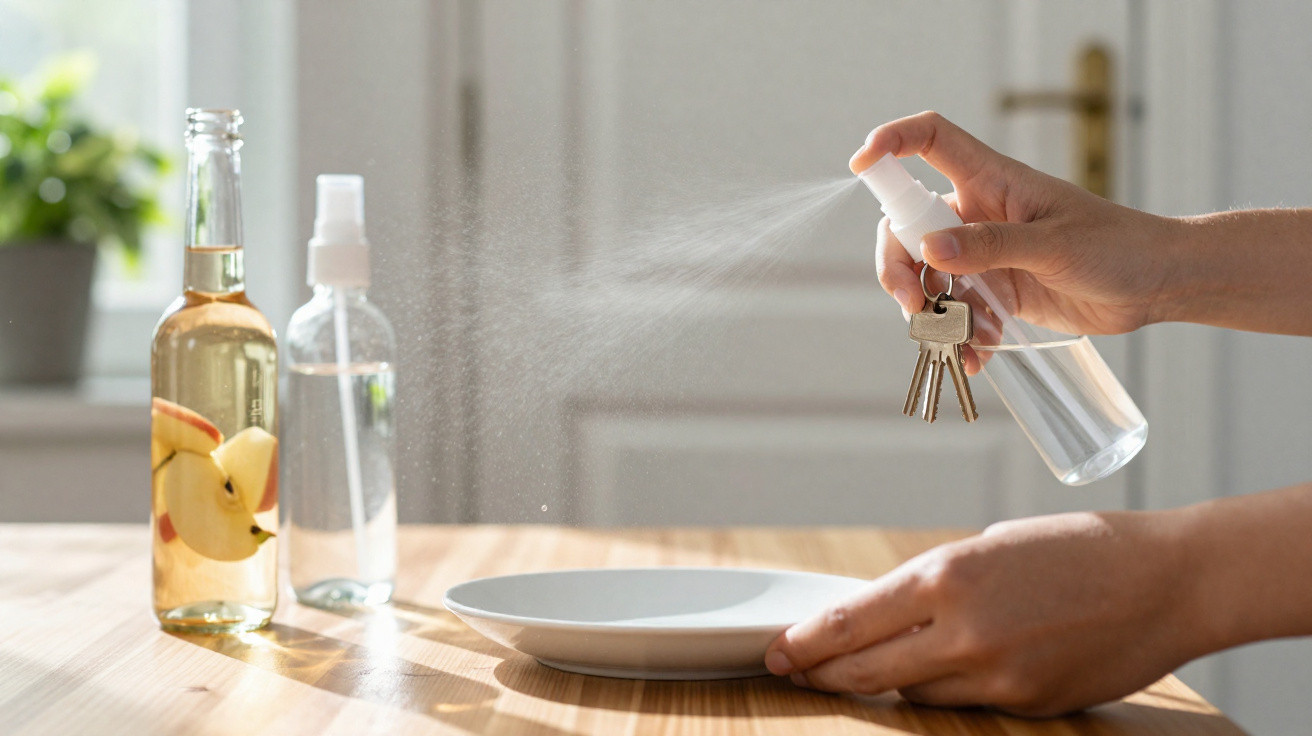
Spraying vinegar and alcohol on house keys has become a common habit in many households, prompted by concerns about germs brought in from outdoors on everyday items. Keys travel through pockets, handbags, counters, locks and even floors, picking up residue that cannot easily be seen but can be removed through a straightforward cleaning routine using affordable products.
Why does spraying vinegar and alcohol on house keys support disinfection?
Spraying vinegar and alcohol on house keys makes use of the properties of two household ingredients to strengthen daily hygiene. Alcohol at concentrations close to 70% is widely used in healthcare settings because of its effectiveness against bacteria and viruses.
White vinegar, which contains acetic acid, helps to lift organic residue, grease and minor marks that build up on metal surfaces. Used together, they reach the gaps and grooves of keys, providing quick cleaning and disinfection without the need for expensive products.
What are the benefits of spraying vinegar and alcohol on house keys?
One of the most frequently mentioned benefits is the potential to reduce the number of microorganisms brought indoors from the street, without relying on complicated solutions. This approach can also help keys retain their appearance by preventing the build-up of crusted residue, dark marks and a sticky metal feel.
The method may also be used on shared keys, such as those for gates, garages or communal doors, which are handled by several people throughout the day. In these situations, regular cleaning becomes particularly relevant during periods of increased concern about respiratory illnesses.
- Targeted disinfection: alcohol acts quickly on bacteria and viruses present on the metal surface.
- Removal of stuck-on dirt: vinegar loosens grease, dried sweat and dust from grooves.
- Fast evaporation: alcohol dries within seconds, so the keys are not left damp.
- Low cost and convenience: both are common household items, and the process takes only a few minutes.
How should vinegar and alcohol be prepared and applied to keys?
To spray vinegar and alcohol on house keys safely, use 70% ethyl alcohol or isopropyl alcohol, along with distilled white vinegar. Combine equal parts alcohol and vinegar in a clean spray bottle, then shake it gently before use to create an even solution.
- Set the keys aside: place the keyring on a clean cloth or remove the keys you wish to clean.
- Spray the solution: apply vinegar and alcohol to every side, tip and groove.
- Wait for a few minutes: leave it for 2 to 3 minutes so it can come into contact with dirt and microorganisms.
- Rub gently: use a microfibre cloth or soft paper to lift away residue.
- Dry thoroughly: make sure the keys are fully dry before putting them away.
What precautions and limitations apply when using vinegar and alcohol on keys?
A few precautions can help protect materials when spraying vinegar and alcohol on house keys, particularly models with special paint finishes, decorative metal plating or plastic components. For these types of keys, it is sensible to test the mixture on a small, less visible area before treating the whole surface.
It is also advisable to avoid prolonged soaking. Prioritise spraying and quick drying, especially for electronic keys and gate controls, so that circuits or buttons are not affected. When used moderately and with attention to signs of wear, this routine can become part of the cleaning of items such as door handles and mobile phones, serving as a simple, useful practice that reinforces the feeling of a more hygienically controlled environment. In addition, the vinegar and alcohol combination may complement, but cannot fully replace, hand hygiene with soap and water or suitable alcohol-based preparations, which remain the most effective way to reduce the transfer of microorganisms between environments.


Comments
No comments yet. Be the first to comment!
Leave a Comment