
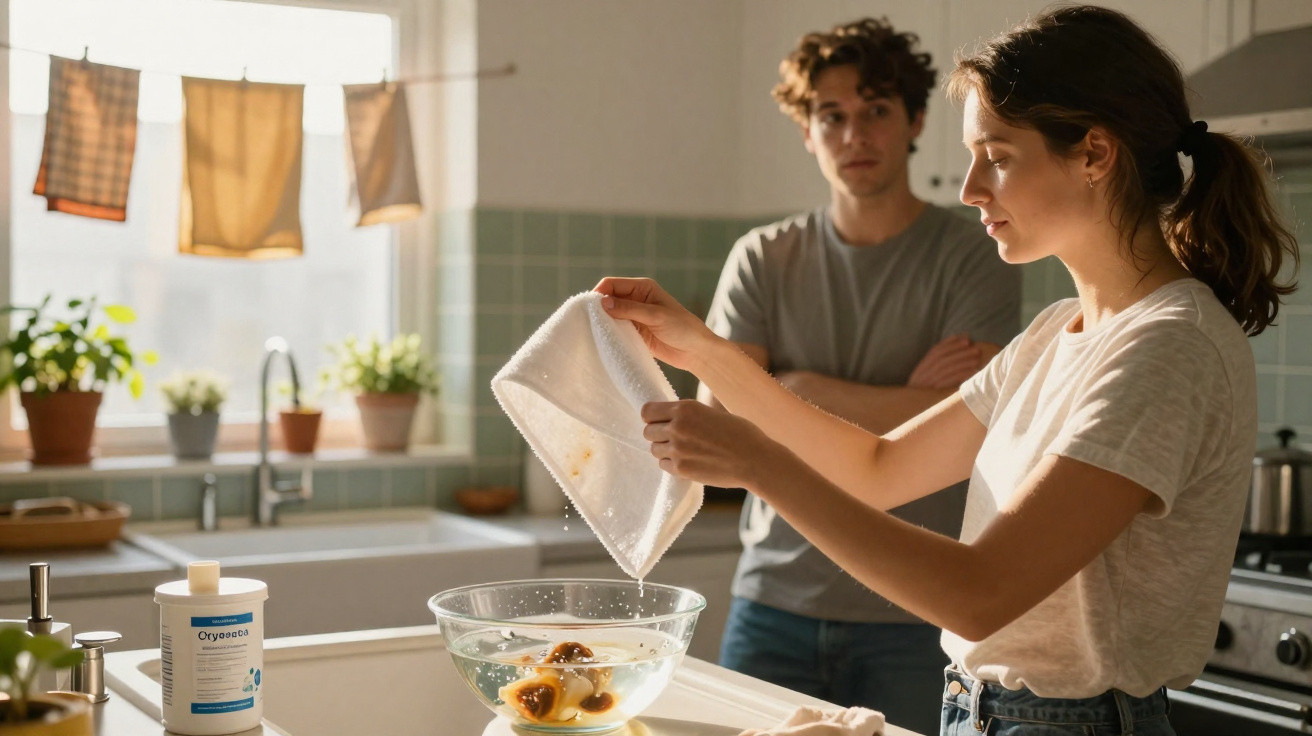
The dispute began with a pan of tomato sauce.
Léa stood on one side, brandishing a grey tea towel that had once been white and defending her trusty baking soda. Across from her, her sister Anaïs held a glass of wine, tipped another white powder into a bowl and said calmly, “You’re stuck in 1998.” Behind them, the washing machine droned away like a referee about to sound the whistle.
Twenty minutes later, both women were staring at the laundry area with slightly parted lips. They had used the same pile of stained tea towels, yet achieved completely different outcomes.
The most painful part? The supposedly old-fashioned solution had not won.
Why baking soda is falling behind in the kitchen towel whitening battle
Every home seems to have that notorious kitchen drawer: an opened box of baking soda, tea towels gone yellow and a hazy recollection of a miraculous grandmotherly remedy. Online, baking soda is presented as a magic fix for everything from blocked drains to scorched pans. But when it comes to whitening tea towels, its shine is beginning to wear off.
More and more households are finding the same thing. However much they soak and scrub, white fabrics remain dull. The fibres become coarse. The red wine mark survives, only slightly paler. With each wash, the legend loses a little of its credibility.
Consider Camille, 32, in her small Lyon flat. On Sunday morning, she sets about “detoxing” her kitchen linens: a basin, hot water, two generous spoonfuls of baking soda and a hopeful prayer. She works hard at the coffee rings, puts everything in the drum, starts a hot wash and leaves with the contented confidence of someone following the proper routine.
When she takes the tea towels out, they certainly smell fresh. Yet the grey-beige coating remains. The corner once used to lift a hot baking tray is permanently caramel-coloured. The white stripes on her favourite tea towel have gradually become the shade of old milk.
The explanation for that disappointment is straightforward. Baking soda is a gentle alkaline product. It is excellent at neutralising smells, softening water and giving detergent a little help. It is far less effective against deeply oxidised stains, such as tomato, turmeric or tea, that cling to cotton fibres.
Surface grime shifts, odours disappear and the impression of cleanliness is there. But the pigment molecules often remain behind. This is where a more targeted, oxygen-based product enters the picture and starts dividing households at the laundry basket.
Oxygen bleach: the surprising method behind laundry arguments
The disruptive product is oxygen bleach, often sold in eco shops as “active stain remover” or “sodium percarbonate”. It appears harmless: a fine white powder, no pungent odour and a rather unexciting label. When mixed with hot water, it releases active oxygen, which tackles coloured stains without the harshness of traditional chlorine bleach.
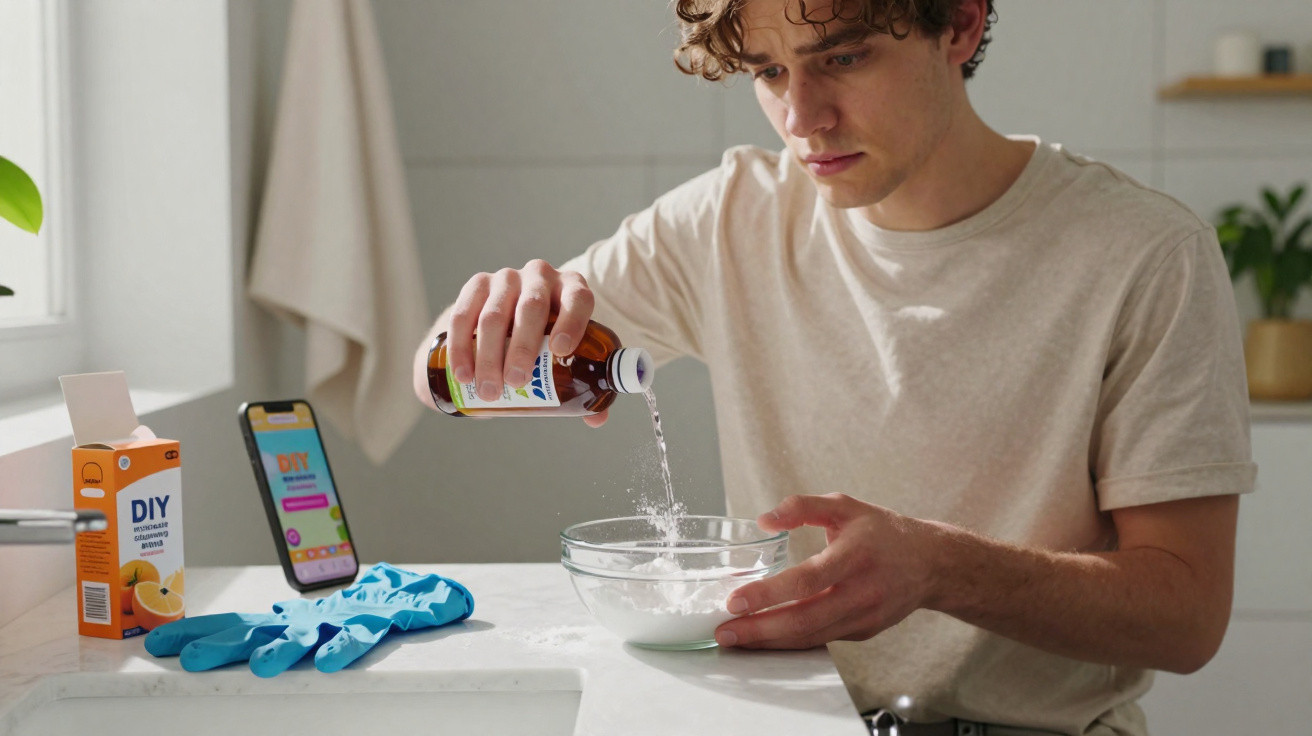
The technique quietly spreading through laundry-focused groups has an almost ritualistic quality. Take a basin, add very hot water - 60–70°C if the fabric can withstand it - stir in a heaped spoonful of oxygen bleach, then add the tired-looking tea towels. Leave everything to soak for 20 to 30 minutes, or longer for curry and beetroot marks. Afterwards, wash as normal in the machine with your usual detergent. There is no need to scrub frantically.
That is precisely what Anaïs did in the family kitchen. She filled a metal bowl, added boiling water from the kettle, poured in a spoonful of oxygen bleach and watched the powder fizz gently. The tea towels changed from grey fabric into floating ghosts in a cloudy bath. Léa mocked her: “You’re just bleaching them to death.”
When the wash finished, the result wounded her pride. The tea towels pre-soaked in baking soda were clean but still lacklustre. Those treated with oxygen bleach looked nearly new: the red wine shadow had vanished, yellow grease halos had gone and the grey film had lifted. That evening, the family group chat filled with photographs and question marks. The famed white powder had been unseated by a cousin that few people properly understood.
The chemistry behind this minor domestic scandal is almost tediously logical. Oxygen bleach does not merely support detergent; through oxidation, it chemically breaks apart the coloured bonds in stains. Tea, coffee, tomato, fruit and many plant-based pigments all respond particularly well to this process. Hydrogen peroxide is effectively produced during the wash, exactly where the dirt is sitting.
By comparison, baking soda is like a helpful friend: it supports the soap beautifully, softens water and reduces odours, but it seldom wins the battle on its own. People often mistake “clean and odour-free” for “visibly brighter”. Those are two very different outcomes. And, honestly, hardly anyone separates kitchen towels meticulously by colour and wash cycle every day.
How to use oxygen bleach on kitchen towels safely
The most effective approach is remarkably uncomplicated. First, read the care labels: cotton and linen tea towels generally tolerate higher temperatures well, while synthetics are far less forgiving. For hard-wearing whites, heat water to at least 60°C. Pour it into a basin or bucket, then add one to two tablespoons of oxygen bleach according to the amount of washing.
Stir until dissolved, then place the tea towels in the water, ensuring they are fully submerged. Soak for 20 minutes if the greying is light, or for up to an hour for persistent marks. Then move the wet textiles directly into the washing machine, select your usual cotton programme and, where possible, air-dry them in bright daylight. Sunshine remains one of the world’s most overlooked whitening aids.
The most frequent error is expecting immediate miracles from tea towels that have endured years of misuse. Grease baked in over 50 washes will not disappear after one magical soak. Another mistake is adding too much product to cold water and waiting for dramatic results. Oxygen bleach needs heat to release its full potential. A cold soak means mediocre performance and wasted powder.
There is also an “all or nothing” tendency. Some people abandon detergent altogether and use only stain remover, then wonder why their tea towels feel stiff or lack a clean scent. These products work as a team rather than as rivals. Finally, many people worry about harming the fibres, although the real risks are overdosing, aggressive scrubbing with a nail brush or blindly combining different chemicals.
“Whitening kitchen towels is like cleaning a pan,” laughs a professional cleaner I met. “If you attack everything with the same product, you either do nothing or you damage things. You need the right level of aggression for the right stain.”
- Use oxygen bleach only on white or pale cotton and linen tea towels; never use it on delicate wool or silk.
- Keep baking soda for deodorising and softening rather than relying on it as the only whitening product.
- Before soaking, rinse very greasy tea towels in hot water with a drop of washing-up liquid.
- Wash stained tea towels promptly instead of leaving them crumpled in a corner for days.
- Whenever possible, dry them in daylight to strengthen the whitening effect without using more product.
When an ordinary wash becomes a quiet domestic revolution
This fresh approach to treating kitchen towels does more than brighten a drawer. It subtly reshuffles the ranking of advice handed down by mothers, grandmothers and that familiar “tip I saw on TikTok”. The product once trusted without question now seems slightly dated. Meanwhile, the newcomer with its laboratory-sounding name is steadily gaining ground in utility rooms and student flats.
Some embrace it with relief, finally watching the yellow halos they had accepted as permanent fade away. Others dismiss it as “another miracle powder” and hold fast to the method they know. These lively disagreements are usually less about chemistry than identity, habit and the pride of doing things “properly”.
It is rarely acknowledged, but laundry can be deeply emotional. Kitchen towels retain traces of family dinners, late-night pasta and first baking attempts. Throwing them away because they appear dirty can feel like discarding memories. Bringing them back to life with a new method is a small triumph over waste - and over the quiet embarrassment of owning “disgusting” textiles.
Some people will try oxygen bleach once and never return to their old routine. Others will stick with baking soda and accept tea towels that are softer but less white. Both choices reveal something about how we handle the unseen work of the home. The real issue is not who is correct, but what we want to see when we open that kitchen drawer.
| Key point | Detail | Value for the reader |
|---|---|---|
| Oxygen bleach beats baking soda for whitening | Active oxygen breaks down coloured stains that simple alkalinity cannot completely remove | Cleaner, brighter tea towels without harsh chlorine bleach |
| Heat and time are non-negotiable | Soaking in 60–70°C water for 20–60 minutes maximises the whitening reaction | Improved results from every wash, with less frustration and fewer repeat cycles |
| Right role for each product | Baking soda for odours and softening, oxygen bleach for deep stains, detergent for overall cleaning | A straightforward, efficient routine that prolongs the life of kitchen textiles |
FAQ:
- Can I mix baking soda and oxygen bleach in the same wash? Yes, you can use both, provided you stick to normal amounts and dissolve the powders thoroughly in hot water; they perform different roles and work well together.
- Will oxygen bleach damage coloured tea towels? Low doses are generally safe on durable, colourfast fabrics, but prints may fade over time, so most specialists reserve it for whites and very pale shades.
- Is oxygen bleach the same as chlorine bleach? No. Oxygen bleach relies on active oxygen and is generally kinder to fibres and less pungent than chlorine bleach, which is more aggressive and may yellow or weaken fabrics.
- What can I do for very old, greyed towels? Try an extended hot soak with oxygen bleach followed by a high-temperature cycle. If they remain dull, repurpose them as cleaning cloths and buy new ones to care for properly from the outset.
- Does this method work in cold water? It is much less effective. The whitening reaction truly activates with heat, so lukewarm or cold water delivers only partial results and wastes product.

Comments
No comments yet. Be the first to comment!
Leave a Comment