
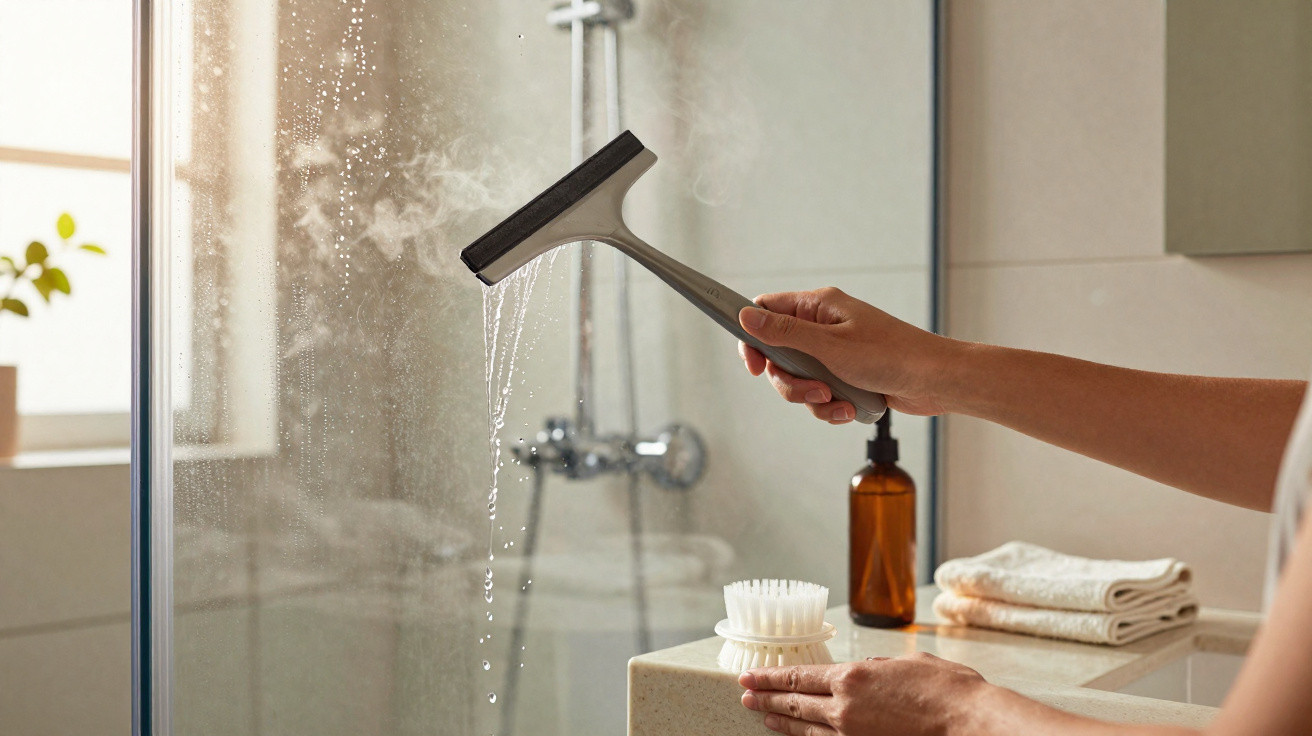
After only a week of hot showers, the screen can already start to look dull and streaked.
Water marks return, tile grout becomes darker and the cloudy layer on the glass can feel impossible to remove. While many people blame ineffective cleaning products, professionals usually point to another cause: what you do in the 60 seconds after switching off the shower.
Why your shower gets cloudy so fast
The chalky coating that develops on glass and tiles is called soap scum. It is created when fatty acids from conventional bar soap react with hard-water minerals, particularly calcium and magnesium. The resulting residue adheres to every surface reached by the water.
Changing from bar soap to liquid body wash can make a noticeable difference. Liquid cleansers contain different surfactants, which are less likely to stick to ceramic and glass. A film can still develop, but it accumulates much more slowly. In areas with especially hard water, the contrast can be clear within a week.
There is another factor to consider: what remains on the surfaces once you leave the shower. A hot shower leaves water, cleanser, natural skin oils and tiny particles of skin behind. As this mixture dries, the water evaporates and minerals crystallise. They bind to the soap residue, fixing it onto the acrylic or glass.
Limescale does not appear from nowhere. It forms when water is allowed to dry in place on a surface.
That is why one shower can look worn out after a year while another in a comparable home remains glossy. The bathrooms that stay in good condition do not let water dry naturally. Their users, or their cleaners, act before the minerals have a chance to set.
The 60-second shower routine professionals swear by
Professional cleaners do not necessarily put more effort into shower cleaning; they simply act earlier. Their approach depends on a small routine carried out after every shower.
Step-by-step routine after every shower
- Rinse the walls, screen, taps and tray with clean water to wash away soap traces and body oils.
- Run a squeegee from the top down across the tiles and glass, directing the water towards the drain.
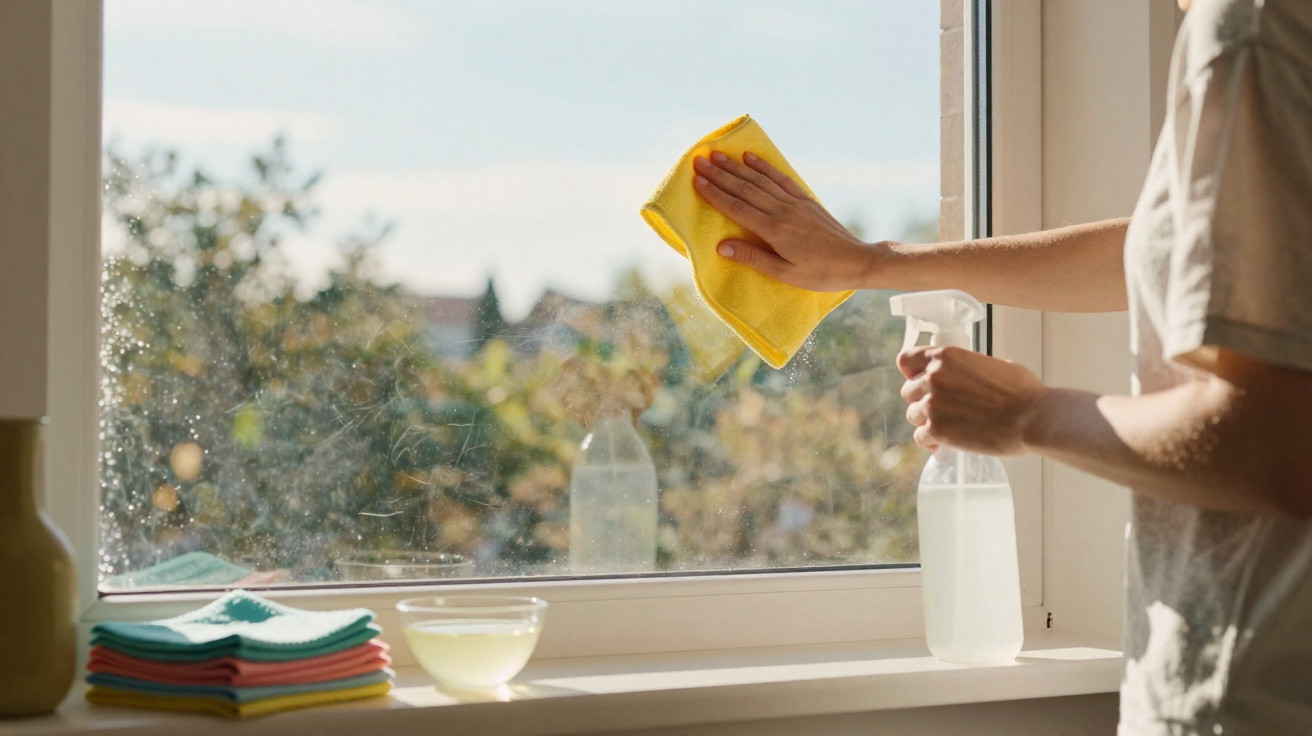
- Use a microfibre cloth on the corners, edges and metal frames to remove any remaining droplets.
- Ventilate the room: open the window for 15 minutes or leave the extractor fan on, and draw the curtain fully open.
Once this becomes habitual, the process takes under a minute. The squeegee clears most of the surface, while the microfibre cloth deals with areas where water collects, such as around the mixer or on the lower rail of the shower screen.
The real “secret” is boring: remove the water before it dries. Do that, and soap and limescale have little to cling to.
Gadgets that make the job easier
Some homes now use handheld window vacuums for this task. These appliances draw water directly from the glass, leaving the surface remarkably dry. Their battery life is often around 40 minutes, enough for several bathrooms or repeated use each day.
For anyone with limited mobility, or for those who simply dislike wiping by hand, such a device can turn a tiresome job into a fast pass over the surface. It also helps prevent streaks on mirrors and shiny tiles, making it easier to maintain a “hotel bathroom” appearance without much effort.
Light cleaning that fits into your shower time
Even when you dry everything thoroughly, a light residue will eventually form, especially in the areas hit hardest by water. Professionals often pair the drying routine with a brief cleaning task while showering.
The dish brush trick
An ordinary plastic washing-up brush with an integrated reservoir can be unexpectedly useful in a bathroom. When filled with a gentle, non-abrasive cleaner, it allows you to scrub awkward areas while the hot water is running.
Going quickly over the grout, the lower section of the glass and the space around the taps every two or three days stops the stubborn film from setting hard. Warm steam helps release residue, meaning you need less cleaner and less scrubbing.
- Pick a brush with soft bristles to prevent scratches on delicate finishes or acrylic.
- Choose a low-foaming cleaner to keep rinsing straightforward.
- Hang the brush inside the shower to remove the barrier to using it: when it is within reach, it is more likely to be used.
The combination of a soapy brush during the shower and a squeegee afterwards breaks the build-up before it ever becomes stubborn.
Smart products and materials that fight limescale
Bathroom manufacturers have begun addressing the battle against limescale with more advanced surfaces. Many newer glass screens have hydrophobic coatings that repel water. These invisible layers slow mineral deposits and encourage water to form droplets instead of spreading into sheets.
Certain shower systems even include a squeegee mounted on a rail and tucked neatly into the corner of the screen. The principle is straightforward: eliminate every reason not to use it. If the tool is within arm’s reach, using it each day can become almost instinctive, particularly in busy homes.
| Surface | What to avoid | Safer option |
|---|---|---|
| Natural stone (marble, travertine) | Vinegar, lemon juice, strong acids | pH-neutral stone cleaner, soft cloth |
| Acrylic shower trays and baths | Abrasive powders, harsh scouring pads | Diluted mild soap, baking soda paste |
| Glass doors | Rough steel wool, gritty creams | Glass cleaner, 0000-grade steel wool for tough spots |
Targeted treatments for existing deposits
If limescale has already left marks around the shower, a careful and targeted method can restore clarity without harming the surfaces.
Vinegar and washing-up liquid combo
For light deposits on ceramic tiles and glass, a 50/50 blend of white vinegar and washing-up liquid can be effective. The washing-up liquid breaks down oils and soap, while the gentle acid works on mineral residue.
- Apply or spray the mixture onto a dry surface.
- Let it work for 10 to 15 minutes, ensuring the area remains moist.
- Rinse well with warm water, then dry using a squeegee and microfibre cloth.
This approach works well for many households because both ingredients are usually already available in the kitchen. It also avoids the strong fumes produced by powerful limescale removers, which may be irritating in a cramped bathroom with poor ventilation.
When limescale turns stubborn
Heavily etched shower glass may require additional treatment. Very fine 0000-grade steel wool can remove mineral marks when used lightly on wet glass without scratching, provided it is handled with care. It remains essential to test it first in an inconspicuous area, particularly if the glass has a coating.
Descaling taps and the showerhead every month can visibly improve both water flow and appearance. A detachable showerhead can be soaked in a bowl of warm vinegar solution. For fixed heads, tie a plastic bag containing the solution around the fitting for an hour before rinsing it off.
Special care for shower curtains and hidden moisture
Glass screens receive most of the attention, but plastic and fabric shower curtains also hold moisture and soap residue. They can become stained, develop unpleasant odours and support mould along their bottom edge.
Machine washing can harm the water-repellent finish on certain curtains, particularly inexpensive plastic models. In many situations, a gentle hand-cleaning routine is the better option.
Monthly refresh for a curtain that lasts
- Soak the curtain for 30 minutes in lukewarm water with white vinegar (about one litre for 3 to 5 litres of water).
- Rinse it, then rub stained sections with a baking soda and water paste.
- Rinse thoroughly once more, then hang it in fresh air until it is completely dry.
Between more thorough cleans, wiping the lower edge with a microfibre cloth and ventilating the bathroom for 15 minutes after showering greatly reduces the risk of mould. Opening the curtain fully instead of leaving it gathered together allows it to dry rapidly and avoids damp folds.
Most curtain mould problems come from trapped folds that stay damp for hours. Open fabric dries, closed fabric grows.
Health, cost and long-term benefits
Although limescale stains are visually frustrating, their less obvious effects can cause greater issues. Mineral deposits constrict the holes in showerheads, encouraging you to increase the pressure and temperature. Over time, this raises energy costs. The deposits can also create an uneven spray, making rinsing take longer and extending every shower.
Damp corners and unclean grout create separate concerns. Mould spores may irritate the airways, especially in children, older people and those with asthma or allergies. Daily use of a squeegee and regular ventilation reduce humidity, helping to keep both dust mites and mould in check.
Financially, maintaining clean grout and clear glass can postpone significant renovation work. Badly etched shower screens often have to be replaced rather than cleaned deeply. Silicone affected by black mould may need to be fully removed and re-sealed, a messy and potentially expensive task compared with spending a few minutes on weekly maintenance.
For tenants, these details are important at inspections. A fresh-smelling bathroom with gleaming fittings suggests that the property has been properly maintained. Landlords notice this. It can make conversations about repairs or deposit returns considerably easier.
Homeowners in regions with very hard water sometimes add another layer of protection with a whole-house water softener or point-of-use filter. These systems lower the water’s mineral content before it reaches the shower. They are not a substitute for regular cleaning, but they can dramatically slow build-up, reducing detergent use and cleaning time over the years.

Comments
No comments yet. Be the first to comment!
Leave a Comment