
Tiny white crescents show exactly where droplets have dried, as though somebody has marked out your routine in chalk. We have all had that moment when the first daylight hits the shower door and the cloudy film seems to challenge you to clean it.
Steam clouds the mirror and turns the bathroom into a miniature rainforest. Run a fingertip over the glass and it squeaks along a gritty strip - the sort of sound that tells you, “You’ll need elbow grease.” The cleaner claims it will restore sparkle, the sponge offers miracles, but the haze hangs on like old chewing gum beneath a desk. Beside the drain, white rings gather around each drip, as hard and stubborn as seashells. Once, out of curiosity and irritation, I timed the solution: it required 90 seconds of actual effort.
Why cloudy limescale film returns
Limescale is not so much a stain as a hardened deposit. As hard-water droplets evaporate, they leave calcium and magnesium behind, which set onto the glass in fine, rough layers. At close range, it resembles a tiny mountain range, scattering the light and dulling the shine.
Anyone whose kettle is coated in chalky deposits will know it comes back with regularity. In the U.S., more than 80% of households have hard water, so this haze is not a personal failing; it is a matter of geography. One reader sent me a photograph from her rental inspection, where the only “major issue” highlighted in red was the shower door, as if simply being near minerals were an offence.
Glass does not absorb limescale; it merely puts up with it. Because calcium carbonate is alkaline, alkaline cleaning products largely have little effect, while scrubbing can spread the residue into streaks instead of dissolving the deposit. The effective approach is to give a mild acid time to reach each ridge, weaken its hold and release the film, allowing it to rinse away without a strenuous scrub.
The no-scrub vinegar wrap-and-wait method
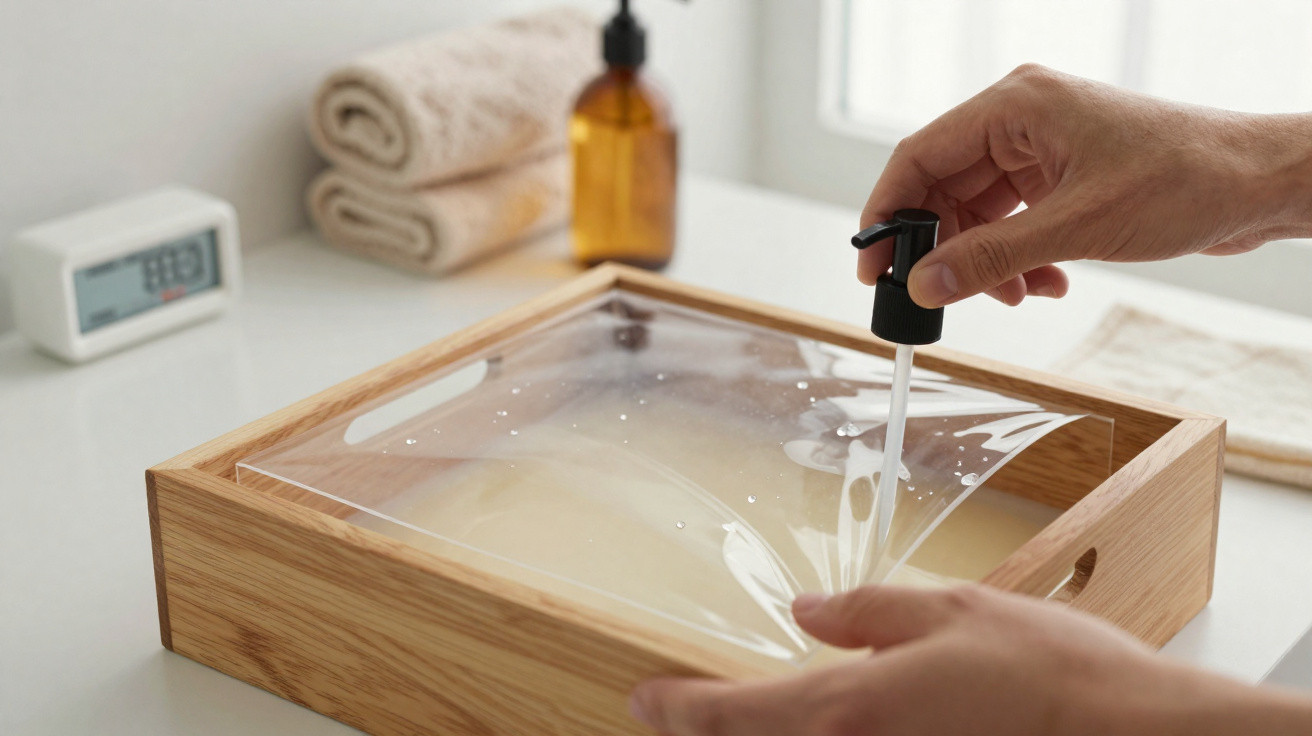
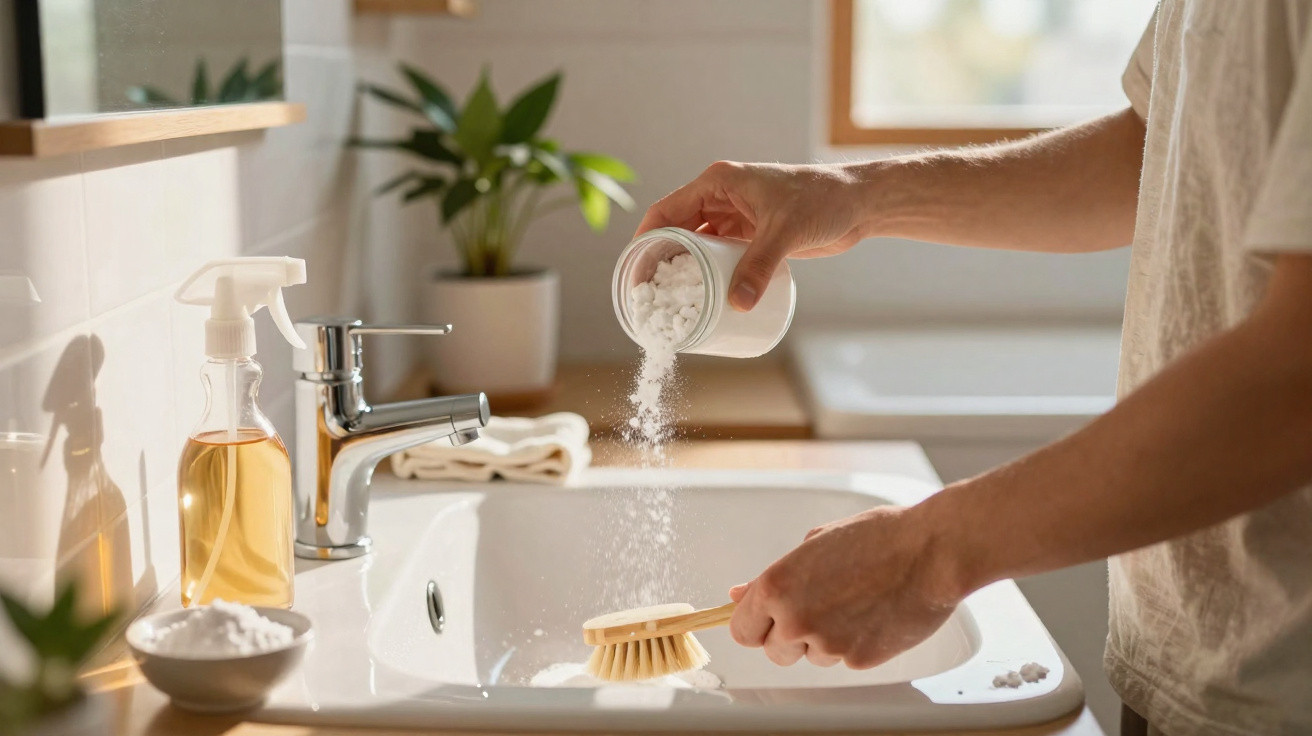
Run the shower for a minute to heat the glass, then spray on a 1:1 mixture of hot white vinegar and water with one tiny drop of washing-up liquid, which helps break the surface tension. Soak several paper towels in the same warm mixture, lay them over the glass in a patchwork and smooth them down so that they adhere. Wrap and wait for 20–30 minutes while the acid does the hard work, before removing the towels, rinsing and using a squeegee.
Warmth helps the acid work its way into the mineral deposit, while the towels hold it in place instead of letting it run off vertical glass within seconds. If dripping is a concern, cover the soaked towels with cling film to keep everything pressed against upright panels. Realistically, though, nobody does this every day.
Give the glass a thorough rinse with warm water, make one swift pass with the squeegee, and the job is finished. Keep the mixture away from natural stone and unsealed grout, and avoid leaving it on metal trim for a long time where the plating is delicate. Never mix vinegar with bleach under any circumstance, in any room.
“I stopped fighting the glass when I realized the trick isn’t strength, it’s patience in disguise,” a professional cleaner told me. “If the liquid can cling to it, the minerals don’t stand a chance.”
- Recipe: 240 ml hot white vinegar + 240 ml hot water + 1 small drop of washing-up liquid
- Preparation: warm the glass for 60–90 seconds
- Contact time: 20–30 minutes, with soaked towels pressed flat
- Finish: remove the towels, rinse thoroughly, then squeegee dry
- Avoid: abrasives, bleach mixtures and metal scourers
Keep shower glass shining without making it a chore
This method restores the glass, and a small habit helps it stay that way. A quick squeegee after the final shower of the day removes the droplets that create fresh rings, while a five-minute weekly wrap deals with any film that returns as you get on with life. Rinse, then squeegee soon becomes automatic, much like switching off the bathroom light with your elbow when both hands are full.
Some people use a citric-acid spray each week; others keep a dryer sheet beneath the sink for a 30-second rub over new marks; a few fit a compact inline filter to reduce minerals at their source. Every home and water supply differs, but the aim is the same: make shine the normal state. Its appeal is straightforward - less work, more gleam and no unrealistic routine that leaves you feeling guilty.
| Key point | Detail | Benefit for the reader |
|---|---|---|
| - | Warm glass and a vinegar wrap dissolve limescale without scrubbing | Little effort and quick, visible results |
| - | A 20–30 minute contact time works better than force and prevents scratches | Protects the glass while saving time |
| - | Rinse and squeegee daily, with a quick weekly reset when necessary | Stops haze reforming and keeps the shine for longer |
FAQ:
- Does this work on textured or frosted glass? Yes. The acidic solution is suitable for textured or frosted glass, but allow the full contact time so it can reach the grooves, then rinse thoroughly.
- What should I do if there is natural stone near my shower? Cover marble, limestone or travertine with a towel before spraying, and do not allow the solution onto these surfaces because acid can etch stone.
- Can vinegar harm metal trim or silicone? Brief contact is suitable for most chrome and silicone. Do not soak pitted or thin plating for long, and always rinse once the contact time is complete.
- Is citric acid more effective than vinegar? Both remove limescale. Citric acid smells less strong and can be mixed at 15–30 ml per 240 ml of hot water. Use only one acid at a time.
- How can I prevent limescale returning? Remove shower droplets with a squeegee or towel, then carry out a brief weekly wrap. If your water is especially hard, consider a small point-of-use filter.

Comments
No comments yet. Be the first to comment!
Leave a Comment