
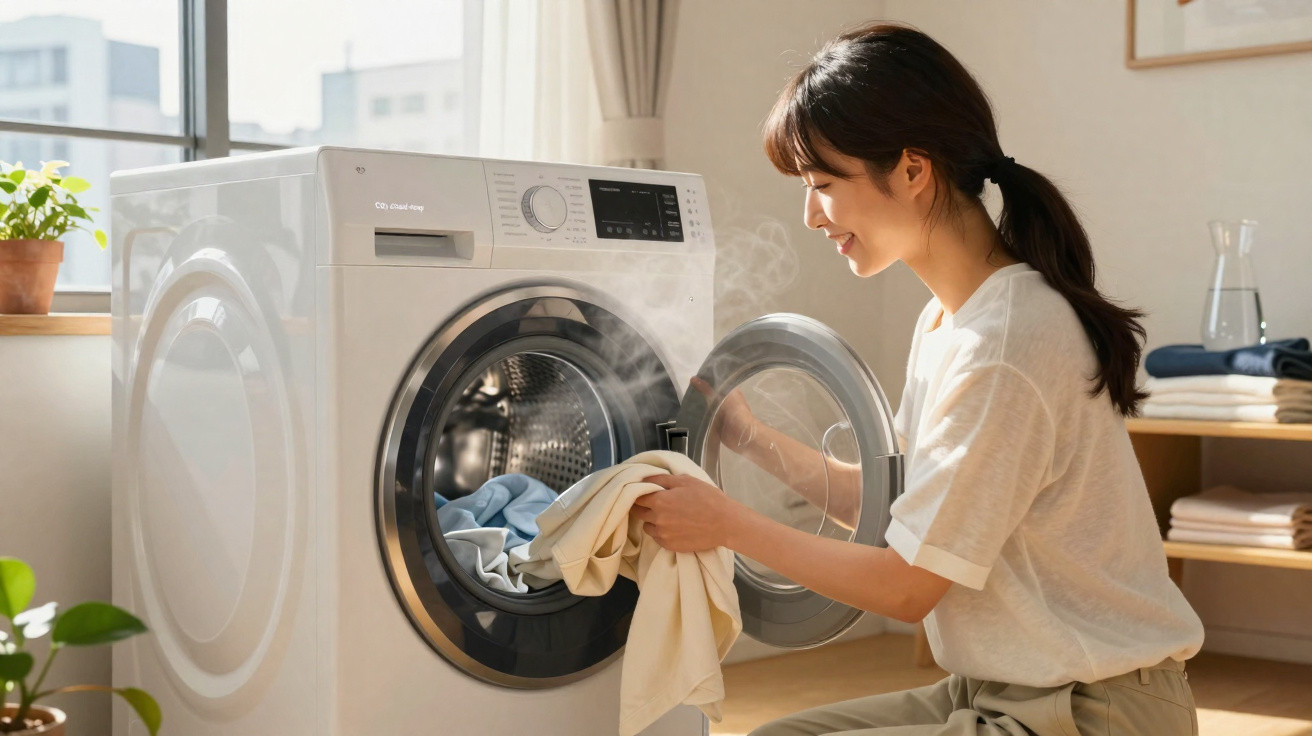
In a nation where technology is treated as a craft, this is not a showy concept device. It is a product you can purchase, wheel into your home and put to work the same evening. Its proposition is both straightforward and startling: fresher laundry without using a drop of water.
On a dull afternoon in Shibuya, people clustered around a countertop-sized unit that hummed like a restrained kettle. A representative placed a lipstick-marked shirt in its sealed drum, pressed the display, and a soft hiss filled the chamber. Ten minutes later, the cotton shirt emerged dry, slightly cool and oddly weightless to the touch. It seemed like a science-fiction prop that had at last become real.
Onlookers bent closer to smell it. There was no dampness and no blast of fragrance, only a neutral “nothing”, like a shirt that had never been worn. A grandmother murmured to her granddaughter about old laundrettes and wet seasons. The representative grinned, raising the empty water drawer. As phones appeared to take pictures, one phrase stuck: No water, no lie.
The machine that washes without water
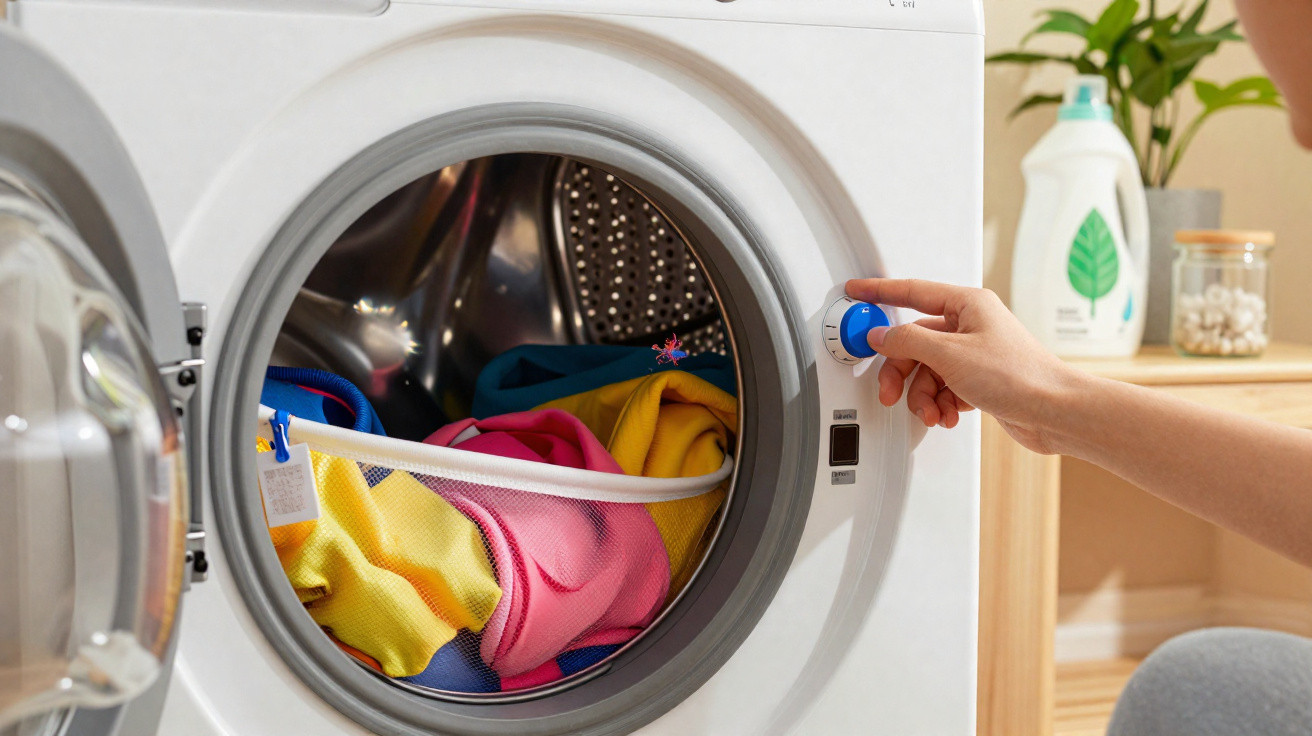
This is the mind-bending part: the drum does not fill with water. It closes and seals instead. The machine pumps in pressurised, recycled CO2, using micro-pulses of air to loosen oils, odours and tiny particles from the fabric. Soil enters the CO2 stream, where an internal filter captures it as the gas circulates repeatedly. The washing action uses zero water, while garments emerge dry.
In a Tokyo flat I visited, a young couple put on a “post-park” load: toddler T-shirts, a cardigan and a scarf that had made it through a noodle lunch. The programme lasted 18 minutes. They emptied the filter cup to find grey fluff rather than sludge, then photographed it with the pride of new parents. Everyone knows the feeling of laundry multiplying into an endless chore. This made it feel half as burdensome.
It resembles dry cleaning in some respects, but it is not quite the same. Conventional dry cleaning relies on solvents, whereas this closed-loop CO2 system uses technology more often associated with premium industrial cleaning and decaffeinated coffee. The consumer breakthrough lies in shrinking the technology and engineering it safely. Sensors monitor pressure and temperature, a carbon cassette traps micro-soils, and the gas condenses for reuse. It is quieter, cleaner and, at least in theory, gentler on clothing.
Living with the waterless CO2 laundry machine every day
Use it as an everyday refresh machine and it should suit you well. Combine lightweight tops, work shirts, knitwear, denim and sportswear in loads of 1–2 kg. Choose “Odor + Oil” for food smells and perspiration, “Pollen” during allergy season, or “Office” for shirts and blouses. Most programmes take 12–25 minutes. Because there is no soaking bath, there is no need to separate colours to prevent dye transfer. Take clothes out straight away, then hang them for a minute so the fabric can settle.
Heavily soiled items are another matter. Mud, blood and thick sauces cling to fibres in ways that gas cannot always release, so embedded stains need pre-treatment with the manufacturer’s stick or a very small amount of eco-gel. Denim and cotton chinos emerge crisp, while terry towels occasionally need a conventional wash to restore their fluffiness. Let’s be honest: nobody does that every day. Keep the existing washer for bedding and deep-cleaning weekends, and let this compact unit tackle the daily heap.
Early users in Osaka praise it for gym clothing and school uniforms. One engineer I met, smiling like a magician, summed it up neatly.
“The win isn’t magic. It’s friction we took out of your week,” he said. “Shorter cycles, no drying, less waiting, fewer excuses.”
- Best for: odours, oils, urban dust, pollen, smoke and everyday sweat.
- Less ideal: caked-on mud, heavy make-up transfers and pet accidents.
- Load size: the 1–2 kg sweet spot; roughly five shirts or a light mixed load.
- Noise: a low hum, similar to a quiet conversation.
- Care: empty the filter cup every week and replace a carbon cartridge every quarter.
Why it is more than a shiny gadget
Laundry consumes both water and time. A standard domestic washing machine uses 50–100 litres per load, and city households may run four loads each week. Scale that up across a city, then across a world facing worsening droughts. A waterless machine reduces that demand one dry shirt at a time, while also avoiding the energy needed for drying. Already on sale in Japan, the initial rollout remains limited to selected retailers and a direct website, but it points towards the future of home garment care. Company materials state consumption of 0.3–0.5 kWh per cycle and almost complete CO2 recovery. Independent laboratories will scrutinise those figures, as they should. Even so, the broader case remains: less water, less waiting, fewer released microfibres and more wear from the clothes you already own.
The main obstacle is routine. You will still need a normal washing machine for bedding and muddy weather. Problem stains may mean adopting pre-treatment sticks, and the filter will need emptying much like a vacuum cleaner. In return, a Tuesday-night emergency wash at 9 p.m. turns into a 15-minute routine that goes straight from dry machine to wardrobe. It is a small benefit, but one that repeats often.
What about the cost? Japanese launch models begin at about ¥148,000, roughly the price of a premium front-loading washer. Day-to-day costs are modest: CO2 circulates within a sealed loop, the capture cartridge is replaced after dozens of cycles, and the filter cup simply needs rinsing. There is no detergent to measure, no hoses that can leak and no lint baking onto a heater. Clothing also avoids the shock of hot water and the punishment of tumble drying. Fabrics last longer, colours remain accurate and linings do not distort. That may be the greenest element of the whole proposition.
There are boundaries, however. It will not remove grass marks from a child’s football slide or charcoal from a summer barbecue in one pass. It is an addition rather than a complete replacement, at least for now. The company has suggested “wet-assist” pods for extreme messes: an optional accessory that sprays microlitres of water to activate particular enzymes. Let’s be honest: nobody really does that every day.
Safety concerns are understandable. CO2 is non-flammable and is widely used in food and drink applications; the chamber has multiple seals, valves and pressure-release systems. Should a sensor flag a problem, the machine releases gas into a capture tank rather than into the room. Odours should not be an issue unless you neglect to rinse the filter for a month. Its footprint is smaller than that of a conventional washing machine, its weight is nearer to a compact tumble dryer, and installation is plug-and-play.
Why launch in Japan? It fits both culturally and practically. Homes are small, the local design ethos values quiet efficiency, and consumers are already familiar with air-purifying and deodorising technology. Add convenience-store logic-fast, clean and always available-and the machine seems perfectly at home beside a rice cooker. Overseas launches will take time, since certification, local servicing and consumer education cannot be completed overnight.
There is another less obvious factor: microfibres. Without a water bath, the shedding pattern changes, and any material that does come away is captured by the internal filter rather than flowing towards a river. Laboratory evidence is still at an early stage, but the principle is encouraging. That could mean fewer invisible fibres in the sea and fewer synthetics in fish: a substantial downstream gain from a small kitchen appliance.
What changes when laundry is no longer wet
Picture a weekday evening when “I’ll wash it now” no longer also means “I’ll hang it, wait, and forget it.” Household rhythms shift. Everyday laundry becomes quicker and lighter, while the demanding wash is confined to a weekend slot. Friends will ask whether it is genuine, give it a go, then shrug because it simply works. The environmental argument is pragmatic-less water, less heat and longer-lasting clothing-but the human argument is even clearer: fewer obstacles, fewer smells and fewer excuses. Technology usually disappears into the background once it has found its role. This machine feels as though it has. The remaining question is how rapidly it will spread, and how “clean” will be redefined once “wet” is no longer the default.
| Key point | Detail | Why it matters to the reader |
|---|---|---|
| Waterless cleaning | Closed-loop CO2 dislodges oils, odours and fine particles | Saves water and leaves clothes dry and ready to wear within minutes |
| Real-world use | Best suited to everyday loads; retain a conventional washer for heavy soil | Cuts daily effort without demanding a complete lifestyle change |
| Cost and upkeep | Launch price around ¥148,000; rinse the filter and replace a carbon cartridge | Predictable running costs and minimal maintenance |
FAQ:
- Does it really use zero water? For the washing action, yes. It uses recirculated CO2 rather than a water bath. A tiny rinse supports internal self-cleaning, not the washing of your clothes.
- Can it remove difficult stains such as mud or wine? Light food oils, sweat, smoke and city dust disappear quickly. Thick mud and dye-heavy marks may require a pre-treatment stick or a conventional wash.
- Do I need special detergents? No liquid detergent is required. The system works with pressure, CO2 and a capture cartridge. Optional pre-treatment pens can help with stubborn marks.
- What does it cost and where is it available? In Japan, prices start at around ¥148,000 through selected retailers and the manufacturer’s website. Broader availability will follow regional certification.
- Is it safe for home use? It has sealed chambers, pressure sensors and fail-safe vents leading to a capture tank. It runs quietly, with no hot drum or exhaust steam.

Comments
No comments yet. Be the first to comment!
Leave a Comment