
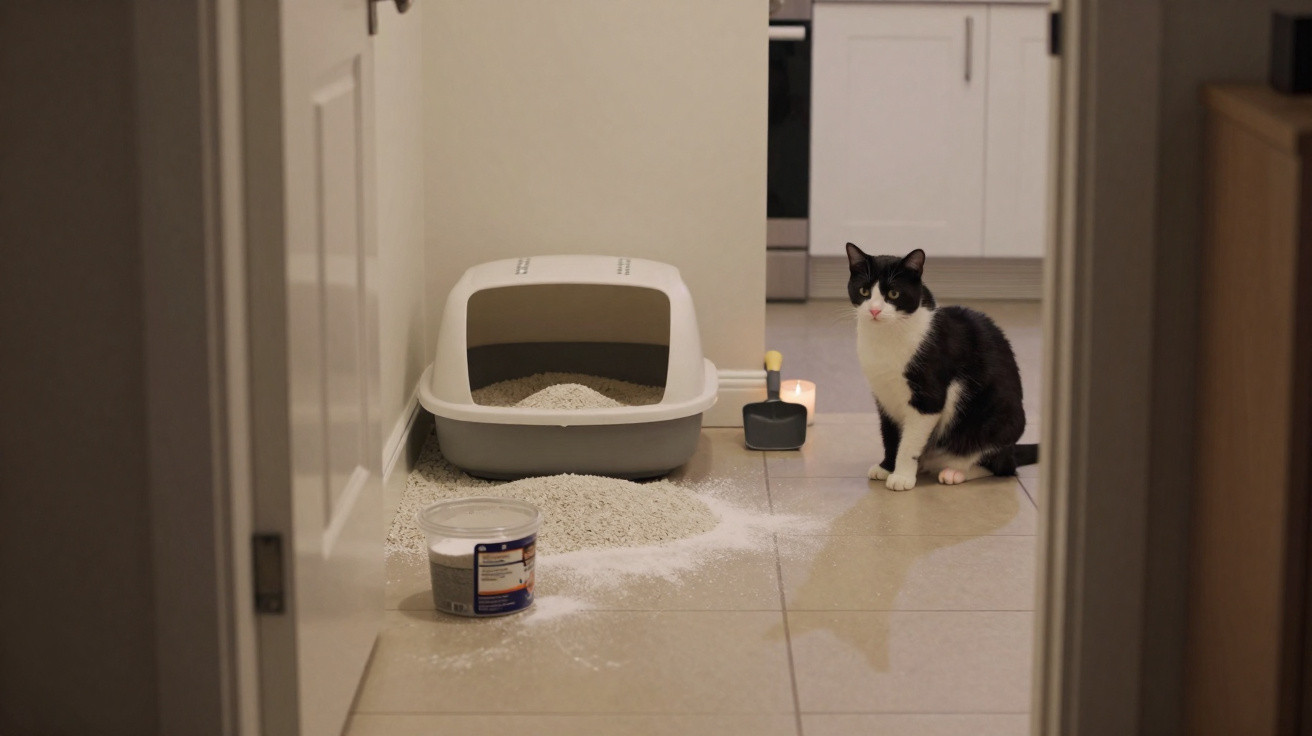
No dramatic discovery, no horrified visitor clutching a sleeve over their nose. Instead, there was a faint sourness lingering in the hall, greeting me when I came home from work. Miso, my black-and-white, toe-bean-pawed cat, watched as I tried sprays and candles, each one leaving the room smelling like flowers in a damp coat. Then a neighbour, smiling with the recognition of someone who had dealt with it before, passed a little tub over the fence: baking soda from her kitchen. I laughed; she simply nodded. That evening, I scattered a small pinch, closed the lid as though making a wish, and left it. By morning, the air seemed calmer, fresher and unconcerned. How can something used for baking scones deal with the smell nobody wants to acknowledge?
The day I stopped masking and started neutralising
For a while, I followed the usual route. First came scented litter, smelling like a December gift shop, followed by sprays that claimed to “eliminate” odours but really just yelled over Miso’s tray before fading by lunchtime. It became a familiar pattern: optimism, perfumed fog, then that unavoidable sharpness at the back of the throat. Everyone has wondered whether their house smells this way to visitors, and whether they have been too polite to mention it.
The change was surprisingly understated. I put a light dusting of baking soda beneath the litter, gave it a brief stir with the scoop, and walked away unconvinced. The next morning there was no perfume and no artificial lemon. There was simply quiet air. It smelled of nothing, which somehow felt like the ideal result.
What actually smells in cat wee
Cat urine is effectively a tiny chemistry kit in a puddle. When it first leaves the cat, it consists mainly of water, urea, salts and assorted organic compounds that are not especially loud. Leave it warm for a while, however, and bacteria begin converting urea into ammonia, producing that sharp tang that makes your eyes prickle. The longer it remains, the stronger the smell becomes.
Other supporting characters contribute too: fatty acids, sulphurous notes, a scattering of uric acid crystals, and lingering traces that settle into plastic and corners. This explains why a tray may look clean while still carrying a faint reminder of yesterday. Odour remembers, particularly once it settles into unseen seams and scratches.
The understated chemistry of baking soda
Baking soda, also called sodium bicarbonate, has no flashy fragrance trick. It is a gentle, mild powder that acts more like a referee than the main attraction. Being alkaline, it can neutralise many acidic odours - the funky, fatty and vinegary varieties - while its fine grains create a large surface on which smelly molecules can be held. It also absorbs a little moisture, keeping the tray drier and less welcoming to odour-loving bacteria.
One important detail is easily overlooked: ammonia is itself alkaline, meaning baking soda does not “cancel” it in the way an acid might. Instead, it interrupts the process elsewhere. By reducing acids and helping manage moisture, it limits the complex odours that develop and leaves less breakdown to fuel an ammonia surge. The background smell quietens, so you stop tensing every time your cat starts scratching.
Baking soda does not perfume the tray; it disarms it. That is why you do not get a replacement scent, only the disappearance of the problem. It is the smell of a home where someone has got ahead of odour rather than pursuing it with aerosols.
How to use baking soda so it actually works
The layer trick
Treat it as underlay beneath a carpet. Before adding clean litter, spread a narrow, even coating across the bottom of the tray - more like a light snowfall than a blizzard. For a medium tray, I use about two tablespoons, then add the litter and give it a short, unhurried stir so the powder is not concentrated in one patch. Adding it on top can create dust when your cat digs, or put them off using the tray because the surface feels unfamiliar beneath their paws.
Do this once you have scooped the tray and before topping it up with fresh litter. Some people blend the powder into a separate container of litter before pouring it in. That gives a consistent mix and avoids overdoing it after a tiring day. The aim is unseen assistance, not a snow globe.
How much is too much
Using more will not improve the result. Large amounts can make the tray dusty and may interfere with clumping in some clay litters. Begin modestly, observe your cat and make adjustments if necessary. If white areas are still visible when you finish, you have used too much. The right amount is the amount you barely notice.
Start with a thin layer under the litter, not on top. This one practice avoids most of the paw-flicking and “what have you done to my toilet” looks. It also places the powder where it is most useful: near the base, where liquid collects and stays.
Does baking soda bother cats?
Cats are highly discerning about both texture and scent. Alter their tray too much and they may leave a review as a protest puddle on the bath mat. A small amount of baking soda hidden beneath their familiar litter will rarely provoke so much as a raised whisker. For a particularly sensitive cat, introduce it on the day of a full litter change, when the whole tray is newly refreshed anyway.
Dust is worth considering. Pick a low-dust baking soda and use it carefully, particularly if your cat coughs or if you have asthma. Kittens, older cats and cats with kidney or heart conditions may be especially sensitive to anything sodium-related, although the quantity used in a tray is very small. If you notice your cat licking the tray or showing paw irritation, stop and reconsider. If your cat seems unhappy, stop and try again later.
When baking soda is not enough
On some days, the numbers simply win. With two cats, one compact flat and a heatwave, even the finest powder from the baking cupboard cannot keep pace. The answer is generally routine and spacing: provide one tray per cat, plus a spare, and position them apart so every area gets some respite.
Scooping every day has the greatest impact. Realistically, nobody manages it every single day. Life intervenes, keys disappear and Zoom meetings overrun. An easier compromise is to scoop in the evening while you are already in the kitchen - a quick scrape, a satisfying tap against the tray edge, and it is finished. Your nose will appreciate it the following morning.
Location also matters. Put the tray away from radiators and avoid still, enclosed corners. Heat intensifies odours, while some airflow helps prevent them from lingering. Give the tray a thorough weekly clean with warm water and mild soap, rinse it well, then dry it completely before refilling. Do not use bleach immediately after urine - ammonia and bleach make a nasty duet.
Myth-busting from the cupboard
Not every white powder belongs near a cat. Baking soda means sodium bicarbonate. Washing soda is sodium carbonate, a more aggressive substance that can be harsh on skin and paws. Soda crystals are for laundry rather than your cat’s private office. If the packet does not say bicarbonate of soda or sodium bicarbonate, it is not the right product.
Avoid essential oils too. They are potent, and many can be toxic to cats even in tiny quantities. What smells pleasantly of lavender to you may feel like a chemical tent to them. Vinegar can be useful for cleaning around the tray, but do not pour acids into litter in an attempt to “beat” ammonia. You will create another sort of mess, and your cat will file a complaint with management.
Why it feels almost magical
Human noses become accustomed to smells. Stay around an odour long enough and the brain decides it is normal, allowing you to concentrate on toast or the doorbell instead. Then a new visitor arrives, visibly recoils, and you remember. Baking soda helps counter that slow normalisation by interacting with the very molecules attempting to settle in.
There is a ritual to it as well: a quiet shake of powder, litter softly scraping as you level it, the gentle clink of the scoop in its caddy. These are small actions that signal a cared-for home. I could breathe properly again; honestly, the air seemed brighter.
It is much the same reason people keep a box of it in the fridge. Odours do not need to be beaten by something louder. They can simply be left with nowhere to settle. When the constant background noise of smell fades to a whisper, the whole home seems to relax.
The science in plain clothes
For a simple mental picture, imagine odours as a crowd of tiny letters. Some are acidic, some alkaline, some sticky and others fleeting. Baking soda is a patient editor, striking out the worst pairings and preventing new rude words from forming. In a litter tray, that translates to fewer volatile acids becoming airborne and less damp material for bacteria to party in.
Ammonia will always attempt to force its way out, especially when wee is left sitting. That is why scooping still matters while baking soda gets on with its discreet work. Freshness comes from a series of small successes, not one dramatic solution. Scoop, sprinkle, replace everything once a week, and the chemistry remains in your favour.
What different litters do with baking soda
Clumping clay is a cooperative partner. The powder settles at the base and around the grains, catching drips and helping stop clumps becoming swampy. Wood pellets are more rustic: they break down into sawdust, and baking soda helps prevent that sawdust from developing a musty smell. Silica crystals already absorb well, while the powder supports them during particularly busy weeks.
If you decide to experiment, keep your cat’s preferences at the centre of it. Some cats enjoy the soft texture of clay, whereas others prefer the forest-floor feel of wood. Keep one factor unchanged when trialling baking soda so you can identify what is doing the hard work. Change the litter brand, scent and tray location at the same time, and you will be left trying to read tea leaves.
Little fixes that multiply the effect
Only line the base of the tray with a thin, removable liner if your cat will not claw through it. Scratches trap odour, while smooth surfaces are easier to restore. Use a separate scoop for each tray instead of passing one around between them. Rinse the scoops occasionally too; they can look clean while carrying a faint echo of last week.
For a stubborn smell in a favoured corner, use an enzyme-based cleaner on the floor surrounding the tray. It breaks down the same compounds that make litter duty memorable for all the wrong reasons. Let the area dry fully before putting the tray back. A dry base beneath a layer of baking soda is like a good undercoat of paint - the top layer simply performs better.
What I wish someone had told me sooner
There is no single heroic product that turns anyone into a better cat owner. Instead, there are several small, almost dull habits that make life easier for everybody in the home. Baking soda happens to be inexpensive and effective, which is unusual in pet-land, where everything seems to come with a mascot and a mark-up. It fits comfortably into an existing routine rather than insisting on an entirely new one.
It also protects your cat’s dignity. There are no overpowering florals and no startling citrus notes, only a quieter tray and a cat acting as though nothing has altered - the greatest compliment a cat can offer. The finest solutions are the ones you forget are there until a friend asks why your home smells like nothing at all.
One last shake before you go
You do not need a spreadsheet; you only need a rhythm. Add a small shake beneath new litter, scoop quickly each evening, do a weekly refresh with warm water and soap, and keep the tray where heat cannot bully it. If the litter looks exhausted, it is. If your cat pauses there, sniffing with a frown, take notice.
When everything falls into place, the reward cannot be seen. Your home smells like your home rather than your cat’s timetable. The hallway air does not hesitate. Your cat scratches, settles and walks away with royal composure. The magic is ordinary: a spoon from the baking shelf, and a box that simply minds its business.

Comments
No comments yet. Be the first to comment!
Leave a Comment