
Daily bathroom cleaning is identified by health and environmental bodies as one of the most effective ways to lower the risk of contamination at home. In shared-use spaces, including family bathrooms and those in schools, keeping the area clear of visible dirt and built-up residue reduces the spread of micro-organisms that can cause respiratory, skin and gastrointestinal illnesses. A cleaning routine is therefore an essential part of basic healthcare.
How does sodium bicarbonate help with daily bathroom cleaning?
Best known as a kitchen ingredient, sodium bicarbonate is also a useful household-cleaning aid. This slightly alkaline white powder helps loosen grease, soap residue, surface stains and unpleasant odours on a range of bathroom surfaces.
Mixed with water or a small amount of mild liquid soap, it makes a gentle paste that can help remove grime without scratching porcelain or metal. Its use is generally well tolerated in ventilated spaces, and it does not release strong fumes, so environmental bodies regard it as a milder everyday option.
What are the environmental and health benefits of sodium bicarbonate?
Ecology departments and health institutions recommend sodium bicarbonate as a safe alternative for routine cleaning of basins, toilets and tiles. Compared with certain industrial cleaners, it can reduce a household’s exposure to harsh compounds found in concentrated disinfectants, chlorine products and solvents.
As well as being inexpensive and widely available, sodium bicarbonate used in small quantities does not create a significant build-up of toxic substances in household wastewater. In many homes, using it in moderation can simplify the cleaning cupboard and reduce the number of bottles kept in poorly ventilated areas.
How can you follow a simple sodium bicarbonate cleaning routine?
For sodium bicarbonate to deliver good results when cleaning the bathroom, it helps to establish a short, straightforward routine. Bathrooms with heavy use should be cleaned daily, paying attention not only to visible surfaces but also to frequently touched points such as taps and flush controls.
The practical steps below can be adjusted to suit each household, keeping cleaning effective without relying on complicated or costly formulas:
- Gather the materials: set aside sodium bicarbonate, mild liquid soap, soft cloths or sponges, a toilet brush, gloves and a bucket of water.
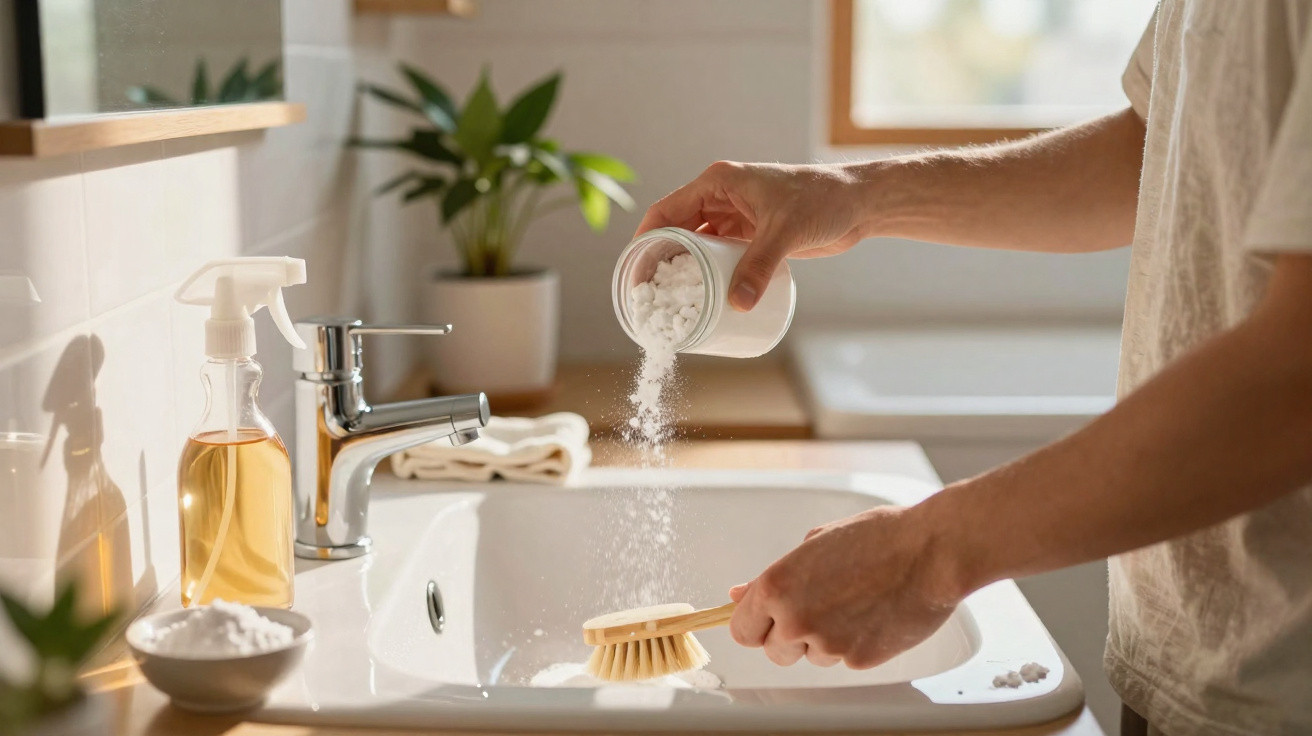
- Clean basins and baths: dampen the surface, sprinkle on a thin layer of sodium bicarbonate and rub with a damp cloth using circular motions. Add a few drops of soap where dirt is more firmly attached, then rinse thoroughly.
- Clean the toilet: distribute sodium bicarbonate inside the bowl, add a few drops of soap to the water, scrub the rim and base with the brush, then flush to rinse.
- Wipe external surfaces: dampen a cloth, add a small amount of sodium bicarbonate and wipe lids, the flush button, taps, handles and tiles near the basin. Finish with a cloth that is only damp.
What precautions ensure safety and hygiene for the whole family?
Although it is considered milder, sodium bicarbonate still requires basic care during use. Makeshift mixtures with chlorine-based bleach or other strong disinfectants may cause unwanted reactions. Avoid combining products without guidance, and keep the bathroom well ventilated while cleaning.
It is also advisable to keep children and pets away during cleaning, wear gloves for prolonged tasks and wash hands thoroughly at the end. In bathrooms at schools, workplaces or very busy homes, a sodium bicarbonate routine can be used for daily upkeep, while specific disinfectants are kept for deeper, occasional cleaning. This balances effective hygiene with lower exposure to harsh chemicals.

Comments
No comments yet. Be the first to comment!
Leave a Comment