
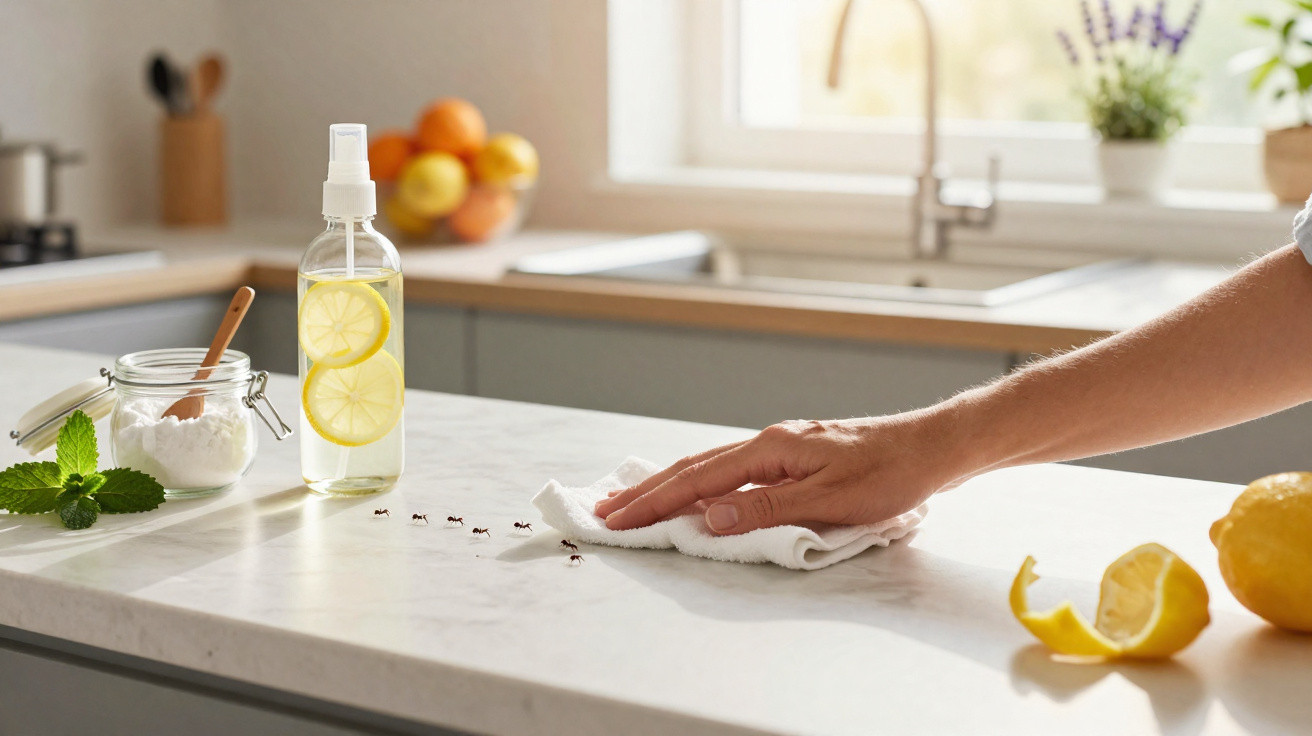
Every spring, the same scene plays out in kitchens up and down the country.
A fresh wave of tiny foragers often arrives with the season. You can deter them without relying on aggressive sprays. Regular cleaning, combined with a few focused measures, can interrupt trails, close off access points and deprive the colony of food.
Why ants come indoors
Ants follow a successful route. When a scout discovers a crumb or a spill, it leaves a scented path for others to follow, and soon more ants appear. Periods of dry weather can send them indoors in search of water, while heavy rain may do the same by flooding their nests. Kitchens and pet bowls are especially inviting.
Win in four steps: remove food and water, seal entry points, erase scent trails, then bait where they walk.
Eight methods that work now
1. Tidy up as you go, every day
Crumbs, sticky marks and wet sinks create a tiny food economy for ants. Wipe worktops after eating. Rinse out the sink. Sweep or vacuum the areas where children eat. Mop beneath the table once or twice each week. Take out the rubbish before it begins to smell.
Keep sugar, flour, cereal, biscuits and pet food in airtight containers. Cover ripe fruit, and rinse jars before putting them in the recycling. These modest habits remove the reward that encourages ants to keep returning to the same trails.
2. Locate and seal entry points
Trace the ant line back towards where it begins. Inspect window frames, door thresholds, skirting boards, cable openings and gaps around pipework. Fill fine cracks with sealant. Fit draught-proofing strips or a door brush where you can see daylight beneath a door. This not only blocks entry but also interrupts their chemical “roads.”
Whenever you spot ants, clean their route using soapy water or a 50/50 solution of water and white vinegar. Dry the surface afterwards. This removes the navigation markers that would otherwise allow them to recreate the route.
3. Use lemon juice or white vinegar to disrupt their GPS
Both citrus and vinegar can interfere with ant scent trails. Combine equal amounts of water and lemon juice, or water and white vinegar. Spray the mixture along skirting boards, splashbacks and routes behind appliances. Apply it again after cleaning, or after rain reaches balconies.
Never combine vinegar and bleach. Test a small, hidden area first if the surface is delicate. Lemon leaves behind a fresh scent, while vinegar is also an everyday cleaner.
4. Try plant-based repellents: citrus peel, cucumber, mint and lavender
Fresh natural scents can discourage scouting ants. Set orange or lemon peel, cucumber skin, or sprigs of mint or lavender beside ant trails and close to small gaps. Replace them once they dry out, as their strength fades quickly.
Diluted peppermint or lavender essential oils may also be used. Put a few drops into water or a small amount of rubbing alcohol, then add water to dilute further. Lightly wipe the chosen areas. Keep oils away from children and pets. Cats can react badly to several oils, so store them out of reach and use them sparingly.
5. Make a simple baking soda and sugar bait
Combine equal parts baking soda and granulated sugar. The sugar attracts worker ants, while the baking soda interferes with digestion. Put small portions in shallow lids close to active trails, well away from children and animals. Replace the mixture if it becomes clumped.
Its effectiveness differs according to the species and the size of the colony. This is a gradual approach rather than an overnight fix. Continue keeping food areas clean while the bait works in the background.
6. Use cornmeal to redirect activity
Cornmeal can serve as a dry distraction. Sprinkle small pinches along travel routes away from the pantry. The purpose is to cause disruption rather than create a dramatic result. It can divert foragers and interrupt their pattern while your other measures take effect.
Watch to see what is carried away. Clear up any cornmeal that remains untouched. For a stronger result, use it alongside sealing and cleaning.
7. Create a short-term dry barrier with chalk or talc
A fine chalk line or an extremely thin strip of talc across a threshold may halt many ants. It interferes with their grip and their chemical signals. Since moisture, foot traffic and vacuuming can remove it, regard this as a temporary measure.
Focus on key areas such as a fruit bowl, the stand beneath a pet dish or a balcony door. Avoid inhaling powder, and use only the thinnest line needed to work.
8. Use boric acid baits carefully
When correctly used in bait, boric acid can reach the colony. Mix a very small quantity with sugar or honey, then place it in small bait stations with pinholes. Position the stations near trails and access points, never on food-preparation surfaces.
Safety first: keep boric acid locked away from children and pets, wear gloves to prepare baits, and label containers clearly.
Use no more than necessary. Once ant activity has stopped, remove the stations and dispose of them in line with local guidance.
What to do this week
- Day 1: Thoroughly clean worktops, skirting boards and floors; empty the rubbish; transfer pantry food into sealed containers.
- Day 2: Follow trails back to entry points; seal gaps with sealant; fit a door brush if required.
- Day 3: Spray the lemon or vinegar mixture along routes; allow surfaces to dry fully.
- Day 4: Put baking-soda-and-sugar bait where ants travel, beyond the reach of children and pets.
- Day 5: Renew repellents such as peel, mint and cucumber at problem spots.
- Day 6: Add chalk or talc at one important threshold; if ants are targeting the pet bowl, raise it on a tray with a water moat.
- Day 7: Review the situation. Relocate baits to active routes and reseal any cracks you overlooked.
At-a-glance cheat sheet
| Method | Best place | Refresh rate | Notes |
|---|---|---|---|
| Lemon or vinegar spray | Trails, skirting boards, behind appliances | Every 1–3 days | Removes scent; do not mix with bleach |
| Plant cues (peel, mint, lavender) | Entry points, windowsills | When dry | Short-lived; keep oils away from pets |
| Baking soda + sugar | Along trails | Weekly or when damp | Slow reduction; safe placement matters |
| Cornmeal decoy | Travel routes away from pantry | Every few days | Diverts attention; monitor what is carried away |
| Chalk or talc line | Door thresholds, fruit area | After cleaning or rain | Temporary barrier only |
| Boric acid bait | Near entry points and trails | Until activity falls | Use stations; keep away from children and pets |
When to call a professional
If there is still heavy ant traffic after two to three weeks of sealing, cleaning and baiting, the nest may be well established or the species may require a more targeted response. Large winged ants indoors, sawdust-like material near skirting boards, or activity around damp timber at night may indicate carpenter ants. A licensed professional can identify the species, find the nest and use a low-risk approach suited to your home.
Extra notes you’ll find handy
Ants are drawn to moisture just as much as they are to food. Repair dripping traps and pipes that sweat. Use a dehumidifier in damp cellars, and ventilate bathrooms. Outside, prune branches touching the property, remove piles of leaves and keep firewood raised off the ground and away from cladding. Reducing pressure around the perimeter also reduces indoor scouting.
Pet feeding areas need particular attention. Put the food bowl on a tray surrounded by a shallow water moat with a drop of washing-up liquid to break the surface tension. Feed pets at regular times and wipe up the area afterwards. If using any bait, block access with a crate or place it beneath an appliance plinth where paws cannot reach it.
The season also makes a difference. Warm spells can bring out scouts early, so begin preventative work before the first trail appears. In late winter, wipe skirting boards with vinegar water. Check seals after the first heavy rainfall. Small routines are more effective than major rescue efforts.
For a more precise approach, carry out a quick “trail test.” Put a small dab of honey on a card near a recent sighting. Watch for a line to form, then position a bait station 0.6 to 0.9 metres along the return route. This places the bait directly where workers travel and can speed up uptake. Keep food areas clean so that the bait remains the most obvious target.

Comments
No comments yet. Be the first to comment!
Leave a Comment