
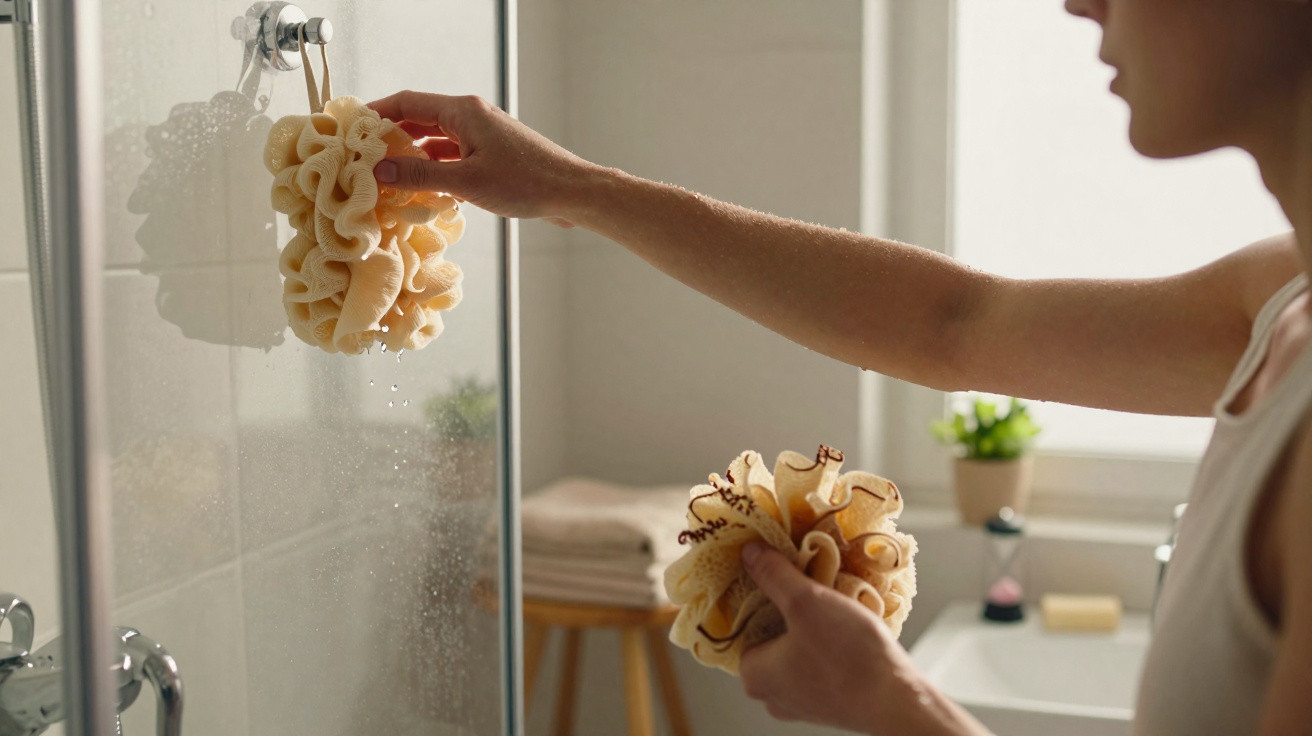
A shower loofah does not need throwing away every week, but it should not sit in the bathroom for months either. Because it stays damp and traps skin cells, it needs regular replacement, thorough drying and checks for signs of wear.
Why does a shower loofah collect so much dirt?
While you wash, the shower loofah comes into contact with soap, natural skin oils and dead skin cells. These substances can become lodged within its fibres. In a damp bathroom with limited airflow, this build-up can lead to odours, discolouration and the growth of micro-organisms.
Replacing it weekly is generally unnecessary if it dries fully and remains in good condition. Keeping one for six months, however, raises the chance of using a deteriorated item, particularly if it develops a smell, stains, a soft feel or persistent darkening.
The main warning signs are:
- Dampness: the item remains wet for a long time after showering.
- Smell: a musty odour suggests that residue has become trapped in the fibres.
- Darkening: lasting stains indicate that it is time for a replacement.
- Texture: soft, slimy or disintegrating fibres should not be used.
- Ventilation: hanging it outside the shower enclosure helps it dry faster between uses.
What is the difference between synthetic and natural shower loofahs?
A shower sponge can be made from synthetic materials, plant-based fibres or natural structures. As each type holds water differently, its usable lifespan depends on its composition, how often you shower and the available ventilation.
Plant-based versions, such as a luffa loofah, have a network of fibres that reaches the skin but can also hold onto residue and take longer to dry in stuffy spaces. For that reason, cleaning and complete drying are vital for reducing dampness.
What is the ideal interval for replacing a shower loofah?
As a practical guide, synthetic shower loofahs can be replaced roughly every three to four weeks when they have been kept in good condition. Plant-based and natural versions need shorter intervals because their fibres usually retain more residue and lose firmness more quickly.
Three to four weeks is the guide
The condition of the item matters more than the calendar. Plant-based and natural shower loofahs may require replacement sooner than synthetic ones. A smell, stains or a slimy texture warrant immediate disposal, even if the item is new.
The calendar should not be the only guide, as a shower loofah can deteriorate sooner depending on the weather, ventilation and frequency of use. If a strong odour, colour change or slimy texture appears, replace it straight away rather than waiting for the expected timeframe.
Follow this practical rule:
- replace synthetic shower loofahs approximately every three to four weeks;
- replace plant-based and natural types at shorter intervals;
- discard it at once if it develops an unpleasant smell;
- do not continue using darkened or slimy items;
- replace it earlier if the shower loofah never dries fully.
How should a shower loofah be dried properly between showers?
After showering, rinse the shower loofah until all soap and residue have gone, squeeze it without harsh twisting, then hang it somewhere with good airflow. Leaving it inside a closed shower enclosure prolongs dampness, particularly when the bathroom is warm and has little air circulation.
Keep the item separate from other people's shower loofahs, and do not allow it to touch the floor, wet walls or dirty bottles. It should not be shared either, as individual use reduces the transfer of residue and potential micro-organisms between users.
To look after a shower loofah properly:
- rinse it thoroughly after every shower;
- remove excess water without twisting the fibres;
- hang it on a clean hook with good ventilation;
- choose a place outside the constantly damp shower enclosure;
- do not store it in closed containers.
Why does keeping a shower loofah outside the shower enclosure matter?
As with a washing-up sponge used every day, the main issue is the combination of organic remnants and moisture. For a shower loofah, drying outside the shower enclosure helps preserve its texture and reduce odour.
The best routine combines replacement every three to four weeks for synthetic types, a shorter interval for plant-based options, and earlier disposal if any change appears. With rinsing, ventilation and individual use, the shower loofah remains better suited to everyday hygiene.

Comments
No comments yet. Be the first to comment!
Leave a Comment