
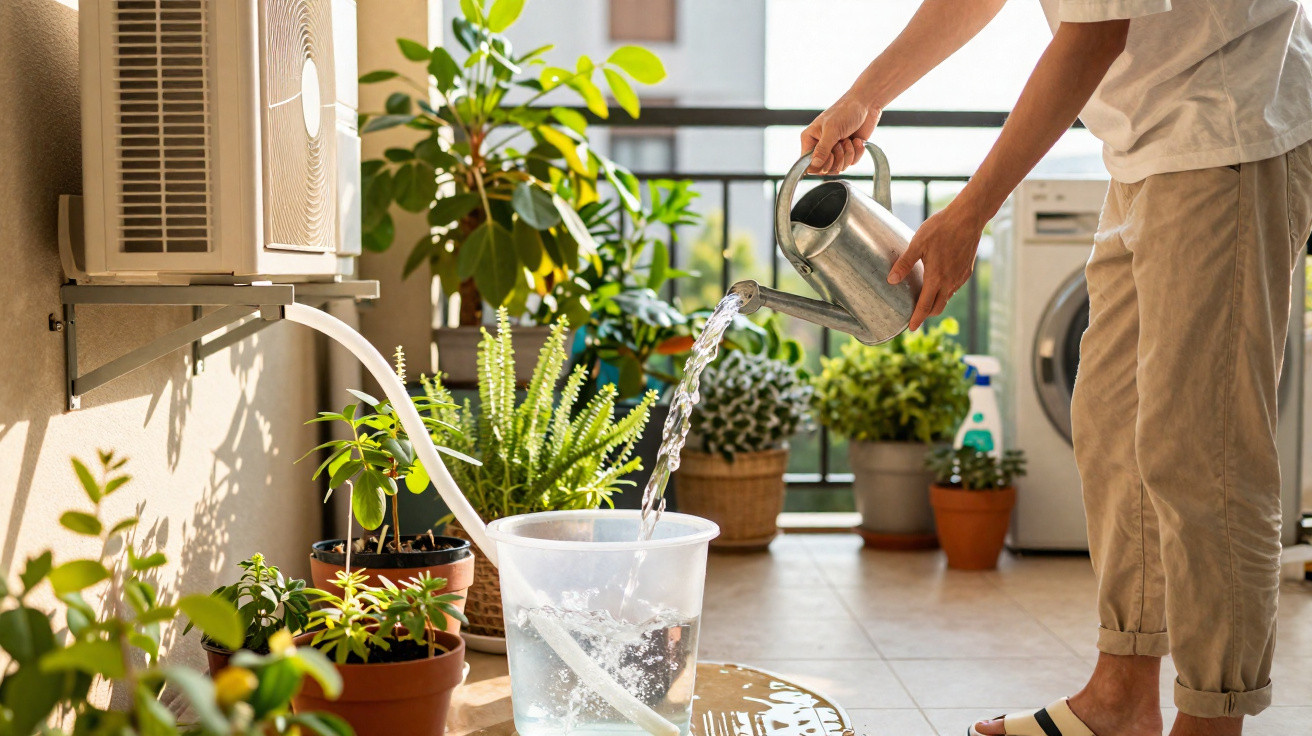
Air conditioner water can be reused for certain household jobs, cutting the amount of treated water used for activities that do not require drinking-quality water. However, the liquid may contain dust, microorganisms and residue built up inside the unit, so it must not be drunk or used where food, animals or personal hygiene are involved.
Where does the water released by an air conditioner come from?
As it operates, the unit cools the air, causing some of the moisture in the room to condense. Tiny droplets develop in the indoor unit, collect in the condensate tray, and are then carried outside through a drainage hose or pipe.
Because it has a low mineral content, this water may leave fewer limescale marks on some surfaces. Even so, it is neither distilled water nor safe to drink, as it passes through internal parts where dirt and microorganisms may collect.
Which household tasks can use this water?
Reusing it is most suitable for cleaning jobs with no contact with food or the body. Water collected from the air conditioner drain can replace some tap water in straightforward tasks.
- Washing floors in indoor and outdoor areas;
- Cleaning windows, glass and mirrors;
- Removing dust from gates, handrails and patio furniture;
- Carrying out the initial wash of a car’s bodywork;
- Cleaning tools and objects that do not come into contact with food;
- Wetting outdoor areas before more thorough cleaning.
Can air conditioner water be used on plants?
It can occasionally be used on ornamental plants, provided that the appliance is clean and the liquid has no smell, colour or sediment. As it contains few minerals, condensate water does not supply the nutrients plants need to grow and must not be their only source of irrigation.
Its use should be alternated with suitable water, with attention also paid to the soil:
- Use it only on non-edible ornamental plants;
- Avoid applying it to leaves, flowers or sensitive parts;
- Do not use it on vegetable gardens, culinary herbs or fruit trees;
- Dispose of the water if it has an unusual odour or appearance;
- Do not use liquid collected from units that have not been maintained;
- Watch the plant’s response before watering it again.
What should never be done with air conditioner water?
Even if it looks clear, it must be treated as non-potable. Cleaning the filters and condensate tray reduces the amount of residue, but it does not turn the liquid into treated water or ensure that bacteria, fungi and other contaminants have been removed.
For safety, this water must not be used to:
- Drink, cook or make beverages;
- Wash fruit, vegetables, plates or cutlery;
- Fill animal drinking bowls or aquariums;
- Bathe, wash hands or brush teeth;
- Fill humidifiers and respiratory devices;
- Put in irons without the manufacturer’s approval.
Correct collection and maintenance make reuse safer
The liquid should be directed into a clean, stable container kept out of reach of children and animals. It is best used promptly, and the container should remain covered to prevent dirt entering, odours developing and mosquitoes breeding. Water left standing for several days, or showing signs of change, should be discarded.
Air conditioner maintenance is equally essential. Water leaving through the external hose is a normal part of operation, but drips running from the indoor unit, wall or floor may point to a blocked drain, incorrect installation or another fault. In this case, reuse should be set aside in favour of having the problem inspected and repaired by a professional.
Comments
No comments yet. Be the first to comment!
Leave a Comment