
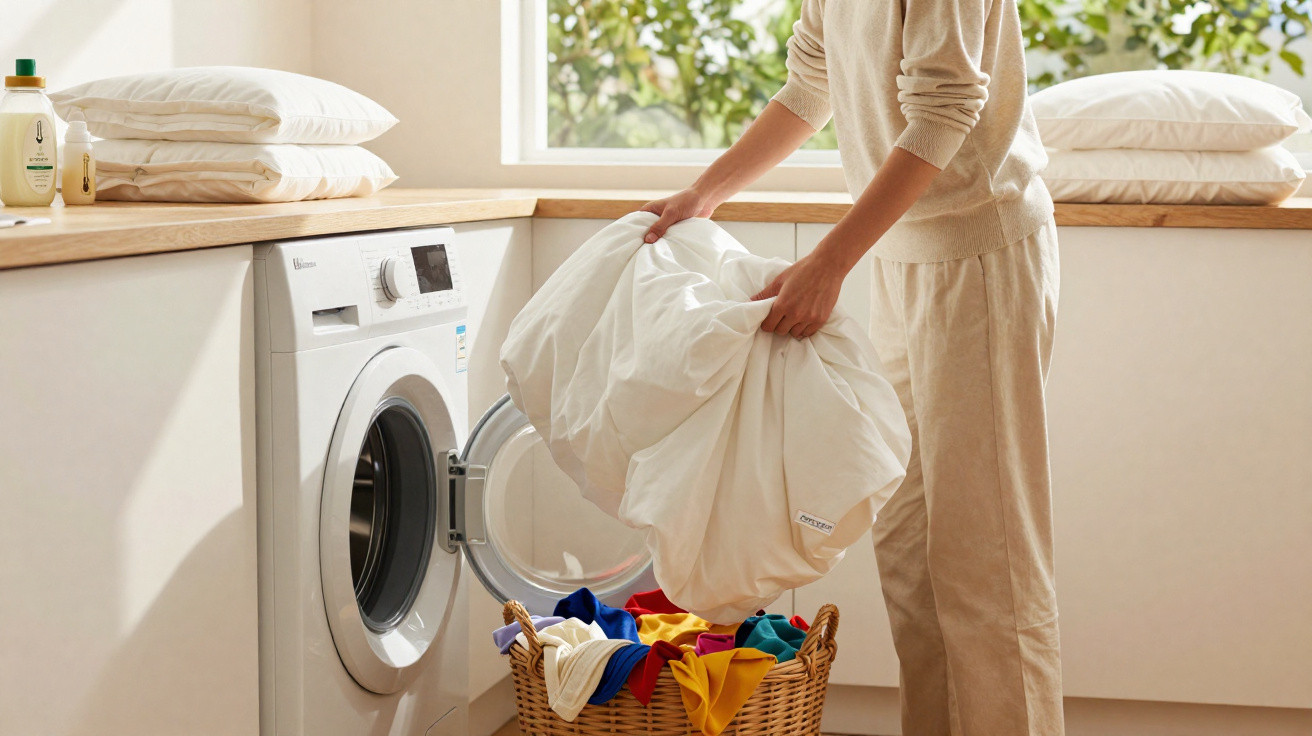
Loading a full machine may seem like an easy way to save time, so many people wash bed sheets alongside everyday clothes. However, combining these items can affect hygiene, washing performance and even fabric longevity. Each type of laundry needs the right cycle, temperature and product to come out properly clean, fresh-smelling and comfortable.
Why should you not wash bed sheets with everyday clothes?
Clothes worn outdoors accumulate concentrated sweat, body oils, deodorant residue, dust and particles from the ground. Bed sheets, on the other hand, spend hours directly against the body and require a thorough, even wash. Putting everything in the same load makes this level of care harder to achieve and may compromise both the cleanliness and comfort of the bed.
When smaller, heavier items such as jeans and towels become tangled in sheets, they create fabric bundles that restrict the movement of water and detergent. This can leave sheets insufficiently rinsed, with detergent marks, an unusual smell and a damp feel, while also making them more creased and harder to iron or dry.
What helps prevent contamination of bed sheets?
Underwear and gym clothing tend to contain more bacteria and fungi because they are worn against warm, damp areas of the body. Washing them with bed sheets increases the likelihood of contamination between items. This is particularly concerning for people with sensitive skin, allergies or respiratory conditions.
Sorting laundry by item type, choosing suitable cycles and ensuring good airflow during drying all make a significant difference to keeping bedding safer and more comfortable. To make this easier in everyday life, follow a few straightforward laundry divisions:
- Wash sheets, pillowcases and pillow protectors separately from underwear and gym clothes.
- Do not combine towels and jeans with bedding, helping to reduce friction and fabric wear.
- Use a higher water temperature only when the fabric allows it and there is heavy soiling or someone in the household is ill.
How to choose the cycle, temperature and products for bed sheets
Cotton sheets generally suit a normal or bedding cycle, with a medium duration and a temperature between 30 °C and 40 °C. For heavier soiling or illness in the home, some washing machines allow the temperature to be raised to 60 °C, provided the care label permits this, to avoid shrinking or damaging the fibres.
Microfibre and synthetic sheets, however, need a gentle programme, low-spin setting and cold water or water at up to 30 °C, as excessive heat can damage them. Bedding sets with embroidery, lace or appliqué should be placed in laundry bags and washed on delicate programmes. Always use the correct amount of detergent, only a little fabric conditioner, and bleach suitable for either whites or colours.
How can you organise washing to save water and energy?
Creating a laundry schedule helps you make better use of the washing machine's capacity, avoiding near-empty cycles as well as overloading the drum. In most cases, washing bed linen every 7 days is enough. Reduce this interval to every 3 or 4 days in very hot areas or in homes with allergy sufferers.
Fill the drum to its recommended capacity without cramming items in, wash sheets and pillowcases made from similar fabrics together, and reuse rinse water for cleaning outdoor areas where possible. Combined with regular cleaning of the filter and drum, these habits help sheets last longer, retain their soft feel and fresh-bed scent, while also helping to lower electricity and water bills.





Comments
No comments yet. Be the first to comment!
Leave a Comment