
Many people assume that an unpleasant smell inside the fridge means they need to buy a new appliance. Yet an old fridge can continue working perfectly when simple cleaning habits remove the residue responsible for everyday unpleasantness.
Why do unpleasant smells build up in the appliance?
Unwelcome aromas accumulate when tiny food particles evaporate and settle on the internal surfaces. Even if the motor is operating efficiently, insufficient sealing of containers allows odours to spread and affect other stored foods.
Storing leftovers without proper protection lets vapours move freely across every shelf. Over time, this combination creates conditions in which unwanted substances can cling to surfaces, making a consistent weekly routine of cleaning and organisation necessary.
How does bicarbonate of soda neutralise odours so quickly?
The powder’s chemical structure acts directly on the acidic molecules that produce bad smells, triggering a reaction that… Read more
How does bicarbonate of soda work against odours?
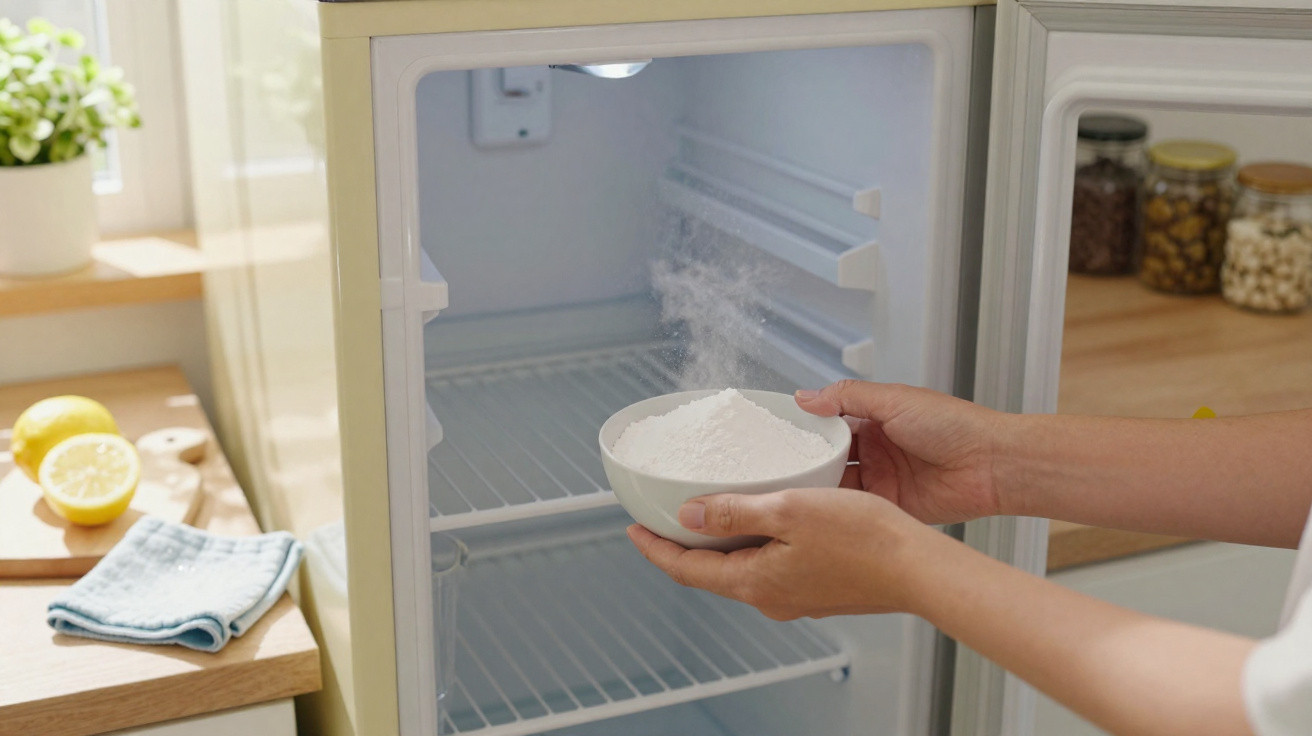
This powdered product works as a natural chemical neutraliser, absorbing volatile compounds released by organic leftovers. Rather than simply covering the problem with synthetic fragrances, the compound traps gaseous molecules and restores freshness to the inside of the appliance.
Keeping this powder continuously in an open container ensures that new gases are captured before they settle into the plastic walls. This passive action protects the quality of groceries and stops the refrigerator from passing unusual flavours on to stored food.
Below is a video from Flávia Ferrari’s TIP OF THE DAY YouTube channel, which explores the points discussed in this topic in greater depth:
What is the correct weekly cleaning method?
Regular maintenance calls for a simple solution of warm water and one spoonful of the neutralising powder to clean the walls and shelves. Applying this mixture routinely removes dried grease splashes, stopping bacterial colonies from developing unwanted aromas in the internal compartment.
Simply wipe every surface with a soft damp cloth to remove grease from the shelves without damaging the thermal insulation seal. The method is quick, leaves no chemical residue and ensures that containers remain completely free from any external contamination.
Items for Neutralising Odours
Recommended resources
Items that help to capture unpleasant smells:
- An open pot of bicarbonate of soda;
- A container filled with fresh coffee grounds;
- Small pieces of activated charcoal.
What precautions prevent unpleasant odours from returning?
Keeping food in airtight containers or dishes sealed with cling film prevents vapours and moisture from escaping. This practice stops the distinctive aromas of cheese, fish and seasonings from spreading, helping to preserve the shelf life of every stored meal.
Checking the use-by dates of stored products prevents leaves, ripe fruit and dairy products forgotten at the back from spoiling early. Quickly discarding deteriorated leftovers keeps the interior hygienic and prevents unnecessary wear to the household appliance.
A few daily measures help keep the refrigerator protected from residue at all times:
- Keep prepared dishes in containers with tightly sealed lids;
- Clean up any liquid spilled on the shelves immediately;
- Replace the pot of bicarbonate every three months to maintain absorption.
When is it worthwhile keeping an old appliance?
If the cooling system chills properly and the door seal closes well, the issue is limited to internal hygiene. Replacing a working appliance because of accumulated smells creates avoidable expense in the household budget.
With straightforward care and the strategic use of homemade absorbent products, the appliance remains useful for many more years. This routine keeps stored food safe, supporting a practical daily life and a pleasant kitchen without financial waste.
Comments
No comments yet. Be the first to comment!
Leave a Comment