
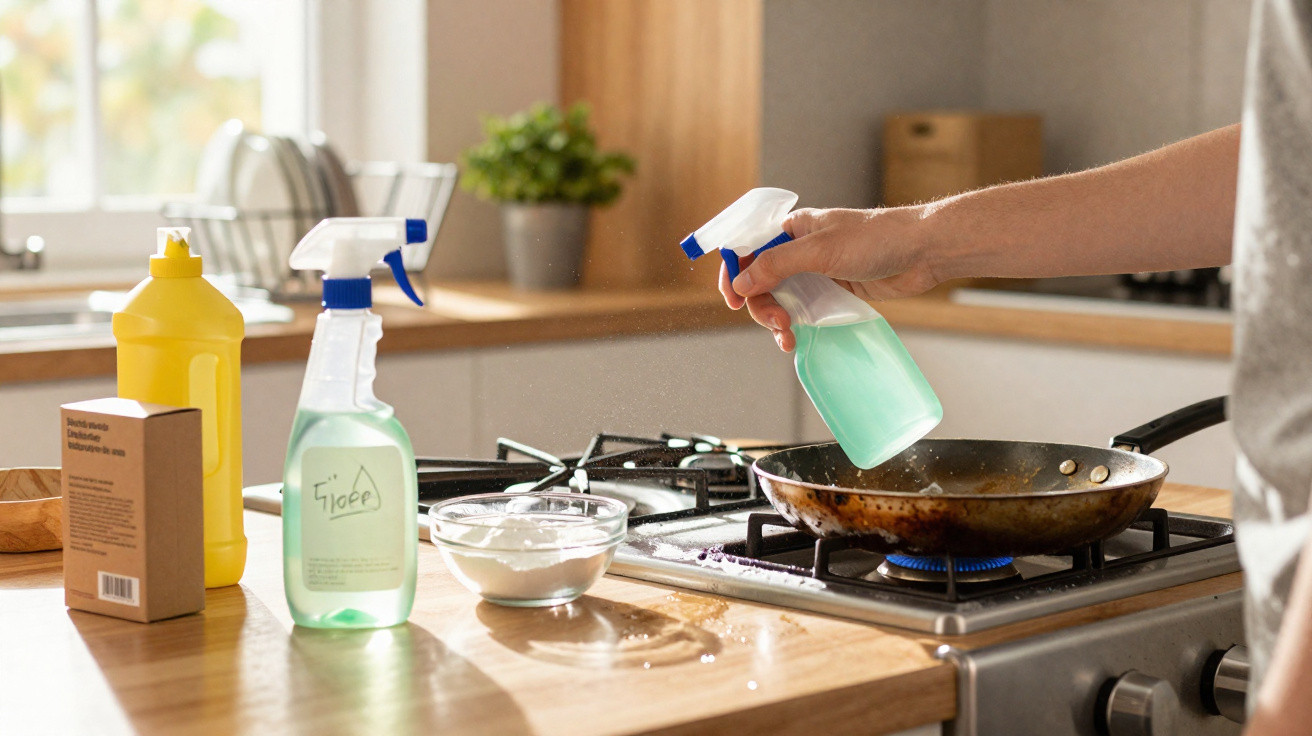
In many kitchens, grease gradually builds up on hobs, tiles and worktops, even where regular cleaning is carried out. In these situations, a homemade degreaser with bicarbonate of soda and washing-up liquid can be a straightforward, inexpensive and easy-to-make option. When applied carefully and with a few basic precautions, it can help lift built-up grease from a range of surfaces.
What is a degreaser made with bicarbonate of soda and washing-up liquid?
A degreaser with bicarbonate of soda and washing-up liquid is a homemade cleaning solution containing water, bicarbonate of soda and either neutral washing-up liquid or standard washing-up liquid. It is designed to combine the grease-cutting action of washing-up liquid with the mild abrasive and alkaline qualities of bicarbonate of soda, making grease and food residue easier to remove.
The mixture can be used on surfaces including hobs, ovens, tiles, cooker hoods and even pans with stubborn grime. It may appeal to people wishing to use fewer harsher products, as its strength can be adapted to the degree of dirt and the kitchen-cleaning routine.
How do you make a powerful degreaser with bicarbonate of soda and washing-up liquid?
A basic recipe can be used to make a powerful degreaser with bicarbonate of soda and washing-up liquid, then adjusted according to household needs. The solution generally provides a good yield for both light daily cleaning and more thorough kitchen cleaning; simply alter the quantity of each ingredient.
The following proportions make approximately 500 ml of homemade kitchen cleaner:
- 2 tablespoons of bicarbonate of soda;
- 2 tablespoons of washing-up liquid, preferably neutral or clear;
- 500 ml of warm or room-temperature water;
- Optional: 2 tablespoons of white spirit vinegar, if the surface is suitable;
- 1 clean spray bottle or plastic bottle for storage.
The method is straightforward: pour the water into the bottle, dissolve the bicarbonate of soda, then add the washing-up liquid gradually while stirring gently. If using it, add the vinegar last. Shake lightly, label the container with the preparation date and preferably use it within 30 days, shaking it before every application.
Where can bicarbonate of soda degreaser be used, and what care is needed?
A bicarbonate of soda and washing-up liquid degreaser is commonly used on kitchen areas that are regularly exposed to grease. It will generally work well when applied directly to the grime and left for several minutes before being scrubbed with a sponge or soft cloth.
Common application areas include the following, provided the material of each surface is always considered:
- Hob: the top, sides and pan supports, while avoiding electronic components;
- Oven: internal walls, door and shelves, taking any surface coatings into account;
- Tiles and walls close to the food-preparation area;
- Cooker hood and extractor fan, particularly greasy metal sections;
- Worktops and sinks made from stainless steel or granite that are compatible with mildly alkaline products.
It is important to test the mixture on an inconspicuous area before widespread use, avoid marble and highly porous stone, never combine it with bleach, and rinse sensitive metals thoroughly. For buttons and control panels, apply the product to a slightly damp cloth rather than spraying it directly onto them.
How can you improve the effect of degreaser in the kitchen routine?
To get more from the degreaser, it can help to clean soon after food preparation, while grease has not yet dried completely. In kitchens where frying is frequent, this small change in habit can greatly limit the formation of difficult crusts and reduce the time needed for intensive cleaning.
Another useful point is that combining small actions can significantly improve results: remove excess dirt with kitchen paper, use warm water for rinsing, and allow the product to work for 5 to 10 minutes on the most problematic areas. Finishing with a microfibre cloth can add shine, reduce streaks and keep hobs, tiles and worktops in better condition over time.

Comments
No comments yet. Be the first to comment!
Leave a Comment