
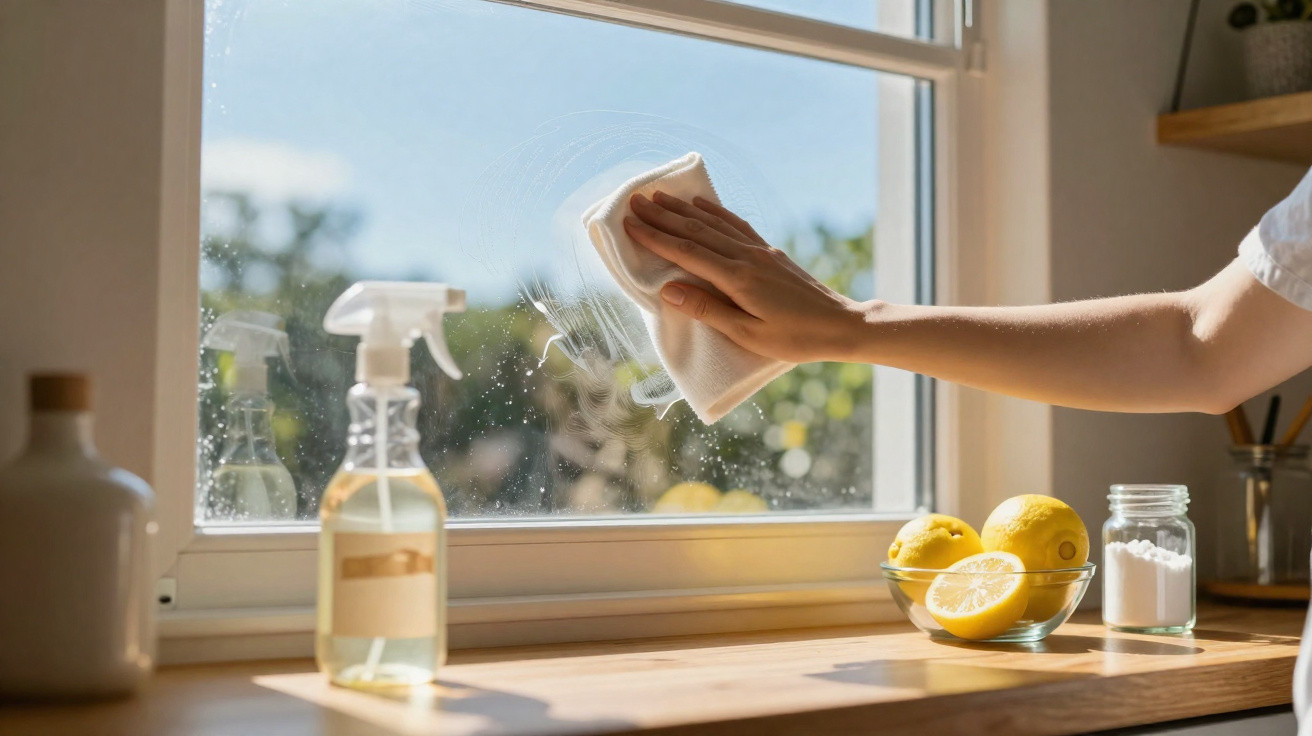
Windows, glass doors and mirrors tend to collect dust, fingerprints and grease over time. While shops offer numerous dedicated products, experts say an effective homemade glass cleaner can be made with straightforward ingredients found in most kitchens. Used correctly, the right mixture lifts grime without leaving residue or streaks.
How do you make a homemade glass cleaner with few ingredients?
One of the most widely recommended recipes uses white vinegar, washing-up liquid and warm water. Vinegar helps break down mineral deposits and grease, while a small amount of washing-up liquid removes the oily film that often builds up on glass. Lemon juice can be used instead by anyone who dislikes the smell of vinegar.
Combine the ingredients in a clean spray bottle, then shake it gently before application. A few drops of essential oil may also be added for a more pleasant scent while cleaning, although this is entirely optional.
What tips help keep glass streak-free?
A reliable recipe alone is not enough: how it is applied has a major effect on the finished result. Experts advise cleaning window frames and tracks first, so dirt is not transferred on to the glass during the process.
It is also important not to clean glass in strong sunlight. If the solution dries too quickly, streaks and marks are more likely to appear. Whenever possible, choose a cooler time of day or an overcast day.
- 480 ml warm water
- 60 ml white vinegar
- 2.5 ml mild liquid washing-up liquid
- 10 to 15 drops of optional essential oil
- Combine everything in a clean spray bottle and shake before use
Which mistakes can leave glass streaky?
Using too much washing-up liquid is among the most frequent mistakes. An excessive amount can leave behind residue that is difficult to remove, making marks more likely once the surface has dried. A clean spray bottle is equally essential, as traces of other products may affect how well the mixture works.
Another key precaution is never to combine vinegar with bleach. This mixture releases a toxic gas that can irritate the eyes, skin and respiratory tract. In addition, vinegar-based solutions should not be used on surfaces including marble, granite, wood and certain metals, as they may be damaged.
- Do not mix vinegar with bleach
- Avoid using too much washing-up liquid
- Only use clean spray bottles
- Do not apply to marble or granite
- Avoid waxed wood and aluminium
- Replace heavily worn cloths with clean microfibre cloths
How can you keep glass shining for longer?
Once the glass has been cleaned, a few simple habits can help it stay clear for longer. Promptly wiping away fingerprints, removing rain splashes and carrying out regular maintenance prevents grime from accumulating and making the next clean more difficult.
It is also worth using basic tools such as a good microfibre cloth and a quality squeegee. These accessories minimise lint and make it easier to achieve a clear finish with less effort. Cleaning professionals say that using less product and drying the glass properly is usually more effective than soaking the surface.



Comments
No comments yet. Be the first to comment!
Leave a Comment