
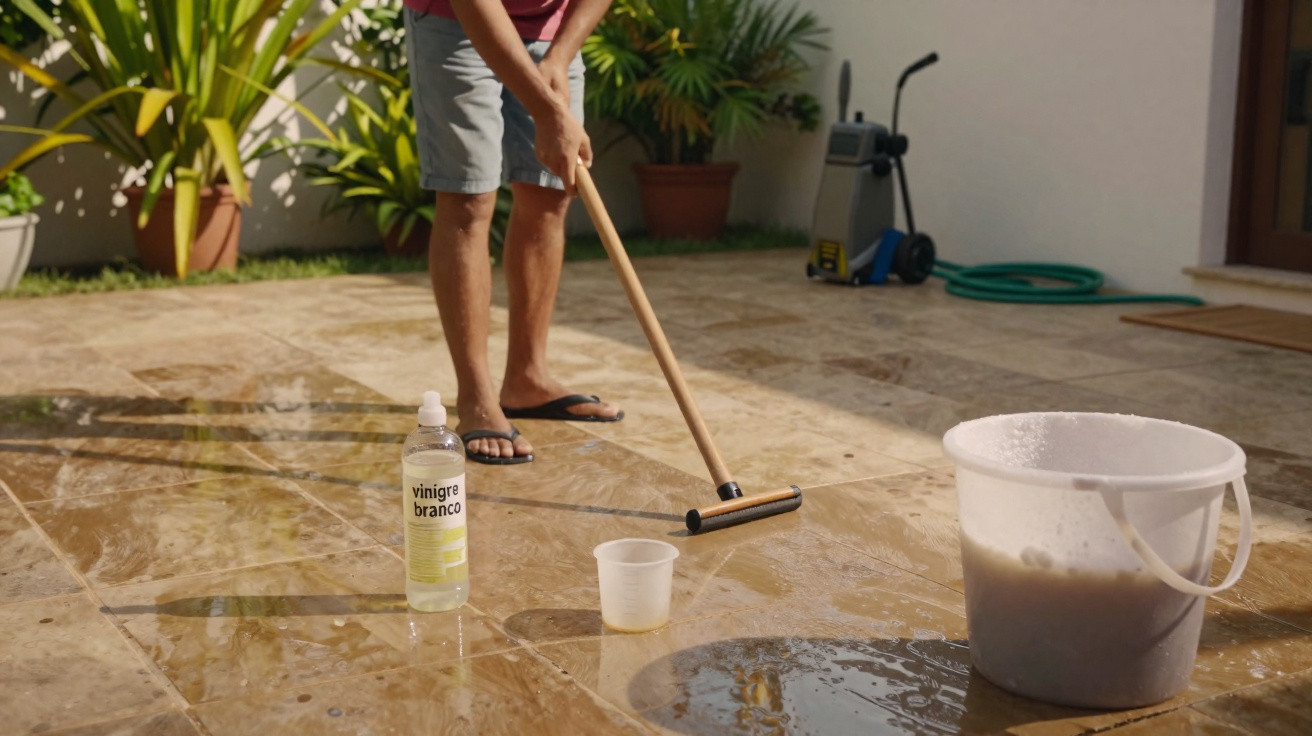
Dust, pollen and paw prints can still make their way on to the slabs.
When sweeping every day starts to feel never-ending, there is a less noisy alternative. A straightforward weekly routine, together with a few changes around the perimeter, will leave a patio looking well kept with considerably less effort.
A routine that reduces sweeping
The 10-minute approach many homeowners rely on
The method is simple: replace continual broom use with a weekly wash using diluted white vinegar, then remove the water using a wide floor squeegee. During the week, light debris is less likely to cling to the surface, meaning a speedy midweek clear-up takes only minutes.
Strong week, light touch days: one diluted vinegar rinse and a squeegee pass can keep most patios guest-ready without daily sweeping.
The reason is chemistry rather than magic. Mild acidity releases dusty residue, hard-water staining and algae spores. Instead of spreading this loosened film around, the squeegee draws it away from the surface. That means less grime accumulates between cleans and fewer intensive scrubs are needed later.
Why white vinegar is useful
The science without the jargon
Standard household white vinegar contains around 5% acetic acid. At low strengths, it breaks up the light biofilm that holds dirt in place and alters the surface pH sufficiently to make algae and mildew less likely to establish themselves. It can also soften mineral marks left after rain, allowing them to be wiped away without abrasive cleaning.
- Mixing ratio: 1 part vinegar to 10–15 parts water for regular maintenance.
- Spread it with a watering can fitted with a rose, a pump sprayer or a soft-bristled outdoor broom.
- Work in the shade, as heat can dry the mixture too quickly and cause marks.
- Pull water with the squeegee towards a drain or flowerbed able to tolerate mild acidity.
Dilute it well. You want a gentle conditioner for the surface, not a harsh strip that could etch sensitive stone.
What to do after rain or heavy use
Simple habits that prevent grime from settling
Following a shower, make one pass with the squeegee to clear standing water from the slabs. This alone helps prevent dusty rings and leaves joints drier, making them less inviting for algae. When pets or children bring soil on to the patio, a two-minute sweep with a squeegee or soft broom removes it before it attaches to the surface.
Making the method work for UK patios
Choose the right approach for your surface
Acid is not suitable for every material. Certain stones react to it, potentially leaving a dull or pitted finish. If you are uncertain, test a discreet corner and leave it for 24 hours.
| Surface | Vinegar use | Better option | Notes |
|---|---|---|---|
| Concrete slabs / pressed paving | Yes, at 1:15 | Washing-up liquid in warm water | Rinse thoroughly around steel furniture to prevent corrosion. |
| Porcelain / vitrified tiles | Yes, mild | pH-neutral patio cleaner | As it is non-porous, this surface responds especially well to a squeegee. |
| Sandstone / limestone / marble / travertine | No | pH-neutral stone soap | Acid may etch and dull the finish. |
| Composite decking | Sparingly | Mild detergent | Refer to the board manufacturer’s guidance. |
| Timber decking | Avoid | Wood cleaner | Keep water moving to reduce algae growth. |
Weekly cleaning step by step
Make the process fast and easy to repeat
- Dry pick-up: Remove leaves and twigs with a brush. Allow two minutes at most.
- Apply: Scatter diluted white vinegar over the surface.
- Agitate: Gently work over it with a soft broom to lift pollen and surface film.
- Dwell: Leave for 5 minutes, without allowing it to dry.
- Squeegee: In long strokes, draw the liquid towards the edges or a drain.
- Final rinse: This is optional for concrete, but essential close to plants and metal.
The squeegee matters. A 45–55 cm head with a stiff, replaceable rubber blade clears more in fewer passes and leaves fewer streaks.
Prevention is better than daily work
Minor adjustments that keep dirt outdoors
Catching grit at the boundaries deals with much of the issue. Place hard-wearing coir or rubber mats by doors. Install a slim gravel strip where soil joins paving to capture splashback. Put a basic shoe brush or boot scraper beside back doors, and cut back overhanging shrubs that drop sap and seeds on to the slabs.
- Joint care: Top up loose joints. Polymetric sand is more resistant to washing out and helps slow weed growth.
- Drainage: Keep gullies and channel drains clear to stop water pooling and creating stains.
- Furniture feet: Add caps to prevent rust rings and scuff marks on porcelain.
When vinegar is unsuitable for stone
Gentle alternatives
Where acid could cause damage, choose a pH-neutral patio cleaner or warm water with a small squeeze of washing-up liquid. For persistent algae, an oxygen-based cleaner (sodium percarbonate) breaks down into soda and oxygen, making it kinder to planting when applied as directed. Always check the label for compatibility with your material and with nearby fish ponds.
Time and money saved
The difference over a season
An average 20 m² patio requires roughly 8–10 litres of solution for each weekly clean. With a 1:15 mix, this uses about 500 ml of white vinegar-approximately 25–35p when bought in 5-litre bottles. The job takes around 10 minutes. If you previously swept for 8 minutes each day, you gain back nearly 45 minutes per week during the busiest season.
Less scrubbing, less water, fewer harsh chemicals; the surface stays brighter because grime never gets a chance to root.
Common mistakes to avoid
Small errors that create major streaks
- Working in direct sun: The solution dries too rapidly and can leave tide marks.
- Making it too strong: More concentrated is not better on porous or polished surfaces.
- Missing the pull: Without a squeegee, dirt can settle back into the joints.
- Ignoring fittings: Rinse railings and barbecue legs to safeguard metal.
Safety and environmental considerations
Look after plants, paws and ponds
Vinegar is mild, but it may scorch delicate leaves. First wet nearby plants with clean water, then keep runoff brief and directed. Do not allow pets on the area until the patio has dried, reducing the chance of paw irritation and slips. Around fish ponds, use pH-neutral products instead and direct runoff away from the water.
Seasonal changes worth making
Adapt to British weather changes
Spring: Clean more often during high-pollen periods, as pollen sticks to damp surfaces. Summer: Work early or late in the day to improve dwell time. Autumn: Deal with leaf tannins promptly to avoid brown shadows. Winter: Use the squeegee to shift meltwater and limit algae-friendly dampness; avoid vinegar in freezing conditions so the patio does not become a skating rink.
Extra tips to expand your options
Sealants, stains and an easy test
A breathable, UV-stable sealer applied to porous paving can reduce water absorption and lessen algae issues. Test before proceeding: tip a tablespoon of water on to a clean slab. If the slab darkens within a minute, the stone is thirsty and could benefit from sealing. Avoid topical sealers on porcelain, as they can streak and hold on to dirt.
If you have inherited historic stone, run a trial in a low-traffic area. Clean one half using your selected method and leave the other untouched for a fortnight. Then compare how quickly soil returns, drying time and underfoot slip. This brief test reveals more than any label can and helps you establish a routine you will genuinely maintain.
Comments
No comments yet. Be the first to comment!
Leave a Comment