
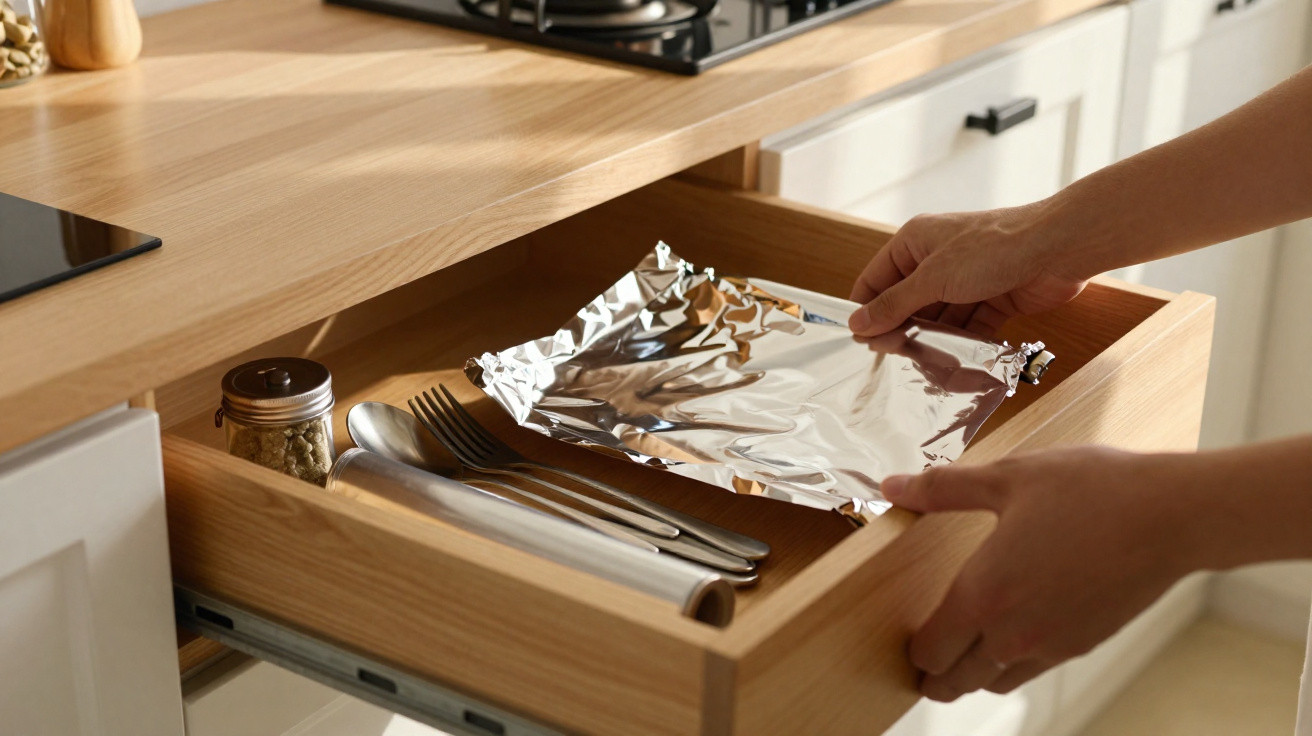
Using aluminium foil in kitchen drawers may sound like something your grandmother would do, yet this is precisely the sort of straightforward trick that protects furniture, makes cleaning easier and gives everything a tidier appearance. In a part of the home constantly exposed to crumbs, oil splashes, moisture and food remnants, adding a basic protective layer can make a real difference to both the longevity of the furniture and everyday convenience.
What is aluminium foil in kitchen drawers used for?
Aluminium foil acts as a “disposable cover” across the bottom of drawers, forming a protective layer between dirt and the drawer material. Should oil, sauce, sugar, coffee or similar spills occur, they are far less likely to affect the wood, MDF or another finish directly.
As well as catching grease and crumbs, foil can limit the impact of typical kitchen moisture from steam, being close to the sink or damp cloths. Provided the drawer base is completely dry before it is fitted, this simple barrier can extend the life of the drawer unit and help prevent stains, swelling and unpleasant smells.
How to line kitchen drawers with aluminium foil step by step
For aluminium foil in kitchen drawers to work properly, it needs to be fitted correctly rather than trapping dirt or dampness underneath. Following a straightforward order of steps delivers a cleaner, longer-lasting result.
- Empty the drawer: Remove everything inside, including cutlery, containers, cloths, seasonings and packaging.
- Clear away solid dirt: Wipe with a dry or slightly damp cloth, then dry the surface thoroughly.
- Make sure the base is dry: The drawer must be fully dry before the foil is added.
- Cut the aluminium foil: Measure the base and cut the foil, leaving a small allowance around the edges.
- Lay the sheet in place: Position it on the bottom and press gently to prevent raised creases.
- Put the items back: The weight of the contents helps hold the foil securely in place, without glue or tape.
Replace the sheet when it becomes torn, heavily coated in grease, stained with sauce or shows signs of dampness. In frequently used drawers, such as those for cutlery and utensils, it will usually need changing more often and can be included in a thorough kitchen clean.
Which kitchen drawers benefit most from aluminium foil?
Not every drawer needs the same level of protection: foil is most useful in places with direct exposure to food, liquids or high levels of moisture. In certain kitchen areas, it provides a quick shield against everyday leaks and splashes.
- Cutlery and utensil drawers: These collect crumbs and food residue that fall from spoons, tongs and other utensils.
- Areas for seasonings and sachets: Jars and opened packets may spill powder, oil or liquids.
- Drawers near the cooker: They are exposed to more heat, airborne grease and steam from pans.
- The section near the sink: Damp cloths, sponges and wet packaging raise the likelihood of mould.
For drawers with removable plastic organisers, washable dividers or well-waterproofed surfaces, regular cleaning with a cloth and mild washing-up liquid is generally enough. Aluminium foil can be used in “critical” areas while other liner types are chosen for drier spaces.
What precautions should you take, and what alternatives to aluminium foil are available?
Although it is affordable and convenient, aluminium foil is not a miracle solution and may even cause problems when used incorrectly. If it is placed on a damp base, moisture becomes trapped between the foil and the furniture, which can encourage mould, mildew and unpleasant odours over time; complete drying is therefore essential.
It is also worth checking drawers regularly and replacing the foil once it is torn or very dirty, rather than leaving it forgotten for months. Those who want longer-lasting options can choose rubber or silicone mats, self-adhesive plastic coverings, or washable textile liners. These can be removed, washed and refitted, keeping the drawer unit protected and the kitchen better organised.

Comments
No comments yet. Be the first to comment!
Leave a Comment