
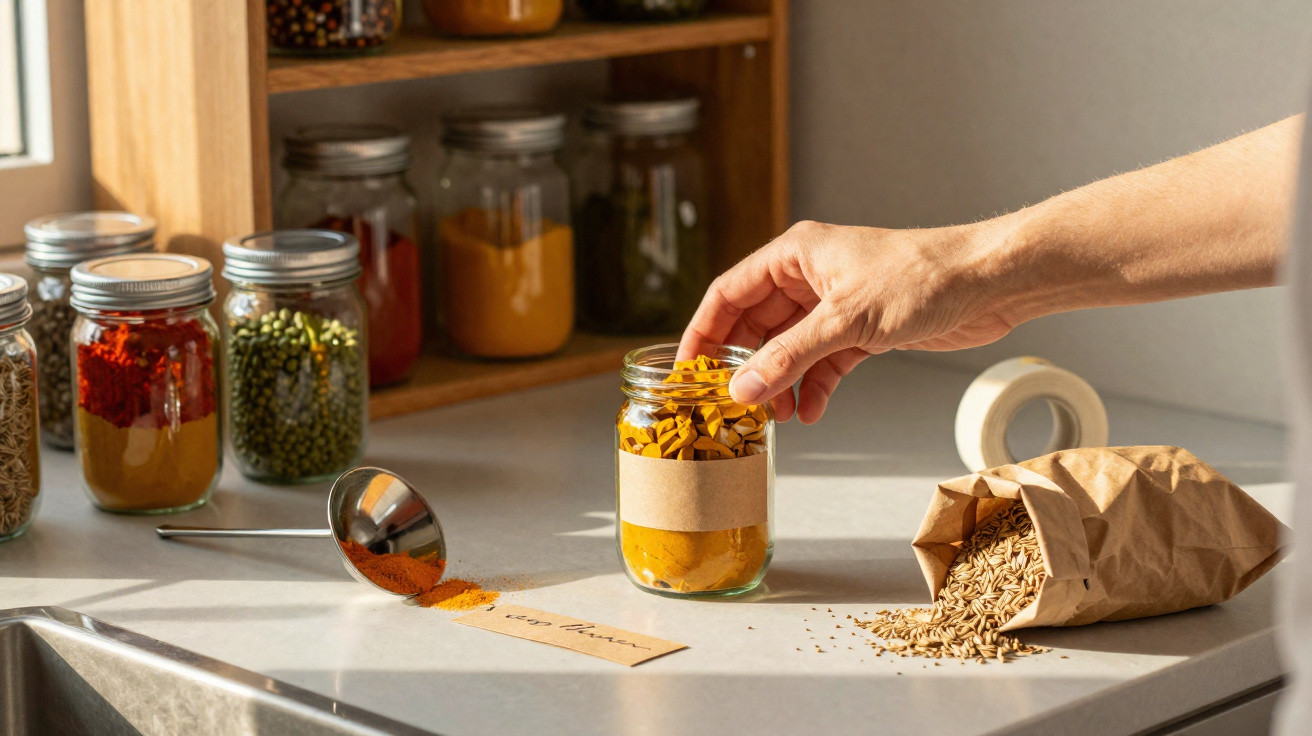
My kitchen seemed to be talking in a dialect I had forgotten: cumin buried behind cocoa powder, smoked paprika scattering red dust across every surface, and repeat purchases made in haste because I could not tell what was already there. The answer was not a gleaming matching set or another organiser. It was sitting in my recycling bin all along.
Why reusing glass jars beats buying new spice containers
Glass has a subtle kind of satisfaction. It feels sturdy, substantial and straightforward in your hand, while its transparent sides reveal precisely what you have. Old jam and olive jars can turn disorder into a soothing grid, and there is a small thrill when sunlight catches the reds, greens and golds along the shelf. This is not merely eco-friendly; it adds personality. Coriander can live in a jar that once contained marmalade, while fennel seeds occupy last winter’s tomato passata jar. Their history remains visible through the glass.
My friend Lina saved every worthwhile jar for a month, arranging them by size across her worktop like a miniature procession. Once the labels were removed and the lids scrubbed, her spice collection gradually changed from a “mystery heap” into a colourful, consistent line-up of flavours. Better still, she paid nothing for a new storage scheme, and the jars both look attractive and dispense more effectively than most shop-bought shakers. We have all experienced how one modest adjustment can make a room seem entirely different.
Unlike plastic, glass is neutral, meaning it does not absorb flavours or discolour as readily. Because light can fade spices, keeping them on shelves out of direct sunshine, or behind a simple cupboard door, helps preserve their colour and aroma for longer. Wide-necked jars allow a teaspoon to go in neatly, whereas smaller ones work well for strong spices used only in pinches. Lids matter as well: metal is suitable for dry mixes, while a plastic insert or shaker lid is useful for fine powders. Create your jar “fleet” around the sizes you enjoy using rather than relying on one-size-fits-all clichés.
Cleaning, prepping, and labelling: the method that actually works
Begin with a warm soak using hot water, a little washing-up liquid and a spoonful of bicarbonate of soda to release labels. For persistent adhesive, rub cooking oil or a small amount of peanut butter over it with a cloth. Rinse the jars, then remove odours with a brief swish of vinegar and water, or leave a pinch of bicarbonate of soda inside overnight. Put them through a hot dishwasher programme or immerse them in boiling water for several minutes, leave them upside down to air-dry, and use a funnel to add your spices. Keep about a thumb’s width of empty space at the top for an easy pour.
Use two clear labels: one on the front for quick scanning and another on the lid if you store jars in a drawer. Include the date on which you opened or refilled each jar; your future self will appreciate it when the turmeric begins to look lacklustre. Store spice families together, with baking ingredients on one row, chillies on another and blends in a separate corner. Keep filled jars away from sunshine, beside-the-hob heat and steamy dishwashers. Realistically, nobody manages this daily, but a five-minute Sunday reset keeps everything manageable.
Small routines keep the whole arrangement running smoothly, and they need not be fussy or flawless. Keeping a clean funnel on a hook, a pen in the drawer and a small tray for jars marked “refill soon” removes enough effort that you are more likely to maintain the system.
“Reusing jars shifts you from buying storage to curating it - your shelf becomes a portrait of how you cook,” said María, who runs a neighborhood bulk store.
- Remove labels after a hot soak; oil lifts adhesive without aggressive scrubbing
- A vinegar rinse or an overnight bicarbonate of soda treatment eliminates lingering smells
- Use two labels, on the front and lid, and add an opened or refilled date
- Keep jars away from heat and sunlight, and refill them little and often
- Reserve a spare jar for spice blends you make yourself
Make it gorgeous, practical, and sustainable for the long haul
This is where the enjoyable part begins. Match lids if you prefer a tidy appearance, but mismatched caps can be endearing, like doodles in a cookbook margin. For quick weekday cooking, group spices by cuisine - Thai, Italian or Indian - or arrange them alphabetically if your mind favours a library-like order. Attach a tiny tag to blends you have created, note down the proportions and place it beneath the lid for next time. The clink of clean glass feels like a tidy mind. When life is hectic, a strip of painter’s tape creates a label in seconds, while switching to zero-waste refills from a bulk shop keeps the shelf flexible and economical.
A simple jar project often grows into a wider habit. First you reuse a salsa jar, then a candle container for whole nutmeg, then a tiny pesto jar for saffron threads. A narrow tray forms a runway on any shelf, preventing jars from wandering and disappearing behind one another. If colour appeals to you, use small printed dot stickers: red for hot, green for herbal and blue for baking. For a calmer look, plain white labels in a clean font can make the collection feel like a quiet exhale. Shelf by shelf, you create a kitchen that lets you cook quickly and cook well.
There is a social element, too. Give a friend a small jar of your preferred taco blend, and the jar becomes part of the present. Keep squat jars for rubs, taller ones for cinnamon sticks and tiny sample jars for saffron or vanilla bean ends. A magnetic strip underneath a shelf can support miniature jars with metal lids, while a drawer insert creates a bird’s-eye index for dinner. The atmosphere need not be showroom-perfect; it should feel lived-in, colourful, beautifully organised, and ready to change with the seasons. Every time you cook, your jars will tell part of your story.
It begins with one empty jar and becomes a kitchen that feels lighter, less wasteful and more distinctly yours. With spices lined up in transparent glass, you cook from what you can see rather than what you assume is there. That brings fewer duplicates, less stale powder sulking at the back and more flavour in the meals you actually make. Replace a few shop sachets with refills, exchange plastic for glass and see how the practice spreads to other areas, including tea, grains and even leftovers. Yes, the shelves look appealing, but the real benefit is the rhythm you regain.
| Key point | Detail | Benefit for the reader |
|---|---|---|
| Choose a jar “fleet” you enjoy handling | Mix wide-mouth and mini jars; keep sizes consistent | Faster scooping and a cleaner, neater look |
| Label twice with dates | Front label for scanning, lid label for drawers; add opened/refilled date | Less guesswork, less waste, fresher flavour |
| Protect from heat and light | Cabinet storage or shaded shelf; avoid stovesides and sun | Spices stay vibrant longer and taste better |
FAQ:
- How can I get rid of stubborn smells in jars? Fill the jar with warm water and a tablespoon of bicarbonate of soda, leave it overnight, then rinse and let it air out. A splash of vinegar helps with garlic or pickle odours, while placing an empty, open jar in sunlight completes the process.
- Are repurposed jars safe for storing spices? Yes, for dry goods. Clean them in hot, soapy water, or in the dishwasher, rinse them and dry them completely before filling. Replace any rusty or warped lid, as dry spices need a clean, tight seal.
- Which is better: metal or plastic lids? Metal provides a tighter seal and stacks neatly, whereas plastic inserts or shaker lids are helpful for powders. Keep salty blends away from lids prone to rust, and interchange lids between jars when necessary.
- Can whole spices be stored and ground later? Absolutely. Whole seeds and pods retain their flavour for longer. Store them in small jars, then grind only what you require in a pestle and mortar or small grinder - for a fresher aroma and greater reward.
- How long will spices keep in glass jars? Dried herbs commonly perform well for 6–12 months, whole spices for 1–3 years, and ground spices for a period between those ranges. Rely on colour and aroma more than dates: if it smells sleepy, it will taste that way too.
Comments
No comments yet. Be the first to comment!
Leave a Comment