
In 2026, a nearly forgotten kitchen trick is making a comeback: practical, attractive and achievable in just a few minutes.
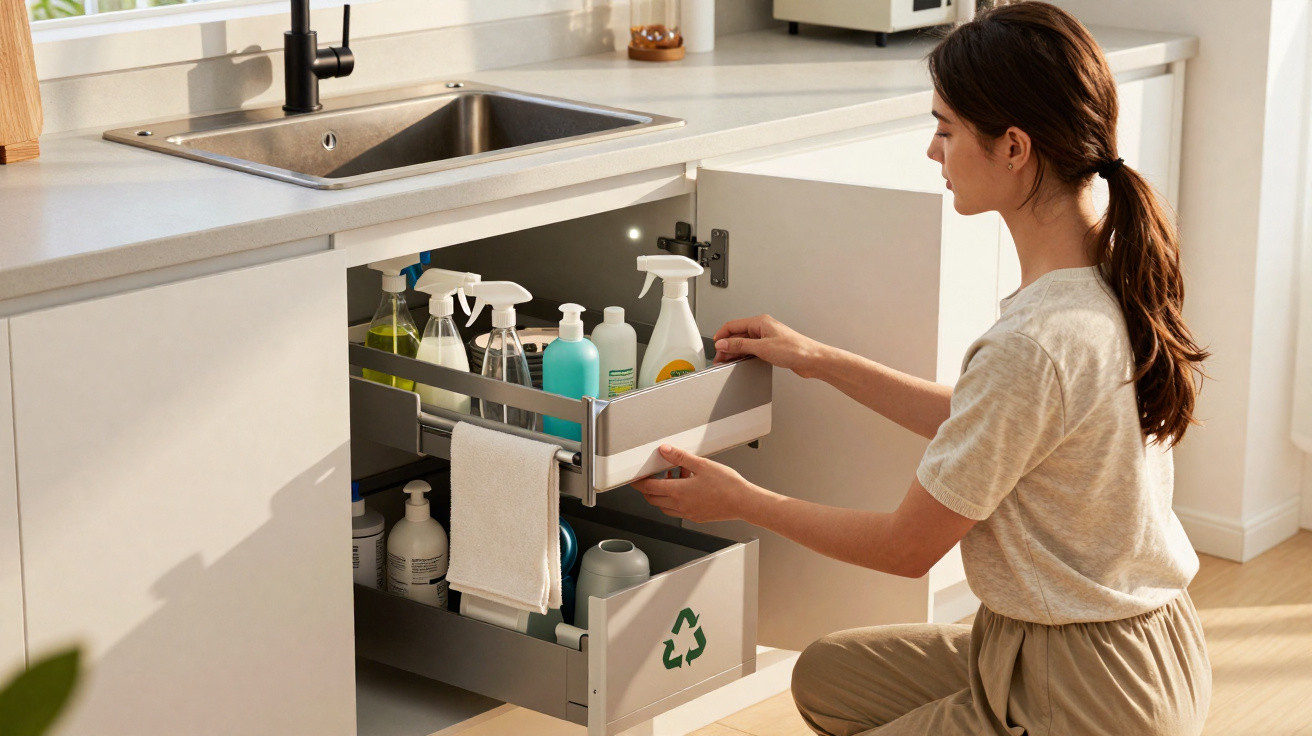
Beneath the kitchen sink, cleaning products, cloths, bin liners and assorted odds and ends tend to pile up. The doors catch, bottles topple over and nothing is truly within easy reach. Yet this troublesome area can be turned into a tidy, unexpectedly stylish zone with a simple, time-tested solution – without expensive cabinets or professional fitting.
Why the space under the sink so often becomes a chaotic zone
The area below the sink is among the most frequently used yet least carefully planned parts of a kitchen. Several factors come together here:
- Pipework and the trap take up considerable space.
- Cleaning products and supplies get put there “somehow”.
- Dividers or made-to-measure compartments are rarely available.
- The door is often flung open – items go in, the door shuts and everything is forgotten.
It quickly becomes a dumping ground for anything that has nowhere else to go. In 2026, a solution familiar to our grandmothers is moving back into the spotlight – and it fits perfectly with current home décor trends.
The return of the sink skirt
Rather than relying on closed cabinet doors, more and more interior enthusiasts are choosing a sink skirt: a fabric curtain placed directly below the worktop. It replaces the traditional cabinet front or conceals an open unit beneath the sink.
“The sink skirt turns a messy void beneath the sink into a charming, flexible storage area – with hardly any tools required.”
The idea is straightforward: a rail or tension wire is fitted above or below the worktop, then a fabric curtain is attached to it. Cleaning products, buckets and other supplies can be stored behind the curtain, keeping them out of sight.
Why this “vintage idea” is suddenly fashionable again in 2026
The sink skirt is appearing again in home magazines and across social media, fitting neatly with several trends:
- Country and cottage style: Open kitchens with fabric details are in fashion.
- Less rigid furniture: People want more flexibility at home without undertaking major alterations.
- Individuality: Fabric can be swapped quickly, allowing colours and patterns to be changed easily.
- Smaller budgets: A curtain costs considerably less than replacement fronts or a bespoke cabinet.
What once looked more at home in an older-style kitchen can now be given a contemporary interpretation with plain fabrics, linen, stripes or graphic prints.
The benefits of a sink skirt at a glance
The concept may seem modest, but it offers several tangible advantages:
| Benefit | Everyday advantage |
|---|---|
| Quick access | Pull the fabric aside and everything is open – no door swing and no rattling. |
| Greater design freedom | Colours, patterns and fabric types can be changed whenever you like. |
| Easy cleaning | Take down the curtain, put it in the washing machine and it is done. |
| Low cost | Ideal for rented homes or temporary kitchen arrangements. |
| Hidden clutter | The contents do not need to look perfect, provided the front remains neat. |
Especially in small kitchens or studio flats, this solution creates a practical blend of order, cosiness and convenience.
How to plan the area beneath the sink sensibly
A curtain resolves the visual issue, but the storage space still needs structure if it is to work properly. The key steps are as follows.
1. Ruthlessly sort through the contents
Before introducing a new organisation system, empty the entire sink cabinet. It is then worth taking an honest look:
- Which cleaning products are duplicates or long past their expiry date?
- Which tools and supplies do you genuinely use each week?
- What could be moved elsewhere, such as to a utility room, cellar or cleaning cupboard?
Anything used only rarely takes up valuable easy-access space. The area beneath the sink is best reserved for items needed several times a week.
2. Create clear zones with baskets and boxes
Rather than placing individual bottles and cloths straight on the floor, dividing the space makes it far calmer. Useful options include:
- shallow plastic boxes for bottles and sprays,
- small baskets for sponges, cloths and washing-up brushes,
- a dedicated container solely for bin liners,
- an additional bucket for cleaning cloths that need washing.
“Baskets and boxes mean you do not have to pull out the entire contents of the sink cabinet every time you are looking for one product.”
Organising items by purpose is ideal, for instance: “Everyday kitchen”, “Bathroom cleaning” and “Stock”.
3. Work cleverly around the pipework
Pipes and the trap must remain accessible, but they also restrict the available space. The following can help:
- height-adjustable slot-together shelves built around pipes,
- narrow extra shelves at either side,
- pull-out baskets measured before installation.
This creates a second level for smaller items without leaving a plumber in despair should access be needed.
Choosing and fitting the sink skirt correctly
The fabric determines whether the sink skirt looks playful, modern or rustic. Three questions can guide the choice:
- What is the rest of the kitchen like? Clean-lined fronts suit simple fabrics, while country kitchens can carry checks or florals.
- How bright is the room? Dark curtains look refined but absorb light. Pale shades make the space feel more open.
- How practical does it need to be? Cotton and blended fabrics wash well; linen creases attractively but can be more expensive.
Usually, all that is needed for fitting is:
- a slim curtain rail beneath the worktop,
- a tension wire between two side walls,
- or hook-and-loop tape fixed directly to the underside of the worktop.
The fabric can be attached with loops, eyelets, curtain tape or hook-and-loop tape. If drilling holes is not permitted, use telescopic tension rods.
Keeping the space behind the sink skirt usable
To prevent the new storage area from becoming a dumping ground again, it needs a few simple rules:
- Keep no more than one basket for “Miscellaneous”.
- Store large containers, such as five-litre cleaning products, only if you will genuinely use them up.
- Keep hazardous products, such as drain cleaner, out of children’s reach or place them in a lockable box.
If you like, add small labels to the baskets – “Kitchen”, “Bathroom” and “Bin liners” – so that housemates and family members can quickly find what they need and are more likely to put it back.
Safety and health: what should not be kept directly beneath the sink
Useful as this space is, some things are better stored elsewhere:
- Food should be kept away because of moisture and odours.
- Dishwasher tablets belong in a securely sealed container.
- Anyone with pets or children should store harsh cleaners higher up in a cupboard.
A well-organised sink skirt can look lovely, but it remains a utility area with water and chemical products, so a degree of caution is worthwhile.
Further ways to extend the idea
The “curtain instead of a door” principle can easily be applied elsewhere: beneath open shelving, under a worktop in a home office or in front of a temporary washing-machine area in the bathroom. This creates flexible zones that suggest order without needing to be flawless.
Those who enjoy a little DIY can also add small extras to the sink skirt: sewn-on pockets for rubber gloves, a stitched-in magnetic strip for metal brushes or a hidden loop from which a microfibre cloth can dry. In this way, a simple length of fabric becomes a considered organisational tool that is quite rightly back on trend in 2026.

Comments
No comments yet. Be the first to comment!
Leave a Comment