
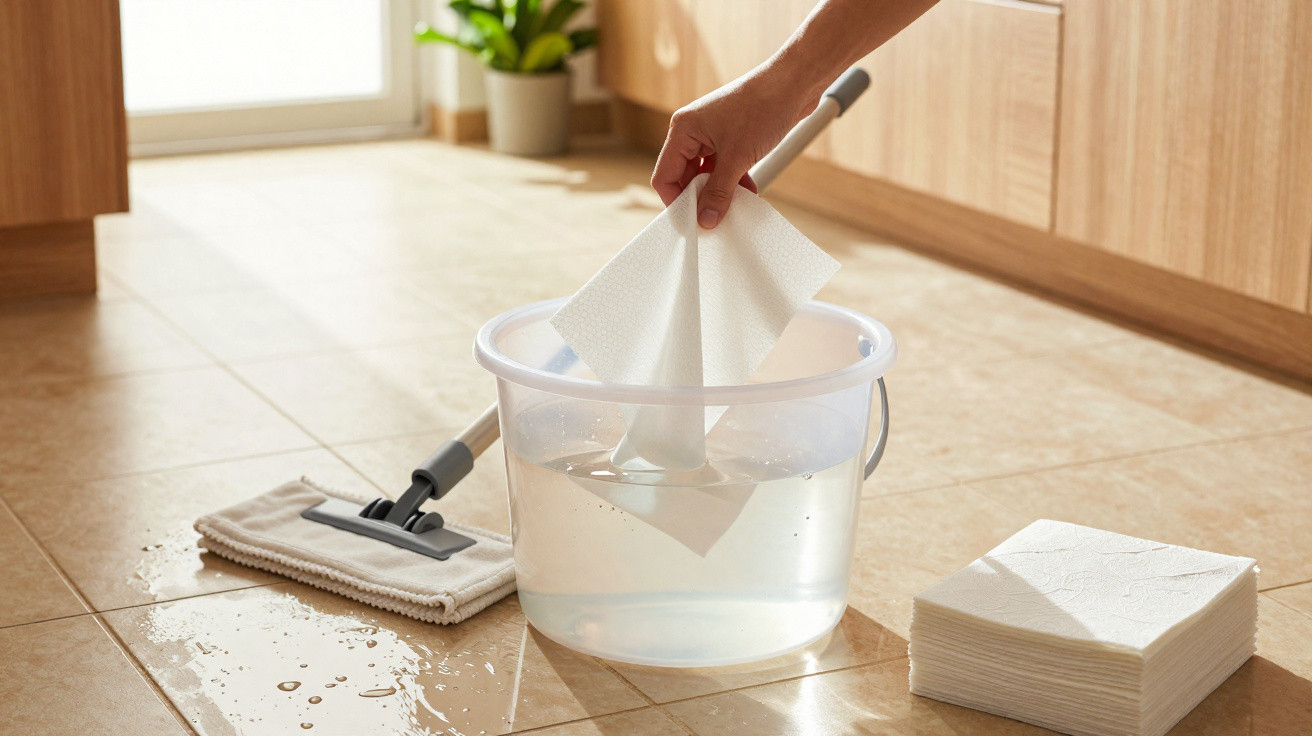
Everyone knows the routine: you mop, wait, air the room – and just a few hours later the floor looks dull again, marked by streaks and footprints. Rather than constantly battling cleaning products and fragranced sprays, a straightforward blend of hot water and dried leaves from the spice rack may help. The result can surprise even people who believed their home was already very clean.
Why floors remain dull despite frequent mopping
The main reason floors look lacklustre and grey is often the water itself. In many areas, tap water contains a high level of limescale. Once the water evaporates after mopping, the limescale is left behind as a fine, invisible layer. Under bright light, this can make the floor appear patchy and dull.
Water alone also has its limits. Although it removes dust effectively, it is much less successful against grease, grime brought in on shoe soles or food splashes. Instead of being fully lifted away, the dirt is spread around. The floor may then feel slightly sticky under bare feet, even though the freshly mopped room smells clean.
The harder the water, the more noticeable this becomes. Tiles and sealed laminate can develop a grey haze that absorbs light. Even shortly after cleaning, the floor can look worn and used – particularly frustrating for anyone who enjoys walking barefoot across smooth, clean surfaces.
Common cleaning mistakes that leave floors sticky or cloudy
Frustrated by lacklustre floors, many people reach for “power cleaners” from the supermarket. These specialist products promise shine, fragrance and hygiene in a single step. In reality, they can often leave behind an extremely thin plastic-like film which may look shiny but attracts dust and fluff.
Incorrectly measured household remedies can be just as problematic. Examples include:
- Too much black soap cleaner: this leaves a greasy coating that builds up further each time the floor is mopped.
- Excessive use of chlorine cleaner: this can damage grout and surfaces while also irritating the airways.
- Undiluted or heavily dosed vinegar cleaner: this may harm sensitive materials, including natural stone, limestone or certain sealants.
The cleaning tools themselves are another commonly overlooked factor. An old mop pad that is saturated with dirt simply redistributes yesterday’s grime. Frustration is inevitable.
“Anyone who focuses only on fragrance and foam while cleaning risks leaving films and streaks – water quality, dosage and a clean mop cover are what matter.”
An unexpected kitchen aid: dried leaves in the mop bucket
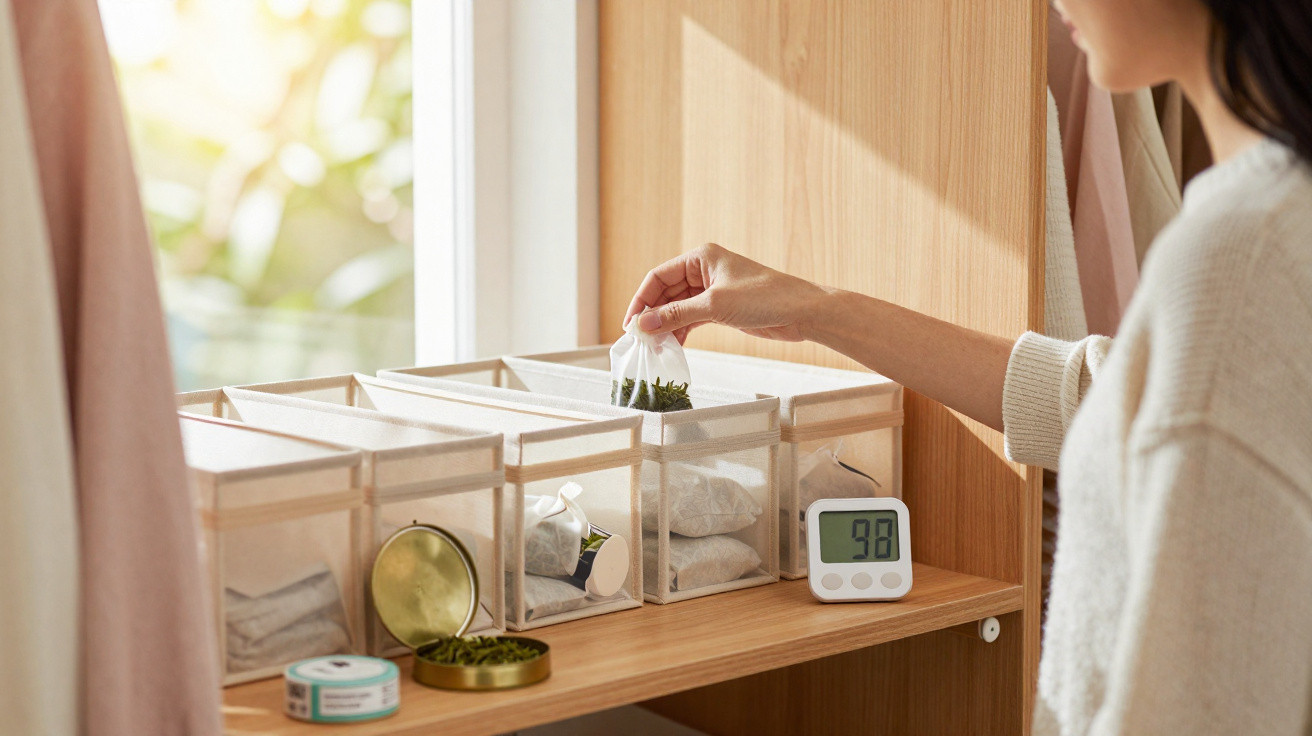
A simple but effective shortcut can be found in the spice rack. Dried, aromatic kitchen leaves can do more than add flavour to sauces. Infused in hot water, they release natural compounds that help loosen grease, reduce odours and make the mop water slightly more effective.
The approach is closer to making tea than conventional cleaning. Rather than immediately pouring cleaner into the bucket, you first prepare a type of herbal infusion. This then forms the basis of the mop water and changes how the floor dries.
How the dried leaves trick works, step by step
This method using dried kitchen leaves is quick to prepare. The following quantities are enough for an average-sized home:
- Bring one litre of water to the boil, or use very hot water from the tap.
- Add 6 dried leaves to the hot water, or 8 if the leaves are particularly large.
- Leave to infuse for around 10 minutes, until the water has a clearly aromatic smell.
- Strain out the leaves so that no fragments end up on the floor.
- Pour the infusion into a bucket of lukewarm water.
- If desired, add no more than one tablespoon of clear vinegar cleaner to help dissolve limescale residue.
- Use a clean microfibre mop in circular motions, taking care not to soak the floor excessively.
The floor should then dry fairly quickly and will usually have a satin sheen rather than an uneven, blotchy appearance. The fragrance is subtly herbal, rather than resembling a cloud of perfumed cleaning product.
Why this dried leaves mixture works so well on many floors
Several effects work together here. Hot water loosens grease much more effectively than cool water. The aromatic compounds released by the leaves also offer a naturally mild antibacterial and odour-binding benefit. This means a gentle mixture can be sufficient, without relying on aggressive chemicals.
If used, the small amount of vinegar cleaner helps remove the limescale haze. At this low dosage, it will not normally damage hard-wearing floors, provided the surface is suitable for it. Once dry, the floor remains smooth rather than slippery and is slower to pick up fresh dirt.
“Rather than relying on harsh chemicals, the method uses heat, microfibre and a light plant infusion – so the floor is genuinely cleaned rather than merely covered over.”
Where the method works well – and where caution is needed
The dried leaves method is especially suitable for:
- Ceramic and porcelain tiles
- Sealed laminate
- Many modern vinyl floors
- Hard-wearing coated surfaces in kitchens and hallways
More care is needed with delicate materials. Natural stone, limestone tiles, marble and open-pored finishes can react sensitively to acids. For these surfaces, first test the infusion without any added vinegar in an inconspicuous area.
Those with underfloor heating may benefit as well: the floor dries even faster, giving greasy films less time to settle. In very warm rooms, however, a second pass with clean water and a lightly wrung-out mop can be worthwhile for complete peace of mind.
Frequent mistakes that spoil the result
To ensure the method works properly, avoid the following pitfalls:
- Using too much vinegar cleaner: more is not better here; it can even make surfaces look duller.
- Using a dirty mop cover: old residue is transferred back onto the floor and creates fresh marks.
- Making the floor far too wet: standing water can penetrate joints and beneath floor coverings, causing long-term damage.
- Skipping a test on delicate areas: a brief trial is especially worthwhile for natural stone.
How often mopping makes sense – and what really protects the floor
Many households mop considerably more often than necessary simply out of habit. In hallways and kitchens, a weekly clean with the dried leaves solution may be sufficient. Bedrooms often need mopping less often, provided they are vacuumed regularly. For some floor finishes, too much moisture causes more harm than a little everyday dust.
Useful additions to a mopping routine include:
- Taking shoes off consistently at the door
- Using clean, absorbent doormats both outside and inside the front door
- Removing crumbs and dust between mopping sessions with a cordless vacuum or brush
- Washing mop covers hot after every use, rather than only wringing them out
Anyone following these points will often notice after just two or three cleaning sessions that floors look calmer and more even. The urge to keep “quickly going over them again” also becomes noticeably less frequent.
What terms such as water hardness, film and satin sheen mean
The frequently mentioned limescale film consists mainly of calcium and magnesium compounds left behind as water evaporates. The harder the water, the heavier this deposit becomes. Descalers or mild acids such as diluted vinegar can loosen these residues again.
The term “satin sheen” describes a middle ground: not reflective like a high-gloss tile, yet not dull either. This effect occurs when the floor is free from layers of dirt and limescale, while its surface texture has not been made to look polished by wax or plastic coatings.
In everyday terms, the floor reflects light softly and evenly without glaring patches. Fingerprints and footprints are less noticeable, and the room looks well cared for even if it has not been cleaned for a few days.
Comments
No comments yet. Be the first to comment!
Leave a Comment