
At the back of the fridge, beneath a half-open yoghurt pot and a solitary lemon, sits a bag of lettuce that was crisp and full of promise only 48 hours earlier.
Now its leaves are stuck together like damp tissue paper, their edges brown and their centres floppy. You could swear it was fresh when you bought it. You paid more for the “washed and ready to eat” version. Perhaps you even hold the supermarket responsible.
But the cause usually begins at home: in the way we shop, store food and then overlook it. Your fridge quietly hums away, its chilled air meant to preserve your salad plans. Yet the lettuce gives up at precisely the moment you fancy eating something green.
Why does it wilt so quickly, right in front of you?
What really happens to lettuce in the fridge
As soon as lettuce is harvested, the countdown begins. It may still appear fresh in the shop, lightly misted and displayed under flattering supermarket lighting. Once it reaches your home, though, that illusion fades. A fridge is colder, drier and darker - and considerably less forgiving.
Lettuce leaves consist largely of water, contained in minute cells that act like balloons. The leaves remain crunchy while those cells are full. When the air in the fridge draws out their moisture, those balloons deflate. That is why your salad looks exhausted every time you open the vegetable drawer.
One grey Tuesday evening in London, I saw a family putting away their weekly shop. The father threw a bag of mixed leaves into the fridge door beside the ketchup and milk. The door shut and that was that. When it was opened again two days later, the leaves on top were slimy, while those underneath had been pressed into a green layer.
Looking at the mess, he said what most of us have thought: “This stuff goes off so fast.” He was right about how quickly it happens. Research from UK food-waste charities shows that bagged salad is one of the foods most often discarded in British households. It is not because it starts out poor-quality, but because it is delicate and we handle it as though it were a carrot.
The fridge door - where that family stored their lettuce - is the warmest and most changeable area of the appliance. Every opening sends the temperature up. Moisture forms through condensation, then evaporates again. Lettuce does not cope well with such fluctuations. Put it in a sealed plastic bag, where trapped droplets create a miniature sauna, and you have the ideal conditions for wilting and decay.
Lettuce therefore does not simply “go off” for no reason. It first loses water, then its structure, and finally its safety. Once it appears sad, much of its flavour has already disappeared.
How to keep lettuce crisp for more than two days
Begin with one straightforward rule: handle lettuce as you would fresh flowers, not a tin of beans. When you arrive home, avoid shoving the bag into the first empty space. Give it a calm place of its own.
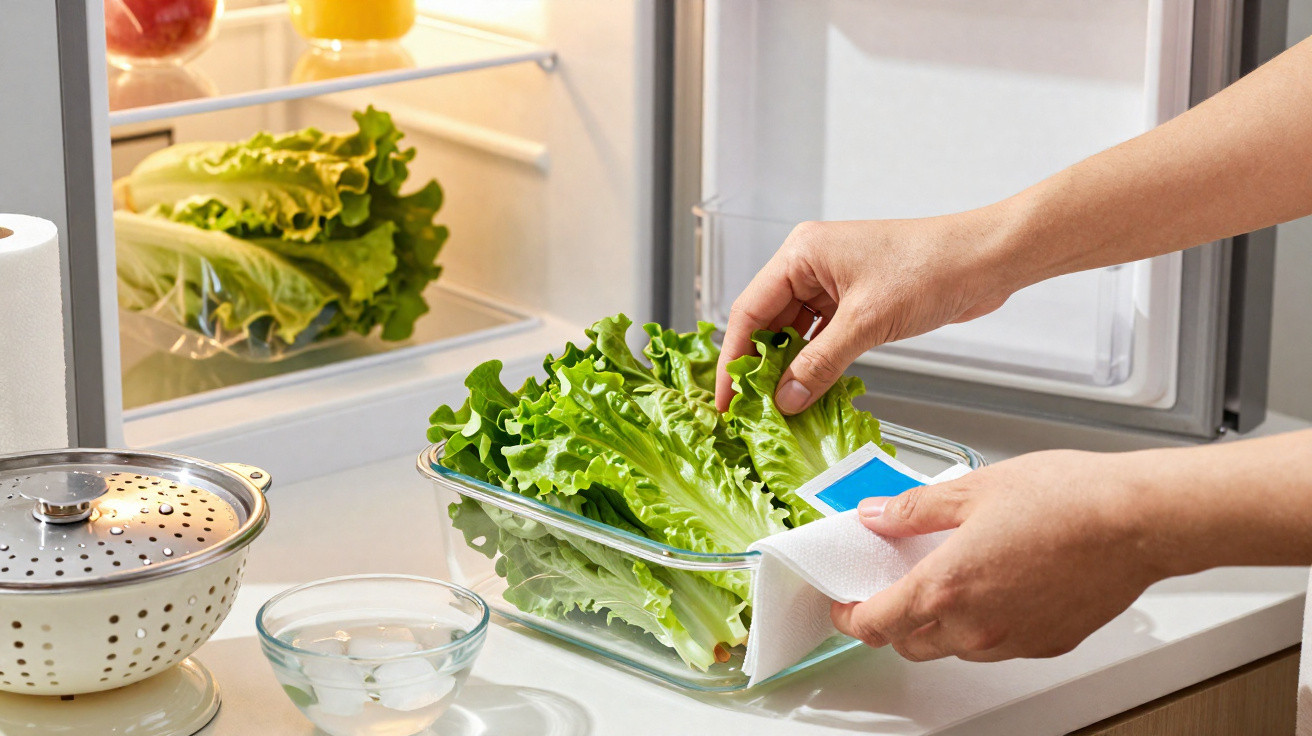
The salad drawer is generally the best location, with one adjustment. Place a clean tea towel or a few sheets of kitchen paper in the drawer first. This gentle layer protects the leaves while absorbing surplus moisture. Put the lettuce there, preferably removed from its original wet bag, then loosely cover it with another cloth.
Treat it as a cosy duvet for greens: sheltered, but still able to breathe.
Most people fall into the same three traps: washing lettuce too early, sealing it tightly in plastic, or forgetting about it for five full days. During a busy week, the fridge becomes a jungle in which only the most noticeable foods get eaten. Lettuce has little chance.
Use this approach instead. For pre-washed lettuce, open the bag, softly shake away any obvious droplets and transfer the leaves to a container lined with dry paper. Add a second sheet on top and fit the lid loosely. For a whole lettuce, leave the root end attached, wrap it in a slightly damp cloth and place it in the drawer. This small routine can provide three, and sometimes five, additional days of crunch.
Let’s be honest: nobody really does this every day. But doing it once, immediately after a large shop, can save a week’s worth of lunches.
“Think of moisture as both friend and enemy,” says a London-based food scientist I spoke to. “Too little and your lettuce wilts. Too much and it rots. Your job is to give it a gentle, stable middle ground.”
There is a quiet reassurance in having a system, even an extremely simple one. It stops every salad craving becoming a game of fridge roulette. You know what you’ll find when you open that drawer.
- Keep lettuce in the salad drawer rather than the fridge door
- Use cloth or paper to soak up excess moisture
- Pack leaves loosely, leaving space for air to circulate
- If it is not pre-washed, wash it only just before eating
- Eat delicate mixed leaves first, saving romaine and hearts until later
Why this small habit change matters more than you might expect
Beneath a floppy lettuce lies a broader story about our relationship with food. We buy it hurriedly, squeezed between work and getting home, then expect it to perform perfectly in a disorganised fridge. When it wilts, we sigh, throw it away and start the cycle again.
Yet the science of lettuce wilting offers an invitation too. It shows us that food remains alive in a quiet, gradual sense even after it is picked. Its cells - those tiny water balloons - are still breathing and responding to temperature, light and humidity. Once you understand that, treating salad as disposable becomes strangely more difficult.
In practical terms, keeping lettuce crisp for longer means less food waste in the bin and more easy meals that genuinely get made. A bag that lasts all week can become quick wraps, last-minute lunches or a base for leftovers. Crisp lettuce is a kind of permission slip for eating slightly better without thinking too hard.
Emotionally, it creates a small but meaningful shift. Opening the fridge feels a little more manageable. You avoid the private guilt of discovering a soggy pile and scraping it into the food-waste caddy. On a difficult day, that modest success can matter more than we care to acknowledge.
There is also the bigger shared issue of food waste and energy. We refrigerate our homes, transport vegetables and light supermarket shelves so lettuce can survive, only to discard tonnes of it every year in the UK. Knowing why lettuce wilts after two days is an initial break in that pattern. It turns a boring annoyance into a small piece of knowledge you can act on.
We have all found an unidentifiable green blob at the back of the fridge and felt a flicker of shame. It began as something fresh, grown in actual soil through real effort. Keeping it usable for a few more days is not about being flawless. It is about giving it a little attention once, at the moment it matters.
The next time you return home with a bag of leaves, try treating it as something living and fragile rather than a disposable extra. Wrap it, keep it away from the fridge door and leave it some breathing room. Then, three or four days later, you may open the drawer to find it still crisp - and quietly want to tell somebody.
| Key point | Detail | Why it matters to the reader |
|---|---|---|
| The fridge environment matters | Cold, dry air and temperature changes in the door cause lettuce to wilt quickly | Helps you select the best place in your fridge |
| Moisture control is crucial | Cloth or paper absorbs surplus water and keeps leaves crisp for longer | A simple adjustment that can add several days of freshness |
| Gentle handling pays off | Loose packing and minimal pre-washing protect delicate lettuce cells | Cuts waste and saves money on weekly shops |
Frequently asked questions
- Why does my lettuce wilt faster in a bag? A closed plastic bag traps tiny water droplets, producing a humid and unstable environment. It alternates between wet and dry conditions, damaging leaf cells and accelerating wilting and sliminess.
- Should I wash lettuce as soon as I get home? If it is not pre-washed, you can wait. Washing introduces extra moisture, so drying it thoroughly is essential. Storage that is slightly damp and breathable is fine; dripping-wet lettuce in a sealed bag is not.
- What fridge temperature is best for lettuce? A steady 3–5°C is ideal for most salad leaves. At lower temperatures, certain varieties can become “chilled” and develop brown, water-soaked patches.
- Can I revive wilted lettuce? Sometimes. If the leaves are only limp rather than slimy, soak them in very cold water for 10–15 minutes and dry them afterwards. The cells may absorb water again and recover some crunch.
- Is it safe to eat lettuce with brown edges? Brown edges caused by drying are generally a matter of quality, not safety. Slime, an unpleasant smell or dark, mushy patches are signs that it should go in the bin. Safety always comes first.

Comments
No comments yet. Be the first to comment!
Leave a Comment