
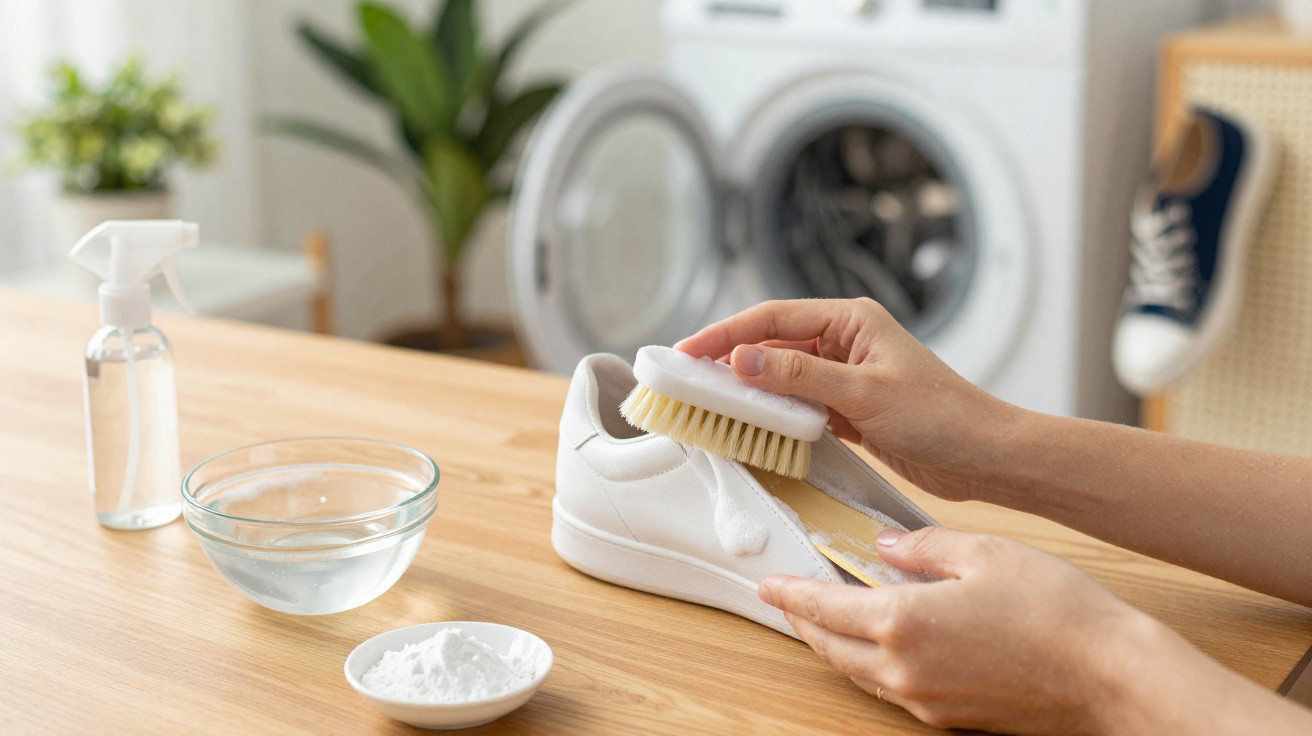
With the right techniques, you can save your favourite pairs instead of throwing them away.
Many people wash the laces and give the surface a quick wipe, then wonder why their trainers still smell unpleasant. The source is inside the shoe: insoles that are glued or stitched in place. Using water or harsh products carelessly here can quickly damage the adhesive, cushioning and shape. However, with a few targeted steps, non-removable insoles can be cleaned thoroughly and kept hygienically fresh.
Why fixed insoles need careful treatment
In many trainers, running shoes and smart leather shoes, the insole is glued or stitched firmly to the midsole. It cannot be removed without force, which makes cleaning more difficult.
Sweat, dead skin cells and dust build up in this area during everyday use. Together, they create an ideal breeding ground for bacteria, causing odours and, in the worst cases, athlete’s foot.
Always clean fixed insoles directly inside the shoe, using as little water as possible and working in a precise, controlled way.
Depending on the model, these footbeds may be made from foam, gel padding, memory foam or leather. Some sports brands use special coatings designed to resist bacteria or moisture. All of these materials are sensitive to excess moisture and aggressive cleaners. Damaging their structure or adhesive can lead to:
- adhesive coming loose and the sole lifting
- crumbling foam
- a distorted shoe shape
- damaged water-repellent treatments and membranes
Step-by-step: gentle cleaning inside the shoe
1. Remove dry dirt thoroughly
Before introducing water, remove any loose dirt. Otherwise, you will simply rub grime deeper into the material.
- Open the shoes fully, loosening or removing the laces.
- Gently tap out the inside.
- Brush across the insole using a soft brush, such as an old toothbrush, or a cloth.
- Carefully clean the edges around the toe area and heel as well.
This initial step already removes a large proportion of the dirt and makes wet cleaning more effective.
2. Apply a mild cleaning product correctly
For the actual cleaning, a very mild solution of lukewarm water and a little washing-up liquid or specialist shoe cleaner is usually sufficient.
The insole must never become soaked. The cloth should be damp, not dripping wet.
Proceed as follows:
- Mix lukewarm water with a few drops of mild cleaner in a bowl.
- Dip a microfibre cloth or soft sponge into the solution and wring it out thoroughly.
- Wipe the insole in small circular motions, working a little more firmly on heavily soiled areas.
- Use a second cloth, dampened only with clean water, to lift away any cleaning residue.
- Finally, blot the surface carefully with kitchen roll or a dry cloth.
If the interior of the shoe contains sensitive materials such as leather, use a leather cleaner or specialist product instead of washing-up liquid and follow the manufacturer’s instructions.
Household remedies for stubborn odours and stains
If a mild soapy solution is not enough, simple household remedies that are commonly already available can help.
| Cleaner | Suitable for | How to use | Approximate drying time |
|---|---|---|---|
| Mild soapy solution | General dirt | Work in with a damp cloth | 24–48 hours |
| Bicarbonate of soda or baking powder paste | Stubborn stains, strong odours | Apply, leave to work, brush off | 12–24 hours |
| Alcohol-water mixture | Reducing germs | Apply lightly with a cloth or spray | 6–12 hours |
| Diluted household vinegar | Neutralising odours | Spray as a fine mist; do not soak | 12–24 hours |
Bicarbonate of soda paste for stains and mustiness
Bicarbonate of soda, or conventional baking powder containing bicarbonate of soda, has a mildly abrasive effect and neutralises odours.
- Mix one to two spoonfuls of bicarbonate of soda with a small amount of water to form a thick paste.
- Apply it only to stains or areas with a strong smell.
- Leave it to work for around 15 minutes.
- Gently rub it away using a slightly damp cloth or brush.
- Wipe again with a dry cloth and allow the shoes to dry thoroughly.
Alcohol and vinegar for hygiene and odour control
A blend of alcohol, such as isopropyl alcohol, and water can help reduce germs, making it suitable after sport or for particularly sweaty feet. Diluted household vinegar is especially useful for odours.
Important: spray only lightly or dab it on with a cloth; never pour it into the shoes. Overdoing it causes material damage and lengthy drying times.
Drying correctly: the crucial step
Even the best cleaner is ineffective if shoes remain damp for days afterwards. Moisture inside encourages mould, ages adhesives and creates fresh odours.
Direct heat is off limits: no radiator, hairdryer or oven. Your shoes will last longer as a result.
Instead, follow these guidelines:
- Leave shoes at room temperature in a well-ventilated place.
- Open the laces and pull the tongue well forward.
- Loosely stuff them with newspaper or kitchen roll, replacing it every few hours.
- Optionally, use a fan or dehumidifier to speed up the process.
Drying can take 48 hours, particularly in damp homes. Before wearing them again, check the toe area with your hand: if the material still feels cool and slightly clammy, the shoe needs more time.
Keeping shoes fresh between deep cleans
Anyone who waits until their trainers smell strongly will constantly be cleaning up afterwards. It is wiser to act early and make small adjustments to everyday habits.
Airing shoes and managing moisture
After wearing them, shoes should not go straight back into a cupboard. Instead:
- leave them open in the room for several hours, ideally somewhere airy
- absorb moisture with cedar shoe trees or cedar inserts
- avoid stacking shoes on top of each other so that air can circulate
This straightforward measure alone greatly reduces bacterial growth and extends the time before the next intensive clean is needed.
Using powders and sprays properly
Odour-neutralising shoe powders and sprays are now available in many forms, from chemist products to natural blends containing tea tree or eucalyptus oil.
Points to consider:
- Apply them only to dry insoles.
- Use a light dose to avoid creating a sticky layer.
- Choose fragrance-free or natural products if you have sensitive skin.
If you do not want to buy anything, occasionally sprinkle a little bicarbonate of soda inside dry shoes, leave it overnight, then thoroughly tap it out or vacuum it up the following day.
Rotate shoes instead of wearing one pair continuously
A simple tip that many people underestimate is to avoid wearing the same pair every day. Rotating between two or three pairs gives each insole time to dry completely. This reduces odours, protects the material and saves money over time because shoes last longer.
When it is time for new shoes or insoles
Some issues cannot be resolved despite careful care. If the cushioning has noticeably weakened, the insole has become compressed or odours return soon after every clean, consider it a warning sign.
With sports shoes in particular, a worn fixed insole can increase strain on joints and tendons. It is then worth taking a critical look: are the tread, upper and footbed still in a condition that properly supports your feet? If not, replacement is the only answer.
Where shoes are otherwise still in good condition but have hygiene issues, a podiatrist or cobbler may, in individual cases, be able to adapt, pad or upgrade them. This depends heavily on the construction of the model and should be discussed with a specialist retailer.
Background: why insoles smell at all
Odour is not caused by sweat alone, but by bacteria breaking it down. The warmer and more humid the shoe, the faster they multiply. Synthetic materials often intensify the effect because they allow less moisture to escape.
Anyone who exercises frequently, wears safety shoes for long periods or spends much of their working day standing should therefore focus not only on their shoes, but also on foot care: wash feet regularly, dry them thoroughly and, where necessary, use specialist care products for heavy sweating. Clean feet significantly reduce the burden on the insole and mean that the next cleaning session will be needed far less often.
Comments
No comments yet. Be the first to comment!
Leave a Comment