
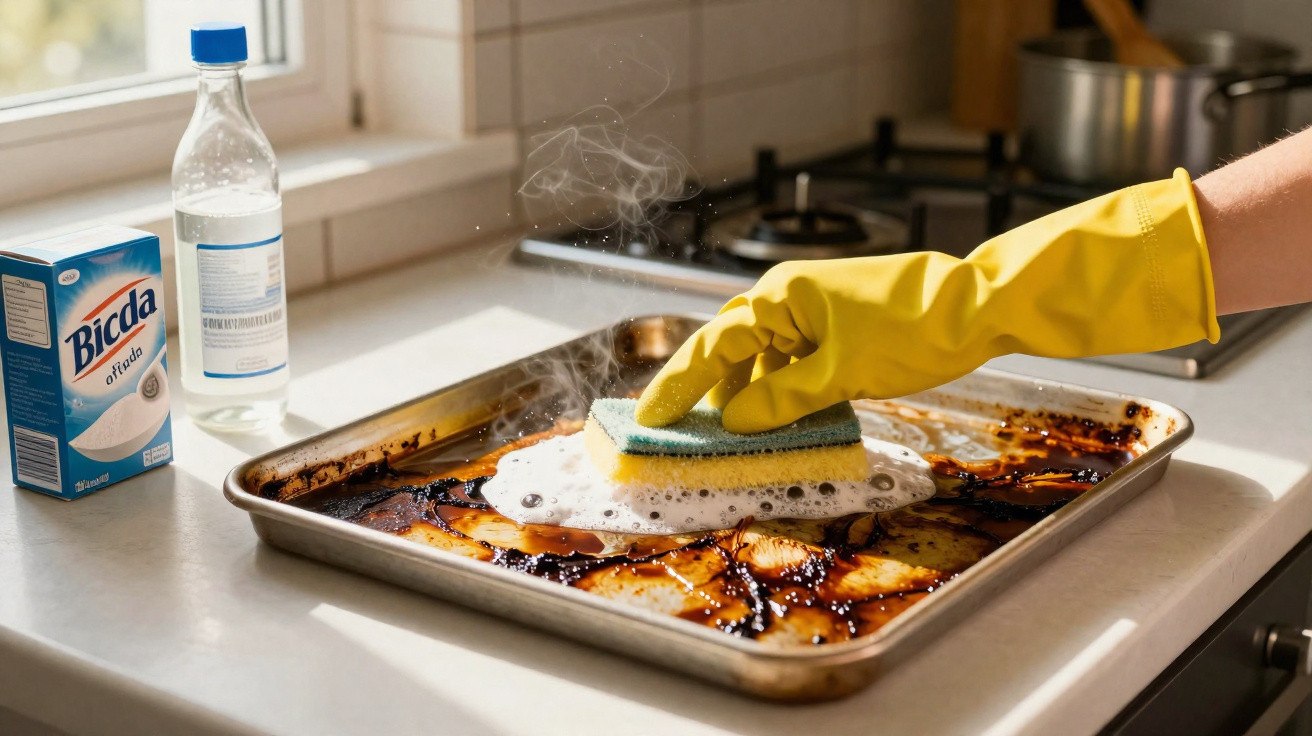
A baking tray collects fat, sugar and sauces that go through repeated heating cycles, leaving dark marks that are hard to shift. The most effective approach is to soften the crusted residue before scrubbing and tailor the cleaning method to the tray’s coating.
Why does grease become so baked onto a baking tray?
Fat released from food loses moisture, oxidises and sets as it is heated again and again. Around the edges and in the corners, where heat builds up, these remnants create an adhesive layer that withstands a quick wash with ordinary washing-up liquid.
Attempting to scrape a dry baking tray with a knife, wire wool or a rough scouring pad can scratch the metal and ruin its coatings. Leaving it to soak gives the dirt time to take in moisture, reducing the force required and protecting the surface while it is cleaned.
Key precautions before cleaning include:
- Temperature: wait until the tray is only warm before washing it.
- Sponge: always use the soft side to prevent scratches.
- Bicarbonate of soda: use sparingly and only on compatible materials.
- Instructions: check the guidance supplied for coated baking trays.
- Abrasives: do not use wire wool, knives or metal scrapers.
Why does oven heat make residue harder to remove?
An oven is an enclosed appliance that retains intense heat, which cooks food but also bakes splashes onto the baking tray. The more often grease is reheated, the darker and more stubborn it is likely to become.
Before using any mixture, establish whether the item is aluminium, stainless steel, glass, enamel or has a non-stick coating. Since each material reacts differently, the manufacturer’s instructions should determine the suitable products, contact time and scrubbing method.
How can burnt grease be removed with bicarbonate of soda and vinegar?
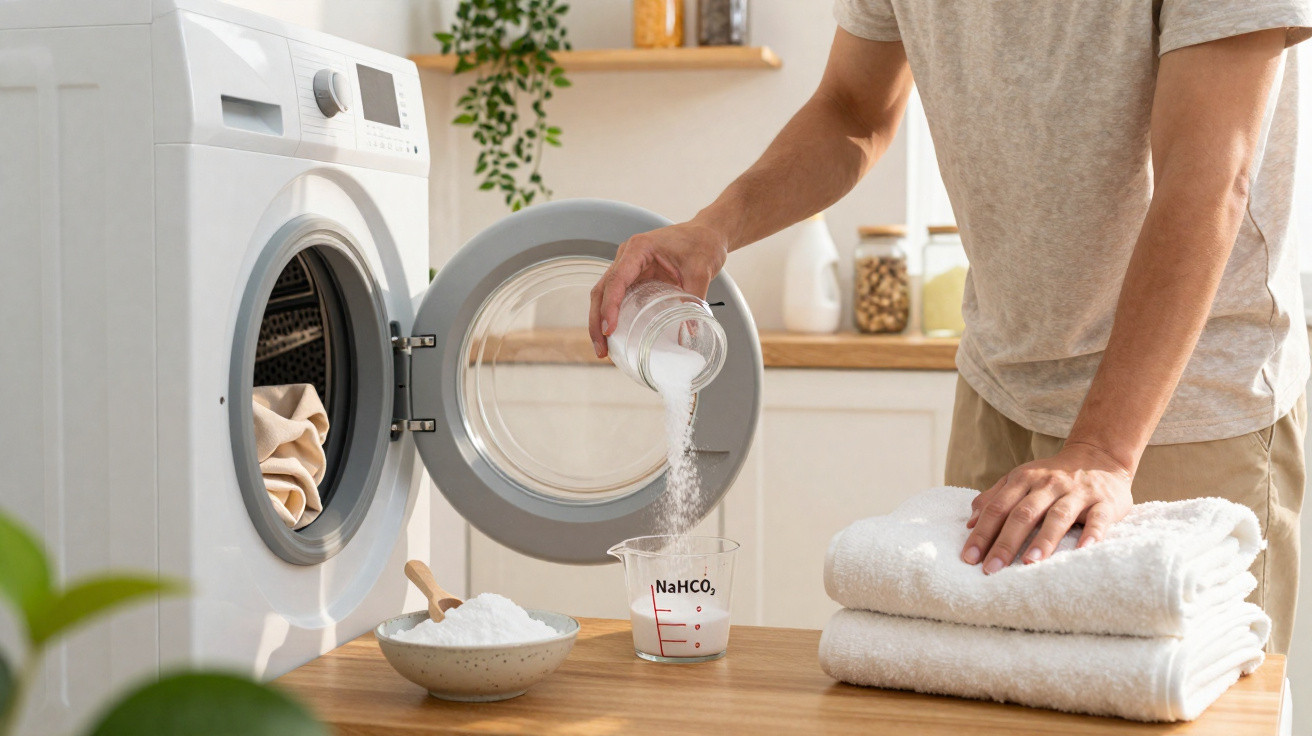
For uncoated metal baking trays, make a paste using bicarbonate of soda and a small amount of water, spread it over the cooled areas and leave it in place for several hours. A little vinegar can then be used to help lift the loosened residue.
Let the paste work before adding vinegar
Combining everything in advance reduces its effectiveness.
The bicarbonate of soda should remain on the grease for several hours to soften the crust.
Use only a small amount of vinegar at the end, scrub gently and rinse thoroughly so that no residue remains.
Bicarbonate of soda and vinegar react with one another and lose some of their effect if combined too soon. For this reason, allow the paste to work first, add vinegar only at the final stage, clean with a soft sponge and rinse the tray fully.
Clean in the following order:
- remove loose food remnants with kitchen roll or a silicone spatula;
- combine bicarbonate of soda with a little water to make a paste;
- spread it over the grease and leave it for several hours;
- add a small amount of vinegar only at the final stage;
- scrub with a soft sponge, rinse and dry completely.
How should non-stick baking trays be cleaned without damaging the coating?
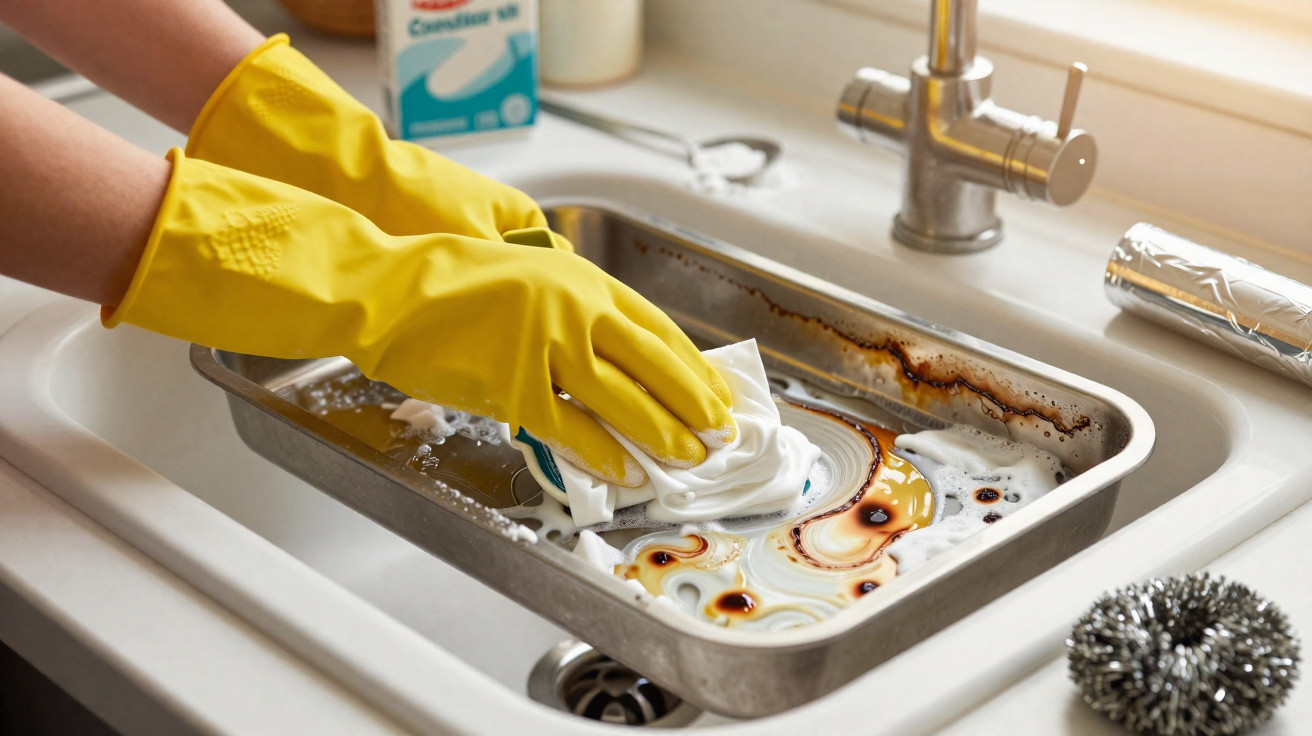
Non-stick baking trays need a gentler technique: warm water, mild washing-up liquid and the soft side of a sponge. Concentrated bicarbonate of soda, wire wool, abrasive powders and scrapers may cause scratches, weaken the non-stick surface and lead to the coating peeling.
Wash the baking tray while it is warm, but never when it is hot enough to cause burns or thermal shock. At this point, the grease has not yet fully hardened and will usually come away with less effort, keeping the corners, edges and finish intact.
To look after a non-stick item:
- soak it in warm water with mild washing-up liquid;
- use only a soft sponge or microfibre cloth;
- soak it again rather than scraping at persistent residue;
- never use wire wool, knives or abrasive powders;
- replace the item if its coating is peeling.
How can grease be prevented from building up again?
Anyone familiar with ways to remove accumulated grease from the hob with bicarbonate of soda should bear in mind that a baking tray may have a different coating. Always check compatibility before trying household remedies, and carry out a small, discreet test before treating the whole surface.
Baking parchment helps prevent dough, cheese and sauces from coming into direct contact with the baking tray. Aluminium foil may also be suitable where the recipe and manufacturer allow it, although highly acidic or salty foods require care; wash the tray promptly after baking.

Comments
No comments yet. Be the first to comment!
Leave a Comment