
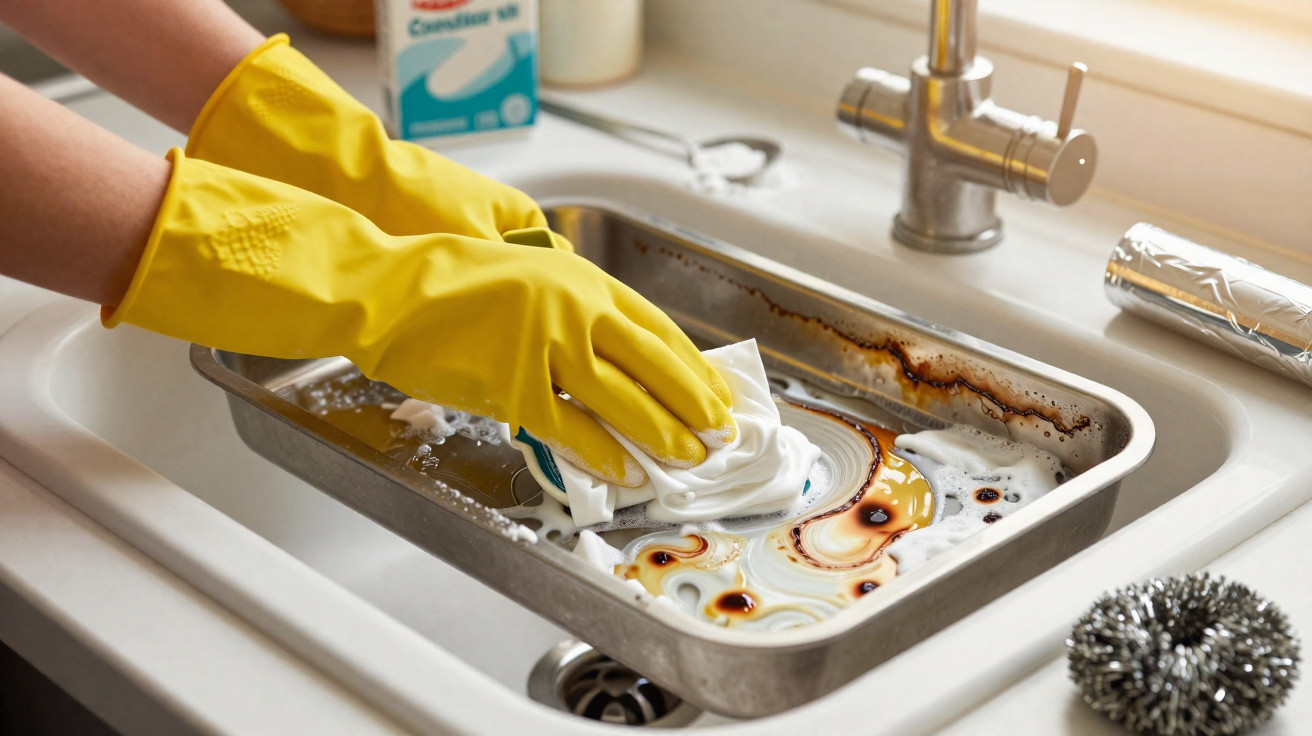
The tray beneath the cooker burners collects grease, sauces and food particles that repeatedly burn on, creating a crust that is difficult to shift. The most effective approach combines a prolonged soak, mild washing-up liquid, bicarbonate of soda and gentle scrubbing, always once the component is cold.
Why does grease become so baked onto the cooker tray?
Every time the cooker is used, splashed grease goes through further heating cycles. Over time, it loses moisture, hardens and sticks to the finish, producing carbonised deposits that a quickly applied detergent cannot fully loosen.
Vigorously scrubbing a dry tray often spreads the grease and increases the chance of scratches or chips. Allowing the dirt to soften beforehand requires less effort and helps protect the enamel, particularly around the burners.
The main precautions before you begin are:
- Cooling: wait until both the cooker and tray have cooled completely.
- Safety: switch off the electricity supply and turn off the gas where necessary.
- Manual: check whether the tray can be removed for washing.
- Sponge: use only the soft side of a sponge or a nylon brush.
- Abrasives: do not use wire wool, knives or metal scrapers.
Why can wire wool damage an enamelled cooker tray?
A cooker uses heat to prepare food, which is why splashes gradually change over time. Before cleaning, switch off the appliance, allow it to cool fully and check the manual to establish whether the tray can be removed.
Enamelled trays have a glass-like layer that makes them easier to clean while protecting the metal beneath. Wire wool, knives and highly abrasive powders can break through this coating, create rust spots and leave the surface permanently rough.
How should you soak a cooker tray to loosen grease?
Once the tray is cold and removed from the cooker, cover it with very hot water, add mild washing-up liquid and sprinkle bicarbonate of soda over the greasy areas. Leave it for at least 30 minutes so the crust can absorb moisture and become easier to remove.
Soaking time reduces the amount of scrubbing needed.
Hot water and washing-up liquid soften the crust.
Keep the tray submerged for at least 30 minutes before starting to scrub.
If the component cannot be removed, follow only the manufacturer's cleaning instructions.
After soaking, discard the water and use the soft side of a sponge or a nylon brush. Rinse, check for any remaining areas and repeat the process if needed, without applying excessive force to a still-hot or weakened finish.
Clean in this order:
- remove the pan supports, burners and tray only after they have cooled;
- add very hot water, mild washing-up liquid and bicarbonate of soda;
- soak the component for at least 30 minutes;
- scrub it with a soft sponge or nylon brush;
- rinse and soak again if baked-on grease remains.
How do you use a bicarbonate of soda paste on the toughest areas?
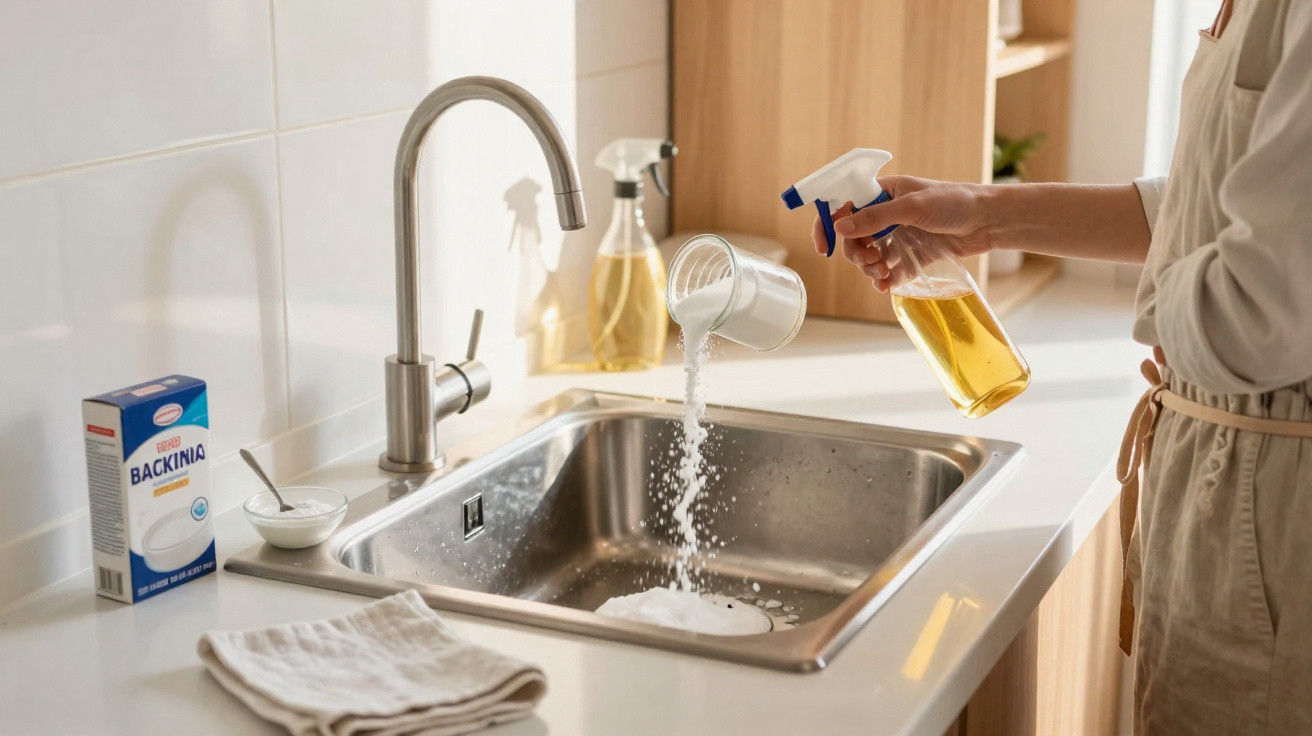
For stubborn patches, combine bicarbonate of soda with a few drops of water to make a thick paste. Apply it to the dirt, wait a few minutes, then scrub gently. Bicarbonate of soda is a mild abrasive, so use moderate pressure to preserve the enamel.
Once the grease has been removed, rinse thoroughly so that no washing-up liquid or bicarbonate of soda remains in corners, dry with a clean cloth and wait until all moisture has evaporated. Replacing the component while wet encourages stains, odours and possible corrosion where the coating has already been damaged.
To finish without harming the component:
- test the paste on a small, inconspicuous area;
- do not allow the bicarbonate of soda to dry completely on the enamel;
- avoid spatulas, blades and wire wool;
- rinse until every trace of the mixture has gone;
- dry the tray completely before returning it to the cooker.
Is it safe to line a cooker tray with aluminium foil?
Anyone looking up ways to clean oven racks with little effort will find that softening deposits before scrubbing protects a range of surfaces. On the tray, removing splashes as soon as it has cooled prevents grease from going through further burning cycles.
Lining the tray with aluminium foil is not universally recommended: some manufacturers prohibit it because the material can obstruct air channels, concentrate heat or cause damage. Use this protection only if the manual permits it, and do not cover burners, outlets or ventilation areas.



Comments
No comments yet. Be the first to comment!
Leave a Comment