
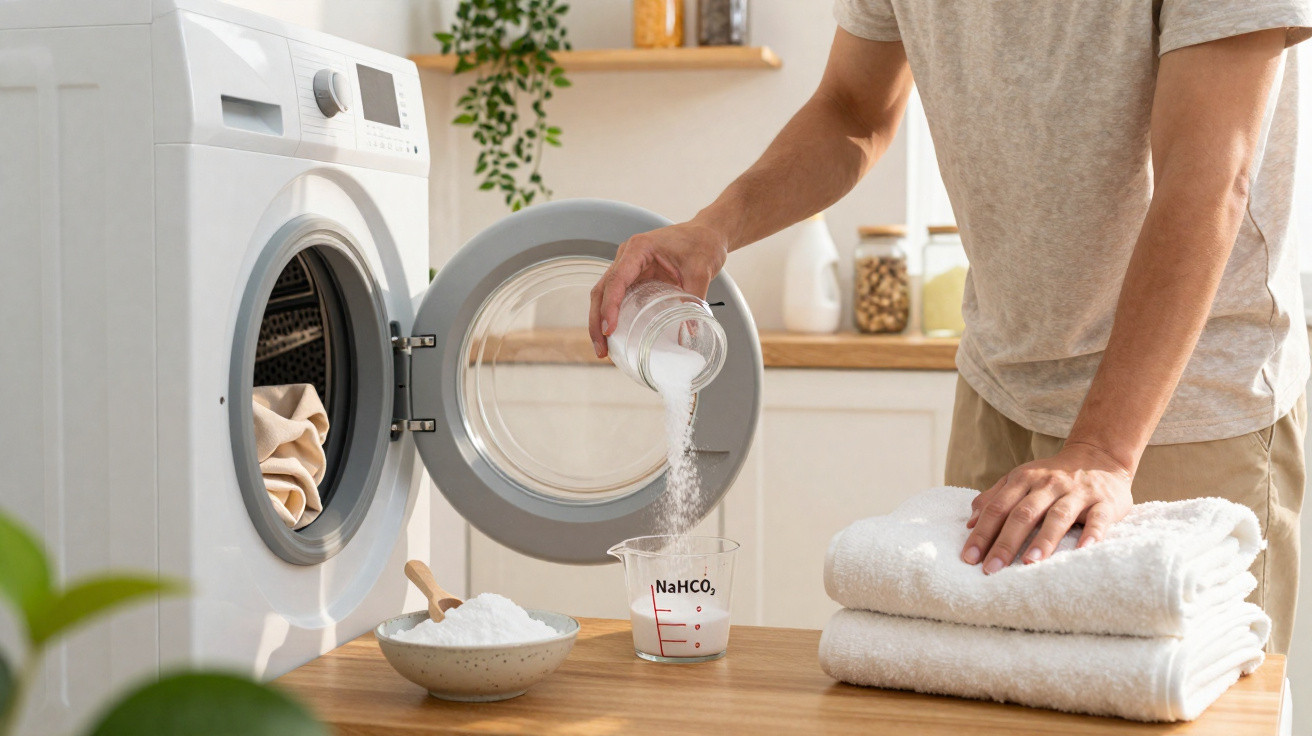
Washing clothes with bicarbonate of soda has become a familiar practice in many households, particularly for people who want better cleaning results without using harsher products. This straightforward ingredient can boost the effectiveness of detergent and help when a standard wash does not produce the desired outcome, supporting garment care rather than replacing detergent altogether.
How does bicarbonate of soda work on fabric fibres?
Bicarbonate of soda is a mildly alkaline salt which, once dissolved in water, can neutralise acids found in perspiration, food residue and strong odours. By lowering this acidity, it supports the cleaning agents in detergent and helps dirt release from the fibres, improving wash results for frequently worn garments.
This effect is particularly helpful for clothing that retains unpleasant smells, including gym wear, socks and uniforms, because it helps chemically neutralise the molecules responsible for odours. In areas with harder water, bicarbonate of soda may also make fabrics feel softer by reducing the stiffness caused by minerals and allowing for a more effective rinse.
Why is washing clothes with bicarbonate of soda so widely recommended?
Using bicarbonate of soda in the laundry is recommended because it can reinforce cleaning, tackle unpleasant smells and provide gradual fabric protection. When used in suitable amounts, it works alongside ordinary detergent on older light stains, deodorant residue and odours that do not disappear completely after the first wash, without being as harsh as strong bleaches.
In many household routines, it has become a simple tip for improving more demanding washes. It can be incorporated in several ways in these cases, with the amount adapted to the type of garment and degree of soiling, as shown below:
- Reducing persistent odours in sportswear, towels and heavily perspired garments;
- Assisting with the removal of light sweat and deodorant stains in areas such as the underarms;
- Softening the water, making rinsing easier and reducing stiffness in clothing;
- Enhancing detergent performance in heavily loaded washes.
How should bicarbonate of soda be used in a washing machine and for hand washing?
In practical terms, bicarbonate of soda is easy to use and can be adjusted for both machine and hand washing. For medium-capacity washing machines, around 2 to 4 tablespoons per cycle is commonly suggested, always alongside the usual detergent and in line with the washing machine manufacturer's guidance to avoid unnecessary excess.
For hand washing, 1 to 2 tablespoons in a medium-sized bucket of water will generally be enough, provided the product is fully dissolved before the garments are soaked. In both situations, it is best not to leave items in contact with it for too long, to rinse thoroughly, and to check for delicate fabrics or care instructions that advise against additives.
Which garments benefit most from bicarbonate of soda?
Bicarbonate of soda generally delivers the best results on cotton items, denim, bed linen, towels and frequently used garments that readily build up perspiration. Synthetic sports fabrics may also benefit, as long as their care labels are followed, since neutralising unpleasant smells is one of this method's main everyday strengths.
For delicate materials, such as silk, wool, fine embroidery or dry-clean-only clothing, it is preferable to avoid using it and choose specialist products or professional cleaning instead. Used moderately, in 1 or 2 washes each week and concentrated on heavier or especially sweaty loads, bicarbonate of soda can be a reliable ally, helping clothes retain their freshly washed feel without excessive wear to the fibres.





Comments
No comments yet. Be the first to comment!
Leave a Comment