
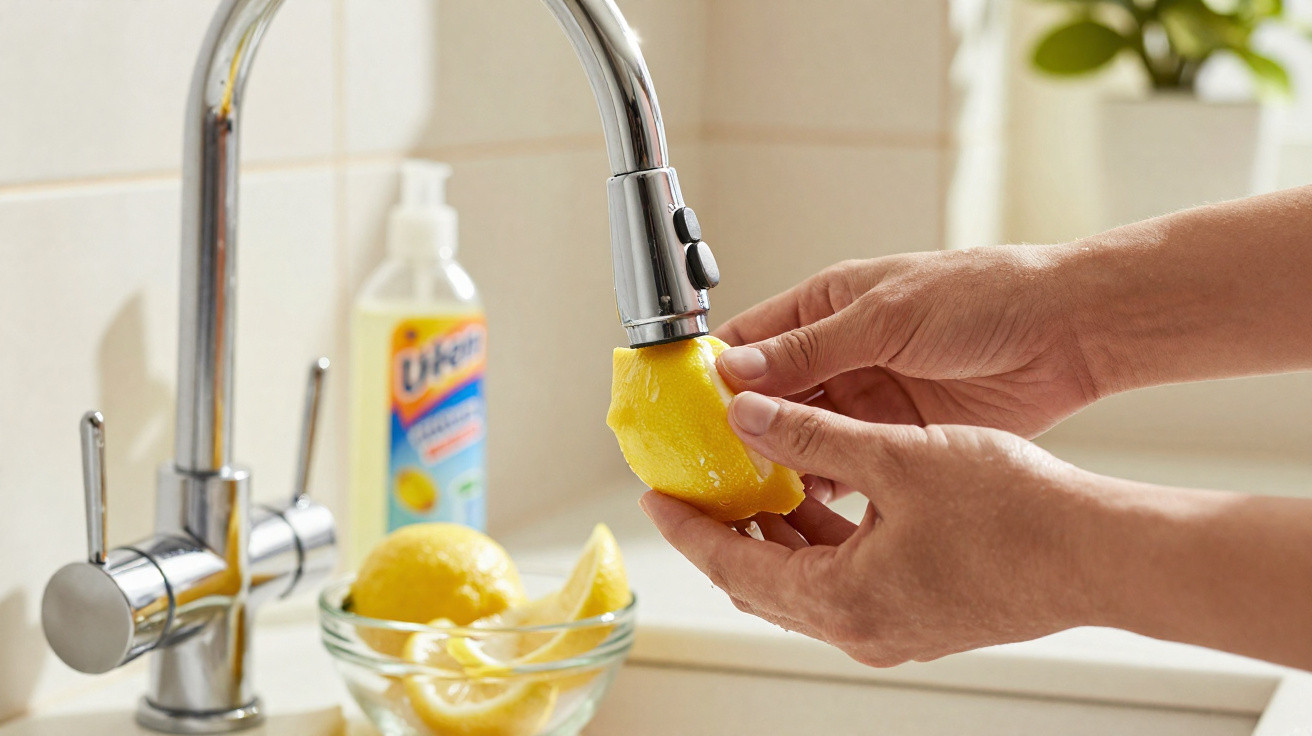
Among the household cleaning tricks becoming increasingly popular, one that stands out is using lemon peel on taps. Rather than immediately reaching for harsh chemical products, many people use the natural acids in the fruit to tackle limescale that builds up over time, making use of something that would usually be thrown away after cooking.
How does lemon peel work on limescale and other dirt?
On taps, the most frequent problem is a mix of limescale deposits, water marks and grease from everyday use. Rich in essential oils and citric acid, lemon peel helps to break down this layer, making it easier to remove without much effort.
In areas with “hard” water, which contains high levels of calcium and magnesium, whitish crusts can form around the base and spout of the tap. Citric acid reacts with these minerals, helping to loosen the build-up while also assisting with soap residue, superficial rust spots and marks left by standing water.
Watch a video from the YouTube channel Organise Without Fuss, which explains how the natural acid in lemon peel dissolves chlorine and limescale marks, restoring the original shine of metal fittings and taps:
https://www.youtube.com/watch?v=J3mCbyE8nco
How to use lemon peel on taps step by step
To get the most from this trick, applying lemon peel on taps involves a few straightforward steps. Simply use the peel left after squeezing a lemon, provided it is still moist and has a little pulp attached to the inner side.
The following sequence sets out how to use lemon for better results, while reducing the risk of marks and avoiding scratches on chrome-plated or delicate metal surfaces:
- Cut and prepare the peel: after using the lemon in recipes, set aside half the peel, leaving some inner pulp in place to put more citric acid in contact with the metal.
- Initial clean: wipe the tap with a damp cloth to remove loose dust and soap residue, preventing coarser particles from scratching the chrome finish.
- Rub with the peel: with the inside facing the metal, rub it in circular motions over limescale-stained areas for around 2 to 5 minutes.
- Leave it to work: allow the juice to sit for 5 to 10 minutes; where the build-up is thick, cover the area with the peel itself or kitchen roll moistened with lemon juice.
- Rinse and finish: rinse thoroughly under running water and dry with a soft cloth to prevent fresh marks and enhance the shine.
Why can lemon be better than some chemical products?
Many limescale removers contain strong acids that require ventilation and care to avoid splashes. Lemon peel is also acidic, but it is generally gentler when rinsed properly and is often enough for everyday maintenance of standard metal fittings.
Another advantage is that lemon makes better use of food waste and can reduce reliance on highly concentrated formulas. Even so, it is important to test it first on a small area, particularly on natural stone or metals with specialist finishes, which may stain when exposed to any acidic agent.
What other uses does lemon peel have in the kitchen and bathroom?
The same approach used on taps can be applied elsewhere in the home, particularly in places affected by grease, moisture or strong odours. Instead of being discarded, the peel becomes a quick maintenance aid between more thorough cleans.
In the kitchen, it can help reduce odours on chopping boards when used with a little salt, add extra shine to stainless-steel sinks and, when heated in water in the microwave, release citrus steam that makes splatters easier to remove. In the bathroom, it can soften water marks on shower glass and lessen odours near drains, as well as help clean shower fittings when used with the same care regarding rinsing and prior testing.

Comments
No comments yet. Be the first to comment!
Leave a Comment